Global Biodegradable Plastics Market Size, Share, Trends & Growth Forecast Report – Segmented By Type (Polylactic Acid, Polyhydroxyalkanoates, Polybutylene Succinate, Polycaprolactone, Starch-based, Regenerated Cellulose), Application (Packaging, Textile, Agriculture, Injection Moulding, Others (Including Electronic, Medical, Etc.), and Region (North America, Europe, Asia Pacific, Latin America, Middle east and Africa) – Industry Analysis (2026 to 2034)
Global Biodegradable Plastics Market Size
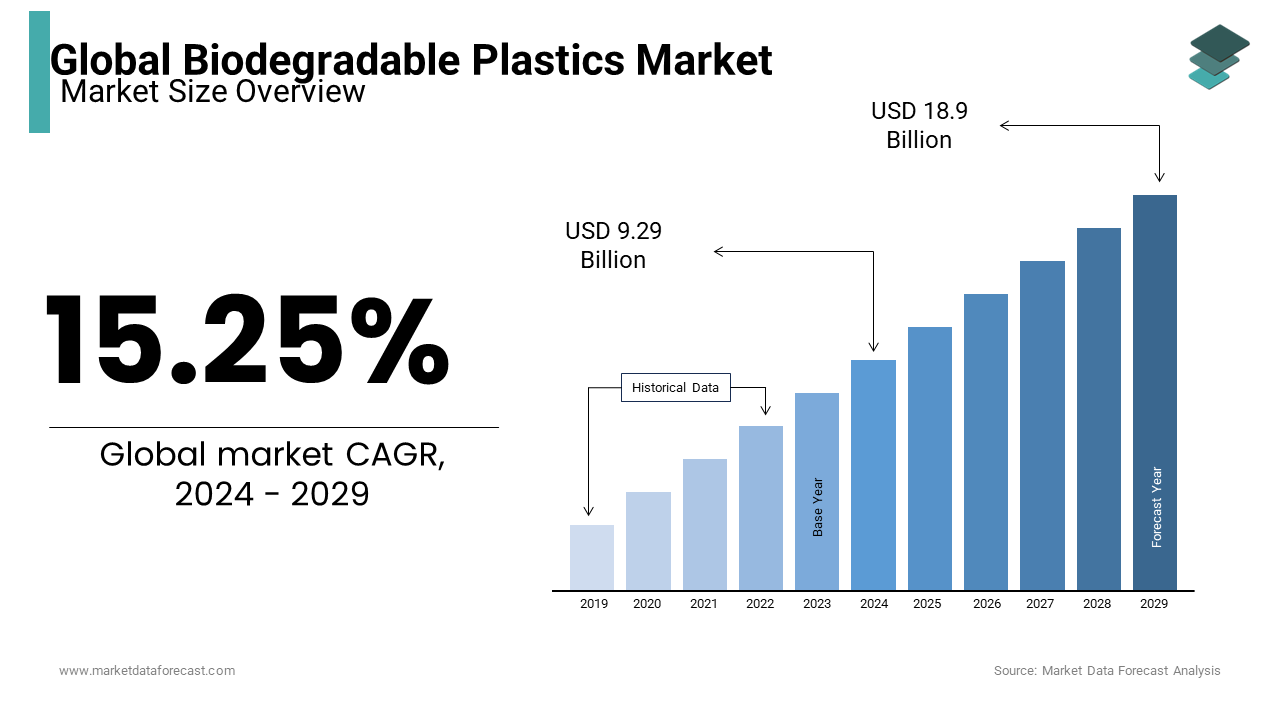
The global biodegradable plastics market size was valued at USD 10.71 billion in 2025. The global market size is anticipated to reach USD 38.41 billion by 2034 from USD 12.34 billion in 2026, growing at a CAGR of 15.25%.
Biodegradable plastics are a type of plastic that can be broken down and decomposed by natural processes such as bacteria, fungi, and other living organisms. Unlike traditional plastics, which can take hundreds of years to degrade and accumulate in the environment, biodegradable plastics break down relatively quickly and do not leave behind harmful microplastics. Biodegradable plastics can be made from a variety of renewable resources, such as corn starch, sugarcane, and cassava, or from petrochemicals that are designed to break down through a controlled process. They are increasingly used in various applications, such as packaging, agriculture, consumer goods, and textiles, to provide sustainable and eco-friendly alternatives to traditional plastics.
MARKET DRIVERS
The biodegradable plastics market is being driven by a variety of factors, including growing environmental concerns and increasing demand for sustainable alternatives to traditional plastics. As the negative impact of plastic waste on the environment becomes more apparent, consumers and businesses are increasingly seeking out environmentally friendly alternatives. Biodegradable plastics offer a solution to this problem, as they break down more quickly than traditional plastics, reducing their impact on the environment. In addition, government regulations and initiatives aimed at reducing plastic waste are also driving demand for biodegradable plastics. Many countries have implemented laws or regulations to limit the use of traditional plastics or promote the use of biodegradable alternatives. Furthermore, technological advancements in the development of biodegradable plastics have expanded their potential applications and improved their performance, making them a viable and attractive option for a wide range of industries. Overall, the biodegradable plastics market is poised for significant growth in the coming years as demand for sustainable and environmentally friendly products continues to increase.
MARKET RESTRAINTS
Despite the potential benefits of biodegradable plastics, there are also several challenges and restraints to their widespread adoption. One major issue is that the production of biodegradable plastics can be more expensive than traditional plastics. This cost may be passed on to consumers, who may not be willing to pay a premium for eco-friendly alternatives. There are also concerns about the actual biodegradability of these plastics. While some biodegradable plastics may break down more quickly than traditional plastics, they may not necessarily fully biodegrade and can leave behind microplastics that can still harm the environment. Furthermore, the infrastructure for the disposal of biodegradable plastics is not as widely available as that for traditional plastics, which can limit their usefulness. Proper composting facilities are necessary for biodegradable plastics to degrade fully, but many areas do not have access to such facilities. Overall, while biodegradable plastics offer potential benefits, addressing these restraints will be necessary for their successful adoption and widespread use.
MARKET OPPORTUNITIES
The biodegradable plastics market is expected to grow rapidly in the coming years due to increasing awareness about environmental sustainability and a shift towards eco-friendly products. The market offers opportunities for companies to develop new and innovative biodegradable plastics with improved properties, such as strength, durability, and flexibility. Additionally, the increasing demand for biodegradable plastics in various industries, such as packaging, agriculture, and automotive, presents a significant growth opportunity. Government regulations and policies promoting the use of biodegradable plastics also create a favorable environment for market growth. Overall, the biodegradable plastics market offers a promising future for companies looking to capitalize on the growing demand for sustainable products.
REPORT COVERAGE
| REPORT METRIC | DETAILS |
| Market Size Available | 2025 to 2034 |
| Base Year | 2025 |
| Forecast Period | 2026 to 2034 |
| CAGR | 15.25% |
| Segments Covered | By Material Type, Application, End-Use Industry, Distribution Channel, and Region |
| Various Analyses Covered | Global, Regional & Country Level Analysis, Segment-Level Analysis, DROC, PESTLE Analysis, Porter’s Five Forces Analysis, Competitive Landscape, Analyst Overview on Investment Opportunities |
| Regions Covered | North America, Europe, Asia Pacific, Latin America, Middle East & Africa |
| Market Leaders Profiled | NatureWorks LLC, BASF SE, Mitsubishi Chemical Corporation, Corbion NV, Biome Bioplastics Limited, Novamont S.p.A., Plantic Technologies Limited, Total Corbion PLA, FKuR Kunststoff GmbH, Danimer Scientific, Inc., and others. |
SEGMENTAL ANALYSIS
By Material Type Insights
PLA (Polylactic Acid) has the highest demand among the biodegradable plastic materials mentioned above. PLA is made from renewable resources such as corn starch, sugarcane, and cassava and is used in a variety of applications, including food packaging, consumer goods, and textiles. It is biodegradable under certain conditions and has comparable properties to traditional plastics, making it a popular choice for companies looking for sustainable packaging options.
By Application Insights
Packaging is currently the largest application segment for the biodegradable plastics market and has the highest demand among the applications. The demand for the packaging segment is driven by the increasing awareness of environmental sustainability and the need for eco-friendly packaging solutions. Biodegradable plastics are used in food packaging, consumer goods packaging, and industrial packaging applications.
By End-Use Industry Insights
The food and beverage industry has the highest demand for biodegradable plastics among the industries mentioned above. Biodegradable plastics are used in food packagings, such as bags, containers, and utensils, as they provide a sustainable alternative to traditional plastic packaging.
By Distribution Channel Insights
Online sales have seen a significant increase in demand for biodegradable plastics. This can be attributed to the growing trend of e-commerce and the ease and convenience of online shopping. Online sales channels provide a broader reach for companies and allow them to target a larger audience, including environmentally conscious consumers. Moreover, online sales provide better accessibility, convenience, and availability of a wide range of biodegradable plastic products, making it easier for consumers to switch to more sustainable products.
REGIONAL ANALYSIS
Asia Pacific region is likely to experience the highest demand in the coming years due to the increasing adoption of eco-friendly materials and the growing population in the region. Additionally, the region is home to some of the largest biodegradable plastics manufacturers and has seen significant investment in biodegradable plastics production.
KEY MARKET PLAYERS
The major key players in the Global Biodegradable Plastics Market are NatureWorks LLC, BASF SE, Mitsubishi Chemical Corporation, Corbion NV, Biome Bioplastics Limited, Novamont S.p.A., Plantic Technologies Limited, Total Corbion PLA, FKuR Kunststoff GmbH, Danimer Scientific, Inc., and others.
RECENT HAPPENINGS IN THE MARKET
-
In June 2022, Confoil and BASF collaborated to develop a certified compostable paper tray for ready-to-eat meals. The dual ovenable tray is made from paper and can be broken down into organic matter by natural processes, providing a sustainable packaging solution for the food industry.
-
In Feb 2022, DURABIO™, a bio-based engineering plastic with high design flexibility and durability, was adopted for use in pilot ballpoint pens. The plastic is sustainable and provides an eco-friendly alternative to traditional petroleum-based plastics, demonstrating its potential for use in various industries.
MARKET SEGMENTATION
This research report on the global biodegradable plastics market has been segmented and sub-segmented based on material type, application, end-use industry, distribution channel, and region.
By Material Type
- PLA
- PHA
- Starch-based plastics
- Others
By Application
- Packaging
- Agriculture
- Textiles
- Consumer goods
- Others
By End-Use Industry
- Food and beverage
- Healthcare
- Agriculture
- Others
By Distribution Channel
- Direct sales
- Online sales
- Others
By Region
- North America
- Europe
- Asia Pacific
- Latin America
- Middle East & Africa
Frequently Asked Questions
1.What is the Biodegradable Plastics Market?
It refers to the market for plastics that can naturally decompose through the action of microorganisms, reducing environmental impact compared to conventional plastics.
2.What factors are driving the growth of the Biodegradable Plastics Market?
Growth is driven by increasing environmental concerns, strict regulations on plastic waste, and rising demand for sustainable packaging solutions.
3.What are biodegradable plastics?
Biodegradable plastics are materials designed to break down into natural elements such as water, carbon dioxide, and biomass through biological processes.
4.What are the common types of biodegradable plastics?
Common types include polylactic acid, polyhydroxyalkanoates, starch based plastics, and polybutylene adipate terephthalate.
5.What are the major applications of biodegradable plastics?
They are widely used in packaging, agriculture films, disposable tableware, medical products, and consumer goods.
6.Which industries use biodegradable plastics the most?
Key industries include packaging, food service, agriculture, healthcare, and consumer products.
7.What challenges affect the Biodegradable Plastics Market?
Challenges include high production costs, limited industrial composting infrastructure, and performance limitations compared to conventional plastics.
8.How do government regulations influence the biodegradable plastics market?
Many governments are implementing policies to reduce plastic waste and encourage the use of biodegradable and sustainable materials.
9.How are technological advancements supporting biodegradable plastics?
Advancements in material science and polymer technology are improving the durability, flexibility, and cost efficiency of biodegradable plastics.
10.What is the future outlook of the Biodegradable Plastics Market?
The market is expected to grow significantly due to increasing environmental regulations, technological advancements, and growing demand for sustainable materials.
Related Reports
Access the study in MULTIPLE FORMATS
Purchase options starting from
$ 2500
Didn’t find what you’re looking for?
TALK TO OUR ANALYST TEAM
Need something within your budget?
NO WORRIES! WE GOT YOU COVERED!
Call us on: +1 888 702 9696 (U.S Toll Free)
Write to us: sales@marketdataforecast.com