Global Companion Animal Healthcare Market Size, Share, Trends & Growth Forecast Report By Product Type (Feed Additives, Pharmaceutics and Vaccines), Pharmaceutical Products (Ectoparasiticides, Endectocides, Antibiotics, Anti-inflammatories and Medicines for curing reproductive problems) and Region (North America, Europe, Asia Pacific, Latin America, and Middle East & Africa), Industry Analysis From 2024 to 2033
Global Companion Animal Healthcare Market Summary
The global companion animal healthcare market was valued at USD 23.92 billion in 2024 and is projected to reach USD 46.06 billion by 2033, growing at a CAGR of 7.5% from 2025 to 2033. With a forecasted market size of USD 25.73 billion in 2025, the industry is experiencing robust growth driven by rising pet ownership, increasing expenditure on pet health, advancements in veterinary medicine, and growing awareness about preventive care.
The companion animal healthcare market encompasses a wide range of products and services designed to maintain or improve the health and well-being of pets such as dogs, cats, birds, and small mammals. This includes pharmaceuticals, vaccines, diagnostics, parasiticides, medical devices, and healthcare services provided by veterinary clinics and hospitals.
Key Market Trends
- Increasing pet humanization is driving demand for premium healthcare services, including pet insurance and advanced diagnostics.
- Rising adoption of companion animals post-pandemic has boosted spending on preventive care, wellness plans, and prescription medications.
- Growth in telemedicine and digital health platforms is transforming access to veterinary care, especially in remote and underserved areas.
- Expansion of R&D in species-specific therapeutics and biologics is accelerating innovation in companion animal medicine.
Key Market Insights
- By product type, the pharmaceuticals segment dominated the market in 2024, capturing a 46.04% share, and is expected to grow at a CAGR of 7.55% during the forecast period. This growth is fueled by the rising use of prescription drugs for chronic conditions, pain management, and anti-infective treatments in pets.
- Based on companion type, the dogs segment held the largest market share at 51.94% in 2024, owing to high dog ownership rates and greater spending on canine health, including vaccinations, surgeries, and specialized treatments.
- Based on Region, North America led the global market in 2024 with a dominant share of 46.83%, attributed to high pet penetration, advanced veterinary infrastructure, strong regulatory frameworks, and increasing pet humanization trends. The U.S. remains the largest single market, supported by high consumer spending and a growing number of specialty veterinary clinics.
- Key players shaping the global companion animal healthcare landscape include Zoetis, Merck & Co. Inc. (MSD Animal Health), Boehringer Ingelheim GmbH, Bayer HealthCare AG, Sanofi Animal Health, Heska Corporation, Bioniche Animal Health Canada, Biogenesis Bago SA, Indian Immunologicals Ltd., Novartis Animal Health, and Protein Sciences, who are focused on product innovation, strategic acquisitions, and expanding global distribution networks to strengthen their market position.
With increasing emotional and financial investment in pets, the companion animal healthcare market is set for sustained expansion, particularly in pharmaceuticals and advanced veterinary services, through 2033.
Global Companion Animal Healthcare Market Size
In 2024, the global companion animal healthcare market was valued at USD 23.92 billion and it is expected to reach USD 46.06 billion by 2033 from USD 25.73 billion in 2025, growing at a CAGR of 7.5% during the forecast period.
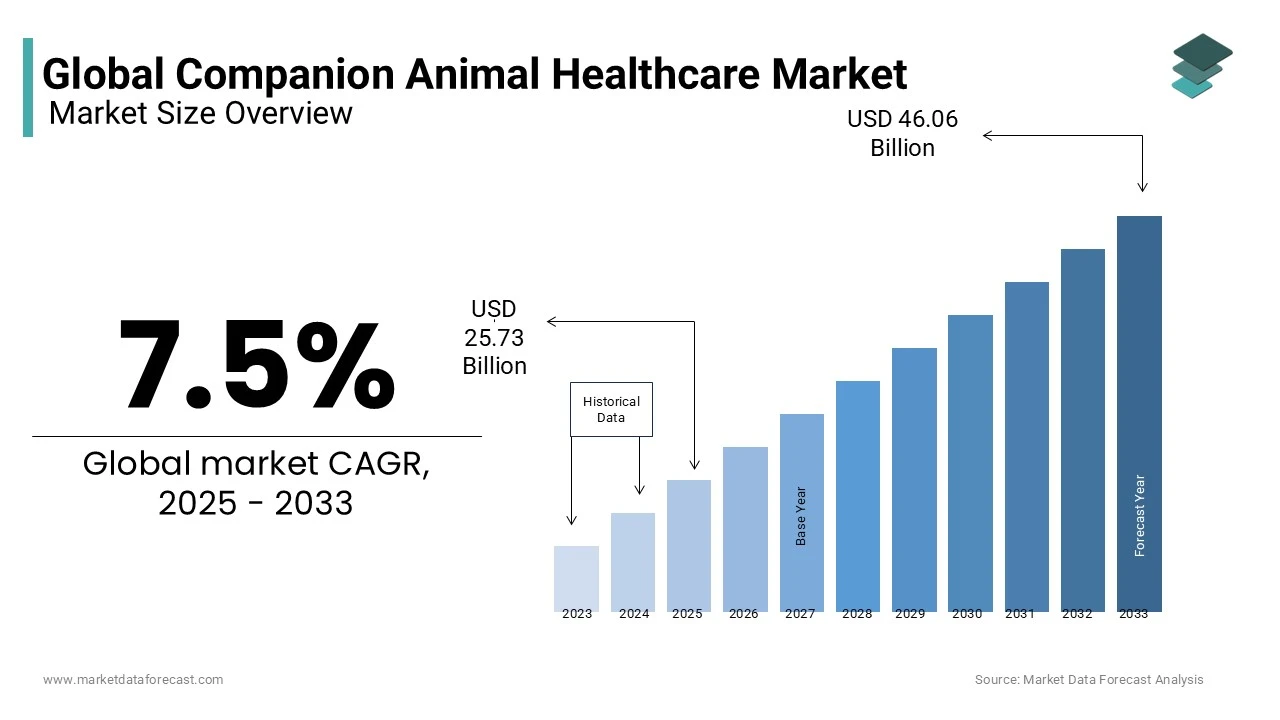
The Companion Animal Healthcare involves in medical services, pharmaceuticals, diagnostics, and preventive care tailored to pets, primarily dogs, cats, and increasingly exotic species. This sector addresses clinical needs ranging from vaccinations and parasite control to advanced surgical interventions and chronic disease management. In the United Kingdom, the People’s Dispensary for Sick Animals (PDSA) estimates that 1.5 million dogs and 800,000 cats annually do not receive necessary veterinary treatment due to financial constraints.
MARKET DRIVERS
Humanization of Pets and Emotional Attachment Driving Advanced Care Adoption is driving the growth of the Companion Animal Healthcare Market. Pet owners now view their animals as integral family members, leading to a willingness to invest in sophisticated medical treatments previously reserved for humans. According to a 2023 survey by the American Pet Products Association, 92% of dog owners and 87% of cat owners consider their pets to be part of the family, a sentiment that directly influences healthcare spending. This emotional bond has elevated demand for services such as MRI scans, oncology treatments, and orthopedic surgeries. Moreover, rising disposable income and willingness to pay for premium veterinary services are amplifying this trend.The
Increasing Prevalence of Chronic Diseases in Aging Pet Populations is accelerating the growth of Companion Animal Healthcare Market. Chronic kidney disease now affects 1 in 3 cats over ten years of age, as documented by the International Renal Interest Society. The veterinary practitioners are shifting toward preventive screening and lifelong management protocols. Routine blood panels, ultrasound monitoring, and prescription diets have become standard in senior pet wellness plans
MARKET RESTRAINTS
Limited access to Veterinary Services in Rural and Underserved Regions is major factor hindering the growth of the Companion Animal Healthcare Market. The Royal College of Veterinary Surgeons reports a similar disparity in the UK, where 40% of mobile veterinary clinics operate at full capacity, unable to meet demand in remote Scottish Highlands and Welsh communities. Additionally, workforce shortages and professional burnout are exacerbating service gaps. The U.S. Bureau of Labor Statistics projects a 19% increase in veterinary demand by 2030, yet veterinary school enrollment remains constrained. In Australia, the shortage is so acute that some regional clinics have implemented triage systems, delaying non-urgent procedures. These systemic limitations hinder preventive care adoption, increase disease burden, and restrict the scalability of companion animal healthcare in areas where pet ownership is growing but infrastructure is underdeveloped.
High Cost of Advanced Veterinary Treatments and Low Insurance Penetration impeding the growth of the Companion Animal Healthcare Market. Financial constraints directly affect treatment decisions. In emerging markets, the situation is more acute India and Brazil have insurance penetration below 1%, according to FERAS Global, limiting access to even basic diagnostics. While installment plans and financing options are emerging, they are not universally available.
MARKET OPPORTUNITIES
The expansion of telemedicine and digital health platforms for pets is another opportunity escalating the growth of the Companion Animal Healthcare Market. According to a 2023 report by the American Veterinary Medical Association, 42% of veterinary practices in the U.S. now offer telehealth services, up from 12% in 2020. These platforms are particularly effective for follow-up visits, behavioral counseling, and chronic disease management by reducing travel burdens and increasing compliance.
Moreover, integration of wearable devices and AI-driven diagnostics is revolutionizing preventive care. Smart collars from companies like Whistle and FitBark track activity, sleep, and vital signs, alerting owners to early signs of illness.
Personalized Medicine and Genomic Testing for Companion Animals is swiftly emerging with prominent opportunities for the growth of the Companion Animal Healthcare Market. The 2023 IPFD Hereditary Disorders Database identifies over 800 known genetic conditions in dogs and 250 in cats, including breed-specific risks such as dilated cardiomyopathy in Dobermans and polycystic kidney disease in Persians.
MARKET CHALLENGES
Regulatory Fragmentation and Lack of Standardization in Veterinary Pharmaceuticals poses a significant challenge to the growth of the Companion Animal Healthcare Market. Unlike human medicine, which is governed by harmonized frameworks such as the FDA and EMA, veterinary drug approval processes vary widely across countries, delaying product launches and increasing development costs. According to the World Organisation for Animal Health, only 38% of member countries have independent regulatory agencies for veterinary medicines, with many relying on ad hoc evaluations. Furthermore, limited incentives for R&D in niche species and conditions restrict therapeutic innovation. The U.S. FDA Center for Veterinary Medicine approves an average of 40 new animal drugs annually, with the majority targeting dogs, cats, and livestock. Rare diseases and exotic pets remain underserved.
The workforce shortages and evolving skill requirements in veterinary practice are restricting the growth of the Companion Animal Healthcare Market. According to the American Veterinary Medical Association projects a deficit of 15,000 veterinarians in the U.S. by 2030. Veterinary schools are operating at capacity, with only 52 accredited institutions in North America producing approximately 4,000 graduates annually insufficient to meet demand. Simultaneously, the complexity of modern veterinary medicine requires advanced training in specialties such as oncology, neurology, and diagnostic imaging. This gap between generalist capacity and patient needs threatens care quality and increases burnout. Addressing this challenge requires expanded educational infrastructure, continuing professional development, and better integration of veterinary technicians and telemedicine to extend the reach of expert care.
REPORT COVERAGE
| REPORT METRIC | DETAILS |
| Market Size Available | 2024 to 2033 |
| Base Year | 2024 |
| Forecast Period | 2025 to 2033 |
| Segments Covered | By Type, Production Technologies and Region |
| Various Analyses Covered | Global, Regional & Country Level Analysis, Segment-Level Analysis, Drivers, Restraints, Opportunities, Challenges; PESTLE Analysis; Porter's Analysis, Competitive Landscape; Analyst Overview of Investment Opportunities |
| Regions Covered | North America, Europe, Asia Pacific, Latin America, the Middle East, and Africa |
| Key Market Players | MSD, Bayer HealthCare AG, Bioniche Animal Health Canada, Sanofi Animal Health, Inc., Biogenesis Bago SA, Heska Corporation, Indian Immunologicals Ltd., Boehringer Ingelheim GmbH, Zoetis, Novartis Animal Health, Inc., Merck & Co. Inc. and Protein Sciences |
SEGMENTAL ANALYSIS
By Product Type Insights
The pharmaceutical segment dominated the global companion animal healthcare market by capturing 58.3% of share in 2024 owing to the rising demand for prescription medications to manage chronic and infectious diseases in pets. According to the Banfield Pet Hospital’s 2023 State of Pet Health Report, the incidence of canine diabetes has increased by 80% over the past decade, while feline hyperthyroidism cases have risen by 67%. These trends have led to sustained demand for long-term pharmaceutical interventions, including insulin, levothyroxine, and NSAIDs.
The vaccines segment is projected to grow at a CAGR of 10.4% during the forecast period with the increased awareness of zoonotic disease risks and mandatory vaccination laws. Rabies remains a public health concern, with the CDC reporting that over 99% of human rabies cases in the U.S. originate from unvaccinated animals. As per WOAH, only 70% of dogs in Latin America and 50% in parts of Africa are vaccinated against rabies by prompting global eradication initiatives such as the Zero by 30 campaign, which aims to eliminate dog-mediated human rabies by 2030.
Additionally, the emergence of novel vaccine technologies and combination products is driving market growth. Companies like Zoetis and Merck Animal Health have launched multivalent vaccines that protect against distemper, parvovirus, adenovirus, and leptospirosis in a single dose, improving compliance. In 2023, the European Medicines Agency approved the first mRNA-based veterinary vaccine for canine melanoma, signaling a shift toward immunotherapeutic applications
By Pharmaceutical Products Insights
The ectoparasiticides segment was accounted in holding 34.2% of the Companion Animal Healthcare Market share in 2024 with the pervasive threat of external parasites such as fleas, ticks, and mites, which affect over 80% of dogs and 60% of cats in North America and Europe, according to the Companion Animal Parasite Council. Flea infestations alone lead to more than 15 million veterinary visits annually in the U.S., often resulting in secondary conditions like allergic dermatitis and tapeworm infections. The shift toward long-acting, broad-spectrum, and user-friendly formulations is propelling the growth of the Companion Animal Healthcare Market. Topical spot-ons, oral chews, and extended-release collars now offer protection for up to 12 weeks, improving owner compliance. Products like NexGard, Bravecto, and Simparica have achieved rapid market penetration due to their efficacy and palatability.
The anti-inflammatories segment is deemed to grow with an expected CAGR of 11.2% in the coming years with the rising prevalence of osteoarthritis and chronic pain in aging pets. The Orthopedic Foundation for Animals estimates that 20% of dogs over one year of age suffer from some form of joint disease, with incidence increasing to over 60% in dogs over seven. The development of safer, targeted NSAIDs and adjunctive therapies is ascribed to bolster the growth of the Companion Animal Healthcare Market.
REGIONAL ANALYSIS
North America was the top performer of the global companion animal healthcare market by holding 39.3% of share in 2024 owing to the high pet ownership rates, advanced veterinary infrastructure, and robust spending on preventive and specialty care. In the United States, 70% of households own a pet, with an average annual veterinary expenditure of $680 per dog and $450 per cat, according to the American Pet Products Association. Canada complements this with universal access to veterinary services and rising adoption of pet insurance, which covers over 5% of pets double the rate of a decade ago, as per the North American Pet Health Insurance Association.
Europe companion animal healthcare market held 28.2% of share in 2024 with Germany, the U.K., and France serving as primary market drivers. The region’s strength lies in strong public health integration and high awareness of zoonotic disease prevention. Additionally, the European Medicines Agency enforces rigorous safety and efficacy standards for veterinary drugs by fostering consumer trust.
The Asia-Pacific (APAC) companion animal healthcare market growth is to have a significant CAGR in the coming years due to rising disposable incomes, urbanization, and evolving pet humanization trends. China’s companion animal healthcare market grew by 16.3% in 2023, as per the China Pet Industry White Paper, driven by young urban professionals treating pets as emotional companions.
Latin America Companion Animal Healthcare Market growth is likely to have a prominent growth opportunities in the next coming years with the increasing middle-class pet ownership and government-led zoonotic disease control programs. Brazil has the second-highest pet ownership rate globally, with 54 million dogs and 18 million cats, as per the Brazilian Association of Pet Retailers (ABEPET). The Ministry of Health’s National Rabies Control Program vaccinates over 15 million dogs annually, significantly reducing human cases.
The Middle East and Africa (MEA) Companion Animal Healthcare market growth is likely to have a significant growth opportunities with South Africa, Saudi Arabia, and the UAE as key contributors. South Africa maintains the most developed veterinary infrastructure in sub-Saharan Africa, with over 4,000 registered veterinarians and a growing number of specialty clinics in Johannesburg and Cape Town. As per the South African Veterinary Council, pet ownership in urban areas has increased by 18% since 2020. In the Gulf Cooperation Council (GCC) countries, rising expatriate populations and pet importation have driven demand for vaccinations and preventive care.
KEY MARKET PLAYERS
A few of the notable players in the global companion animal healthcare market profiled in the report are MSD, Bayer HealthCare AG, Bioniche Animal Health Canada, Sanofi Animal Health, Inc., Biogenesis Bago SA, Heska Corporation, Indian Immunologicals Ltd., Boehringer Ingelheim GmbH, Zoetis, Novartis Animal Health, Inc., Merck & Co. Inc. and Protein Sciences. Apart from these major players, many other companies operate in the companion animal healthcare market, including regional and local players. Additionally, many startups and emerging companies are developing innovative products and technologies for the market.
The competition in the Companion Animal Healthcare Market is intensifying as pet humanization, rising chronic disease prevalence, and technological advancements redefine care standards. Multinational pharmaceutical leaders dominate through extensive R&D pipelines, global distribution, and strong veterinary relationships. However, regional players and specialty biotech firms are gaining ground by offering niche therapeutics and localized solutions. Differentiation is achieved through product specificity, safety profiles, and integration into digital health ecosystems. The market is highly sensitive to regulatory compliance, clinical evidence, and brand trust, particularly in vaccine and parasiticide segments. While innovation in pain management and oncology drives premium pricing, economic disparities limit access in emerging regions.
Top Players in the Companion Animal Healthcare Market
Zoetis has established a foundational presence in the Asia Pacific companion animal healthcare market through localized product development and deep integration with veterinary networks. The company’s portfolio, including flagship brands like Simparica, Galliprant, and Nobivac, addresses needs in parasitology, pain management, and vaccination. Zoetis has strengthened its regional footprint by launching species-specific formulations tailored to local disease profiles, such as leptospirosis vaccines for tropical climates in Southeast Asia. In 2023, the company inaugurated a regional innovation hub in Singapore to accelerate clinical trials and regulatory submissions for APAC markets. Additionally, Zoetis partnered with veterinary associations in India and Thailand to deliver continuing education programs, enhancing diagnostic and treatment standards. These initiatives position Zoetis as a science-driven leader in advancing clinical care across diverse healthcare ecosystems in the region.
Elanco Animal Health plays a transformative role in expanding access to innovative therapeutics for companion animals across Asia Pacific. The company’s acquisition of Jurox in 2022 strengthened its presence in Australia and New Zealand, enabling regional manufacturing and distribution of sedatives, analgesics, and dermatology treatments. Elanco has introduced localized versions of products like Certifect and Caninsulin, adapting dosage forms and packaging to meet clinical and retail preferences in countries like Japan and South Korea. In 2023, the company launched a digital engagement platform in Vietnam to connect veterinarians with technical support and treatment guidelines, improving prescribing accuracy. Furthermore, Elanco collaborates with animal welfare NGOs in Indonesia to support spay/neuter campaigns and vaccination drives with its commitment to public health and long-term market development in emerging economies.
Boehringer Ingelheim has significantly influenced the standard of companion animal care in Asia Pacific through its focus on preventive medicine and scientific excellence. The company’s NexGard and ProMeris lines have become benchmark ectoparasiticides in Australia, India, and Southeast Asia, where tick- and flea-borne diseases are endemic. Boehringer Ingelheim has invested in regional regulatory teams to expedite product approvals in countries such as Malaysia and the Philippines, reducing time-to-market for new launches. In 2022, it launched a comprehensive veterinary training initiative in partnership with the Thai Veterinary Medical Association, focusing on antimicrobial stewardship and dermatology. The company also supports the “Heartworm Free” campaign across tropical regions, raising awareness about vector-borne diseases.
Top Strategies Used by Key Market Participants
Key players in the Companion Animal Healthcare Market deploy multifaceted strategies to consolidate their global leadership and respond to evolving clinical and consumer demands. Major companies prioritize innovation through R&D investments in targeted therapeutics, including monoclonal antibodies, immunotherapies, and gene-based treatments. Strategic acquisitions and partnerships enable expansion into high-growth regions and access to novel technologies. Companies strengthen veterinarian engagement through continuing education, clinical support tools, and digital platforms. Additionally, firms are integrating telehealth, wearable diagnostics, and subscription-based care models to enhance client retention. Sustainability initiatives, such as eco-friendly packaging and carbon-neutral manufacturing, are increasingly leveraged to align with consumer values and regulatory expectations.
RECENT HAPPENINGS IN THIS MARKET
- In January 2022, Boehringer Ingelheim launched the “Heartworm Free” awareness campaign across Southeast Asia, targeting veterinarians and pet owners in high-risk tropical regions to promote year-round preventive treatment and improve disease surveillance in countries like Thailand and the Philippines.
- In June 2022, Elanco Animal Health completed the acquisition of Jurox, an Australian veterinary pharmaceutical company, enhancing its regional manufacturing capabilities and expanding its portfolio of sedatives, analgesics, and dermatology products for companion animals in the Asia Pacific market.
- In September 2022, Zoetis partnered with the Indian Veterinary Association to deliver nationwide training programs for veterinarians on antimicrobial stewardship and pain management, improving clinical standards and reinforcing brand credibility in a rapidly growing pet care market.
- In March 2023, Boehringer Ingelheim introduced a localized version of NexGard for the Japanese market, reformulated for regional palatability and packaged with multilingual dosing instructions, increasing compliance among pet owners and veterinarians.
- In November 2023, Zoetis opened a regional innovation and clinical research hub in Singapore, dedicated to accelerating the development and regulatory approval of companion animal therapeutics tailored to the unique disease profiles of tropical and urban Asian environments.
MARKET SEGMENTATION
This research report on the global companion animal healthcare market has been segmented based on the product type, companion type, and region.
By Product Type
- Feed Additives
- Nutritional Feed Additives
- Proteins
- Minerals
- Amino Acids
- Vitamins
- Medicinal Feed Additives
- Enzymes
- Probiotics
- Hormones
- Immune Modulators
- Prebiotics
- Feed Acidifiers
- Nutritional Feed Additives
- Pharmaceuticals
- Vaccines
By Companion Type
- Dogs
- Cats
- Others
By Region
- North America
- Europe
- Asia-Pacific
- Latin America
- Middle East and Africa
Frequently Asked Questions
How much was the global companion animal healthcare market worth in 2024?
The global companion animal healthcare market size was valued at USD 23.92 billion in 2024.
Does this report include the impact of COVID-19 on the companion animal healthcare market?
An analysis on how has the COVID-19 impacted the companion animal healthcare market is included in this report.
Which are the major players operating in the companion animal healthcare market?
Bayer HealthCare AG, Bioniche Animal Health Canada, Sanofi Animal Health, Inc., Biogenesis Bago SA, Heska Corporation, Indian Immunologicals Ltd., Boehringer Ingelheim GmbH, Zoetis, Novartis Animal Health, Inc., Merck & Co. Inc. and Protein Sciences are a few of the major participants in the companion animal healthcare market.
Related Reports
Access the study in MULTIPLE FORMATS
Purchase options starting from
$ 2500
Didn’t find what you’re looking for?
TALK TO OUR ANALYST TEAM
Need something within your budget?
NO WORRIES! WE GOT YOU COVERED!
Call us on: +1 888 702 9696 (U.S Toll Free)
Write to us: sales@marketdataforecast.com