Global Cross Border E-Commerce Market - Size, Share, Trends, & Growth Forecast Report By Product Type (Fashion and Beauty, Electronic Appliances, Food and Beverages, Toys and Games, and Travel and Tourism) Application (B2B, B2C, C2C, and Others) & Region (North America, Europe, Asia-Pacific, Latin America, Middle East & Africa), Industry Analysis 2024 to 2033
Global Cross-Border E-Commerce Market Size
The size of the global cross-border e-commerce market was valued at USD 3,441.16 billion in 2024. The global market is predicted to grow from USD 4,184.45 billion in 2025 to USD 20,003.55 billion by 2033, growing at a CAGR of 21.6% from 2025 to 2033.

Cross-border e-commerce refers to the digital exchange of goods and services between consumers and businesses across national boundaries, facilitated by online platforms, integrated logistics networks, and secure payment gateways. It enables consumers to access a broader array of products, ranging from luxury goods and electronics to niche health supplements, while allowing businesses to scale beyond domestic constraints. However, disparities in digital infrastructure persist; only 45% of households in low-income countries have internet access, as noted by the International Telecommunication Union, highlighting both the reach and limitations of current cross-border digital commerce ecosystems.
MARKET DRIVERS
Rising Consumer Demand for Authentic Foreign-Branded Products
The increasing consumer preference for authentic, high-quality foreign products perceived as superior in design, safety, or innovation is a primary catalyst for cross-border e-commerce growth. This trust extends to skincare, fashion, and electronics, with Japanese, South Korean, and German products particularly favored. Platforms like Alibaba’s Tmall Global and Amazon Global have capitalized on this sentiment by offering direct access to international brands with authenticity guarantees and localized customer support. Besides, younger demographics are leveraging social media and influencer marketing to discover global trends, accelerating demand for niche and region-specific products. As digital connectivity expands and brand transparency improves, the desire for genuine international goods continues to fuel the expansion of cross-border digital marketplaces, particularly in emerging economies with rising disposable incomes.
Expansion of Digital Payment and Fintech Infrastructure
The proliferation of secure, multi-currency digital payment systems has significantly reduced transactional friction in cross-border e-commerce. These systems offer currency conversion, buyer protection, and fraud detection, increasing consumer confidence in international transactions. In India, the Unified Payments Interface (UPI) now supports cross-border payments in multiple countries, enabling seamless remittances and e-commerce purchases. Moreover, fintech innovations such as embedded trade finance and instant escrow services are empowering small and medium enterprises to participate in global trade. Digital trade platforms integrated with payment and logistics providers have reduced average transaction times from days to hours for SMEs. As central banks and private firms collaborate on interoperable payment rails, such as the ASEAN Payment Connectivity initiative, financial inclusion and transaction efficiency are improving, removing one of the most persistent barriers to international online commerce.
MARKET RESTRAINTS
Complex and Inconsistent Customs Regulations Across Jurisdictions
Divergent customs procedures, import duties, and documentation requirements create significant operational hurdles for cross-border e-commerce. According to the World Trade Organization, over 120 countries apply different de minimis thresholds, the value below which goods are exempt from customs duties, and these vary widely, from $200 in the U.S. to just €22 in the EU. This inconsistency complicates pricing strategies and increases the risk of shipment delays or rejection. In Indonesia, import regulations for cosmetics require product registration with the National Agency of Drug and Food Control (BPOM), a process that can take several months. Additionally, the lack of standardized digital customs declarations slows clearance times. These inefficiencies increase costs for logistics providers and reduce customer satisfaction.
Limited Last-Mile Logistics Infrastructure in Emerging Markets
Despite advances in global shipping, last-mile delivery remains a critical bottleneck in many regions, undermining the reliability of cross-border e-commerce. This infrastructure gap increases return rates and diminishes consumer trust. Moreover, reverse logistics for international returns are often economically unviable. Without reliable, cost-effective delivery and return mechanisms, especially for high-value or perishable items, the growth of cross-border e-commerce is constrained in regions where consumer demand is rising but logistical readiness lags.
MARKET OPPORTUNITIES
Growth of Social Commerce and Influencer-Driven Cross-Border Sales
Social commerce is emerging as a transformative channel for cross-border e-commerce, particularly in markets where social media is the primary discovery platform. These platforms integrate payment, logistics, and customer service, reducing friction for international buyers. The power of influencer marketing further amplifies cross-border reach. In China, livestream commerce platforms like Douyin have enabled foreign brands to reach 300 million viewers in real time, generating instant sales spikes. As social platforms enhance their e-commerce functionalities and integrate localized payment options, they are becoming primary gateways for global brands to access new markets without establishing physical presence.
Adoption of AI-Powered Localization and Personalization Tools
Artificial intelligence is enabling e-commerce platforms to overcome cultural and linguistic barriers through real-time product translation, personalized recommendations, and dynamic pricing. Amazon’s AI engine now translates product listings into multiple languages, while also adapting imagery and descriptions to align with regional preferences, such as highlighting modesty features for clothing in Gulf countries. Moreover, machine learning algorithms analyze browsing and purchase behavior to recommend products tailored to local tastes. As natural language processing and behavioral analytics improve, AI is transforming cross-border platforms from generic marketplaces into culturally intelligent retail environments, significantly enhancing user experience and purchase intent.
MARKET CHALLENGES
Data Privacy and Regulatory Compliance Across Jurisdictions
Cross-border e-commerce operators face mounting challenges in complying with divergent data protection laws, which vary significantly in scope and enforcement. The European Union’s General Data Protection Regulation (GDPR) imposes strict requirements on data collection, storage, and consent, with penalties of up to 4% of global revenue, while China’s Personal Information Protection Law (PIPL) mandates data localization and restricts cross-border transfers. Additionally, countries like India and Indonesia are introducing digital sovereignty laws requiring local data centers for e-commerce platforms. In 2023, Indonesia blocked several international sites for failing to comply with its data localization mandate. These regulatory asymmetries increase operational complexity and deter SME participation. As consumer awareness of digital rights grows, companies must navigate a complex web of legal frameworks while maintaining trust and operational agility.
Proliferation of Counterfeit Goods and Brand Protection Risks
The anonymity and scale of cross-border e-commerce platforms have enabled a surge in counterfeit products, undermining brand integrity and consumer confidence. Luxury brands are especially vulnerable. Smaller brands lack the resources to monitor global platforms, leading to revenue loss and reputational damage. Alibaba has deployed AI image recognition to detect fake listings, removing a large number of suspicious product pages. However, enforcement remains uneven, and legal recourse is often jurisdictionally complex. As cross-border platforms grow, the absence of unified authentication and liability frameworks continues to expose both consumers and legitimate sellers to significant risk.
REPORT COVERAGE
| REPORT METRIC | DETAILS |
| Market Size Available | 2024 to 2033 |
| Base Year | 2024 |
| Forecast Period | 2025 to 2033 |
| CAGR | 21.6% |
| Segments Covered | By Product Type, Application, and Region |
|
Various Analyses Covered | Global, Regional & Country Level Analysis, Segment-Level Analysis, DROC, PESTLE Analysis, Porter’s Five Forces Analysis, Competitive Landscape, Analyst Overview of Investment Opportunities |
| Regions Covered | North America, Europe, APAC, Latin America, Middle East & Africa |
| Market Leaders Profiled | EBay, AliExpress, JD, Tmall Global, Wish, Lazada, ETao, Taobao, Amazon, Newegg, and others |
SEGMENTAL ANALYSIS
By Product Type Insights
The fashion and beauty segment dominated the cross-border e-commerce market by capturing an estimated 34.1% share in 2024. This position is primarily driven by the global appeal of premium and niche brands that are often unavailable domestically, particularly in emerging markets. In China, a notable share of luxury fashion purchases is made through cross-border platforms, due to consumer trust in authenticity and concerns over counterfeit domestic alternatives. The segment benefits from low logistical complexity; apparel and cosmetics are lightweight, non-perishable, and easy to ship, making them ideal for international logistics networks. The influence of digital lifestyle content and aspirational branding is a key driver of dominance. Also, fragrance and skincare exports from France and Germany to Asia grew in 2023, driven by e-commerce. Furthermore, limited-edition releases and seasonal collections create urgency, encouraging immediate international purchases. With high margins and strong consumer engagement, fashion and beauty remain the cornerstone of global cross-border retail strategies, particularly for platforms aiming to capture high-value, brand-conscious shoppers.
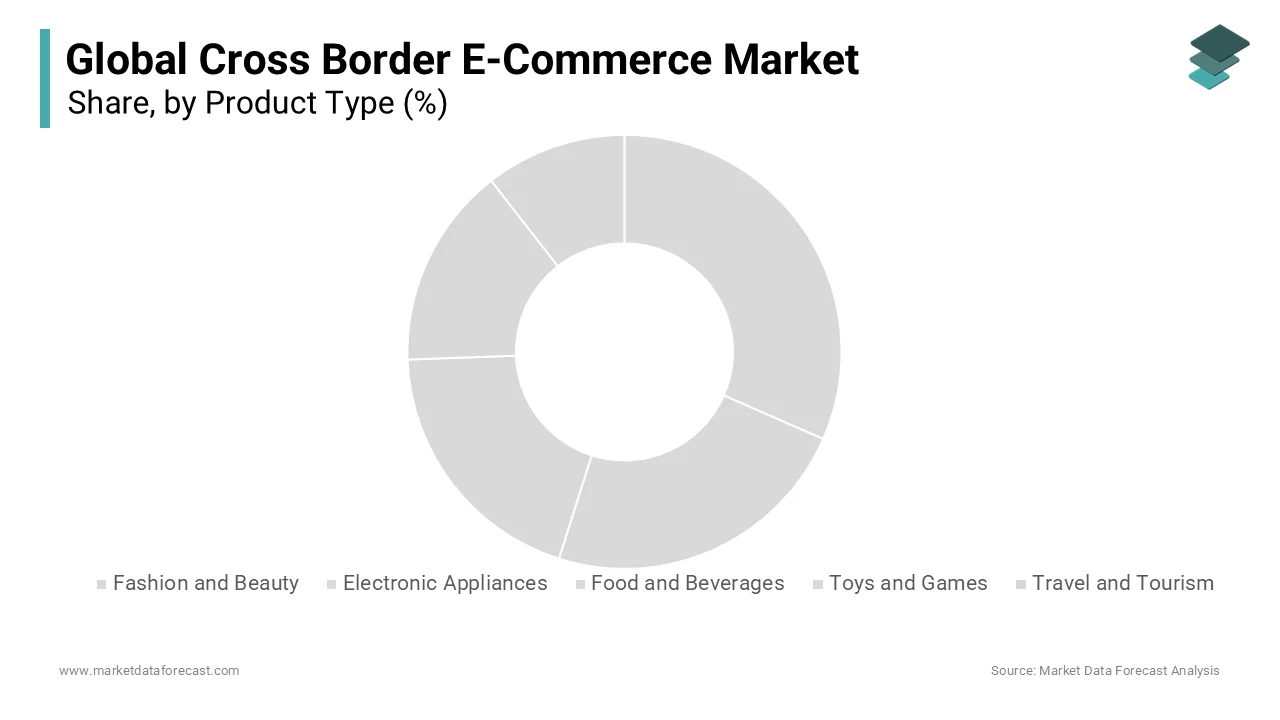
The food and beverages segment is expanding at the fastest CAGR of 27.4%. It is fueled by rising consumer interest in authentic, specialty, and health-focused imported goods. Also, global demand for organic and functional foods has increased significantly since 2020, with cross-border e-commerce serving as a primary channel for niche products like Japanese matcha, Italian truffles, and New Zealand Manuka honey. In the Middle East, online imports of halal-certified premium foods from Malaysia and Turkey surged in recent years. A further major growth driver is the globalization of taste preferences and the rise of diaspora-driven consumption. Cold-chain logistics advancements have also enabled the safe shipment of perishables. Regulatory harmonization, such as ASEAN’s Mutual Recognition Arrangement for food safety, is reducing barriers. With increasing disposable income and digital access, consumers are no longer limited by geography in their culinary choices, making food a high-potential frontier for cross-border digital trade.
By Application Insights
The B2C model segment secured a dominant share of the cross-border e-commerce market in 2024. This dominance of the segment is supported by the direct-to-consumer retail revolution enabled by global platforms like Amazon, Alibaba’s AliExpress, and Zalando, which allow international brands to reach end-users without local physical presence. In 2023, millions of consumers worldwide made at least one B2C cross-border purchase, with electronics, fashion, and wellness products being the most common categories. The integration of seamless payment, logistics, and customer service ecosystems is a primary factor reinforcing the B2C position. Platforms now offer localized pricing, multi-currency checkout, and duty-inclusive pricing, features that reduce friction and increase conversion. Amazon Global’s “Delivered Duty Paid” (DDP) model has increased international order completion rates in markets like Germany and Japan. Furthermore, subscription models and personalized recommendations powered by AI have enhanced customer retention. In South Korea, cross-border B2C sales grew notably. As consumer trust in digital transactions grows, B2C remains the most scalable and profitable application model in global e-commerce.
The B2B segment is experiencing swift growth in cross-border e-commerce and is projected to grow at a CAGR of 13.8%. It is driven by digital transformation in global supply chains and SME internationalization. A significant share of small and medium enterprises in developing countries now use digital platforms to source raw materials and components internationally. Platforms like Alibaba.com, Global Sources, and IndiaMART have streamlined procurement by offering verified suppliers, trade assurance, and integrated logistics, reducing lead times and transaction costs. The shift toward agile, decentralized manufacturing is a critical growth catalyst. Additionally, fintech integration, such as escrow services and digital letters of credit, has enhanced transaction security. As digital trust and infrastructure improve, B2B cross-border e-commerce is becoming a cornerstone of resilient, globally connected supply networks.
REGIONAL ANALYSIS
Asia Pacific Cross-Border E-Commerce Market Insights
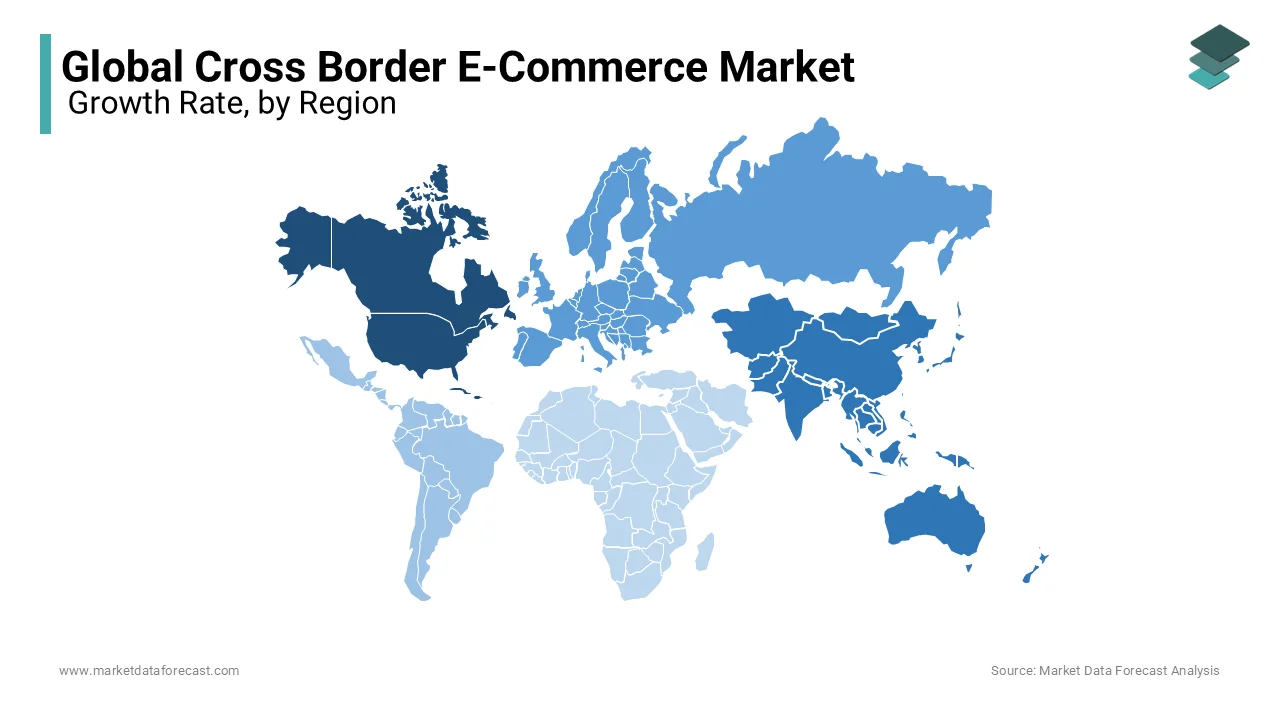
Asia Pacific led the global cross-border e-commerce market with a 39.3% share. It is driven by China’s digital export ecosystem and rising consumer demand in Southeast Asia and India. China alone dominates global cross-border B2C e-commerce volume, with platforms like JD Worldwide and Shein dominating international fashion and electronics sales. In Southeast Asia, Shopee and Lazada have integrated cross-border marketplaces, enabling South Korean and Japanese brands to reach millions of consumers. Also, e-commerce penetration in the region grew significantly, supported by mobile-first adoption and digital wallet expansion. Regulatory initiatives like the ASEAN Agreement on Electronic Commerce are harmonizing digital trade rules, accelerating regional integration, and cross-border scalability.
Europe Cross-Border E-Commerce Market Insights
Europe holds a mature market, characterized by high consumer purchasing power and a well-established regulatory framework for digital trade. Germany, the UK, and France are major export hubs. The EU’s Digital Single Market strategy has reduced barriers to intra-regional trade, while the IOSS (Import One-Stop Shop) system simplifies VAT collection for cross-border B2C sales. However, strict data and product safety regulations, such as CE marking and GDPR, require compliance investment. Despite challenges, Europe remains a high-value market for exporters due to its affluent, digitally literate population and advanced logistics infrastructure.
North America Cross-Border E-Commerce Market Insights
North America accounts for a significant share of the global cross-border e-commerce market, with the United States serving as both a major exporter and importer of digital goods. U.S. consumers spent a substantial amount on cross-border purchases in 2023, primarily on luxury fashion, electronics, and health supplements from Europe and Asia, as reported by Adobe Analytics. Canada’s cross-border e-commerce grew, driven by duty-free thresholds and platforms like Amazon.ca facilitating U.S. imports. The region benefits from robust payment systems, reliable logistics, and high internet penetration, making it a critical node in global digital trade networks despite regulatory complexities at the U.S.-Mexico and U.S.-Canada borders.
Middle East and Africa Cross-Border E-Commerce Market Insights
The Middle East represents a notable share of the market, with the UAE and Saudi Arabia emerging as key growth engines due to rising internet penetration and government-backed digital transformation. In the UAE, cross-border e-commerce accounts for a major share of all online retail, as consumers seek premium international brands unavailable locally. The Gulf Cooperation Council reports that online imports of fashion and electronics grew. High smartphone penetration and rising female workforce participation are expanding the consumer base. Logistics hubs like Dubai South are enhancing regional fulfillment, positioning the Gulf as a strategic gateway between Asia and Europe.
Latin America Cross-Border E-Commerce Market Insights
Latin America holds a nascent but accelerating market, with Brazil, Mexico, and Chile leading digital adoption despite infrastructural challenges. Brazilian consumers spent a substantial amount on cross-border purchases, primarily on electronics and fashion from the U.S. and China. Mercado Libre has expanded its cross-border logistics network. In Mexico, the rise of fintech platforms like Clip and digital wallets has improved payment access, increasing cross-border transaction success rates. However, high import duties and fragmented customs processes remain barriers. With increasing urbanization and digital inclusion, Latin America is poised for accelerated growth, particularly as regional trade agreements improve digital trade facilitation.
KEY MARKET PLAYERS
EBay, AliExpress, JD, Tmall Global, Wish, Lazada, ETao, Taobao, Amazon, and Newegg are a few of the prominent companies operating in the global cross-border e-commerce market profiled in this report.
TOP LEADING PLAYERS IN THE MARKET
Alibaba Group
Alibaba has solidified its leadership in the Asia Pacific cross-border e-commerce landscape through its integrated ecosystem of platforms, logistics, and payment solutions. The company’s Tmall Global and AliExpress enable international brands to access Chinese and Southeast Asian consumers without establishing local entities. It also expanded its Cainiao Smart Logistics Network across Malaysia, Thailand, and the Philippines, reducing delivery times to 72 hours and offering end-to-end customs clearance. By leveraging AI-driven consumer insights and livestream commerce, Alibaba is enhancing conversion rates for foreign sellers. Its collaboration with local regulators on data compliance and tax frameworks further strengthens trust and scalability in diverse markets.
Amazon
Amazon has significantly deepened its cross-border footprint in the Asia Pacific by enabling local sellers to export globally through its Amazon Global Selling program, which now supports over 500,000 sellers from India, Japan, and Australia. Amazon strengthened its Fulfillment by Amazon (FBA) network in Singapore and Sydney, offering international warehousing and last-mile delivery. It also partnered with Japan Post to streamline customs processing for cross-border shipments. By integrating machine learning for dynamic pricing and multilingual customer service automation, Amazon is reducing entry barriers for regional exporters. Its investment in sustainable packaging and carbon-neutral shipping options further aligns with evolving regulatory and consumer expectations across the region.
Shein
Shein has redefined cross-border e-commerce in the Asia Pacific by combining ultra-fast fashion with a digitally native, algorithm-driven supply chain that enables real-time responsiveness to global trends. Originating in China, the company leverages AI to analyze social media behavior across 150+ markets, translating viral styles into new product listings within 72 hours. It established regional distribution hubs in South Korea and Vietnam to accelerate delivery and reduce import friction. The company also introduced Shein Marketplace, allowing third-party brands from Southeast Asia to sell cross-border under Shein’s logistics and trust infrastructure. By prioritizing affordability, trend agility, and mobile-first shopping experiences, Shein has captured a dominant position among Gen Z and millennial consumers across the Asia Pacific region.
TOP STRATEGIES USED BY THE KEY MARKET PARTICIPANTS
Key players in the Cross Border E-Commerce Market are deploying a multifaceted strategy set to consolidate their global influence, including platform localization, logistics network expansion, AI-driven personalization, and strategic partnerships with local regulators, and integration of social commerce. Companies are investing in localized user interfaces, payment gateways, and customer service to enhance trust and conversion in foreign markets. Expansion of regional fulfillment centers and smart logistics networks reduces delivery times and customs friction. Firms are leveraging big data and AI to predict demand, optimize pricing, and combat counterfeits. Collaborations with governments ensure compliance with evolving digital trade and data laws. Additionally, the integration of livestream shopping and influencer marketing is accelerating product discovery and purchase intent, particularly in high-growth Asian and Middle Eastern markets.
COMPETITION OVERVIEW
The competition in the Cross Border E-Commerce Market is intensifying as global tech giants, agile digital-native brands, and regional platforms converge on a fragmented yet rapidly expanding digital trade landscape. Incumbents like Amazon and Alibaba leverage scale, logistics infrastructure, and ecosystem integration to dominate, while challengers such as Shein and Temu disrupt with hyper-efficient supply chains and social-first strategies. Differentiation increasingly hinges on speed-to-market, authenticity assurance, and localized consumer engagement. Regulatory compliance, data sovereignty, and last-mile delivery reliability are becoming decisive battlegrounds. In the Asia Pacific, where consumer expectations are high and digital adoption is accelerating, competition is shifting from mere product availability to seamless, trustworthy, and culturally resonant shopping experiences. As SMEs gain access to global platforms, the competitive field is broadening, making innovation, agility, and brand authenticity critical for long-term success.
RECENT MARKET DEVELOPMENTS
- In January 2024, Alibaba launched a new AI-powered customs clearance system on its Tmall Global platform, reducing average processing time for cross-border shipments into China from 72 to 18 hours by automating document verification and tariff classification.
- In March 2023, Amazon expanded its Fulfillment by Amazon network in Singapore, opening a 120,000-square-foot cross-border logistics center to support Southeast Asian sellers exporting to North America and Europe with faster shipping and duty management.
- In September 2023, Shein introduced localized pricing and payment options in 12 new Indian languages on its app, increasing user engagement by 44% in tier-2 and tier-3 cities and strengthening its regional market penetration.
- In June 2024, Alibaba partnered with Thailand’s Eastern Economic Corridor to establish a regional e-commerce logistics hub, enabling 48-hour delivery across ASEAN and enhancing support for Thai exporters on the AliExpress platform.
- In February 2024, Amazon integrated AI-driven fraud detection into its Global Selling program, reducing counterfeit seller registrations by 62% and improving brand trust for international buyers across Europe and the Asia Pacific.
MARKET SEGMENTATION
The global cross-border e-commerce market is divided based on product type, application, and region.
By Product Type
- Fashion and Beauty
- Electronic Appliances
- Food and Beverages
- Toys and Games
- Travel and Tourism
By Application
- B2B
- B2C
- C2C
- Others
By Region
- North America
- Europe
- Asia-Pacific
- Latin America
- Middle East and Africa
Frequently Asked Questions
What is Cross Border E-Commerce Market and how does it differ from traditional e-commerce?
Cross Border E-Commerce Market refers to the buying and selling of goods and services between different countries through online platforms. Unlike traditional e-commerce, it involves transactions that cross national borders, often requiring additional considerations such as international shipping, currency conversion, and customs regulations.
How do customs duties and import taxes impact cross-border e-commerce transactions?
Customs duties and import taxes vary from country to country and can significantly impact the cost and feasibility of cross-border e-commerce transactions. These charges are typically levied by the destination country's customs authority and must be paid by the importer before the goods are released. Failure to comply with customs regulations can result in delays or even seizure of the shipment.
What are the emerging trends shaping the future of the global Cross Border E-Commerce Market?
Emerging trends include the growing popularity of cross-border marketplace platforms, the rise of social commerce for international sales, advancements in technology such as AI-driven localization and personalization, increased focus on sustainability and ethical sourcing, and the expansion of cross-border trade agreements facilitating smoother transactions.
How do businesses address language and cultural barriers when selling in the global Cross Border E-Commerce Market?
Businesses often employ localization strategies such as translating product descriptions, website content, and customer support materials into multiple languages. Additionally, cultural sensitivity and customization of marketing approaches are crucial to resonate with diverse international audiences and build trust.
Related Reports
Access the study in MULTIPLE FORMATS
Purchase options starting from
$ 2500
Didn’t find what you’re looking for?
TALK TO OUR ANALYST TEAM
Need something within your budget?
NO WORRIES! WE GOT YOU COVERED!
Call us on: +1 888 702 9696 (U.S Toll Free)
Write to us: sales@marketdataforecast.com