Europe Air Filters Market Size, Share, Trends & Growth Forecast Report – Segmented By Type, End User, and Country (UK, France, Spain, Germany, Italy, Russia, Sweden, Denmark, Switzerland, Netherlands, Turkey, Czech Republic & Rest of Europe), Industry Analysis From 2026 to 2034
Europe Air Filters Market Report Summary
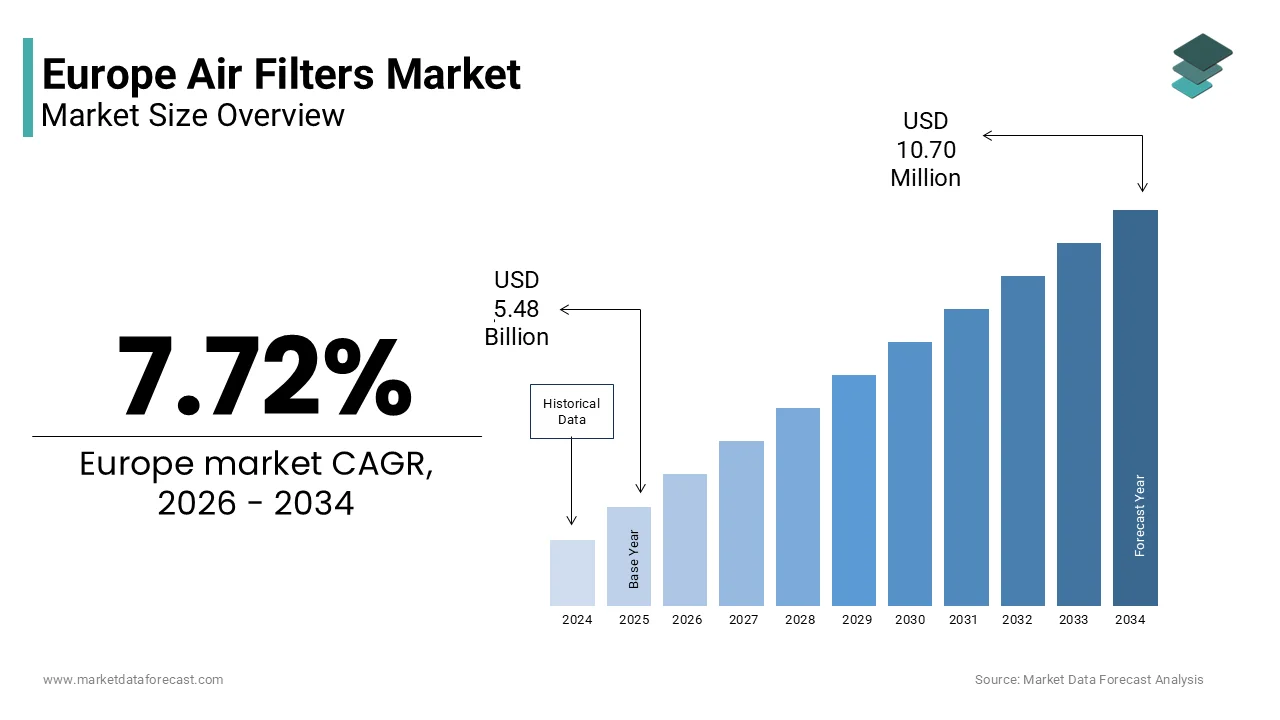
The Europe air filters market was valued at USD 5.48 billion in 2025 and is estimated to reach USD 5.90 billion in 2026, further projected to reach USD 10.70 billion by 2034, growing at a CAGR of 7.72% during the forecast period. Market growth is driven by increasing concerns over air quality, stringent environmental regulations, and rising demand for advanced filtration systems across industrial, commercial, and residential sectors. Expansion of manufacturing activities, growth in HVAC installations, and heightened focus on workplace safety standards are accelerating adoption of high efficiency air filtration solutions. In addition, technological advancements in filtration media, energy efficient systems, and smart monitoring capabilities are supporting long term market expansion across Europe.
Key Market Trends
- Rising demand for HEPA filters due to their high particle removal efficiency and suitability for healthcare, cleanroom, and industrial environments.
- Increasing regulatory enforcement related to emissions control and indoor air quality standards across European countries.
- Growing adoption of advanced filtration technologies in pharmaceutical, food processing, and electronics manufacturing industries.
- Integration of energy efficient and low pressure drop filter designs to reduce operational costs in HVAC systems.
- Expansion of industrial automation and production facilities driving sustained demand for air filtration systems.
Segmental Insights
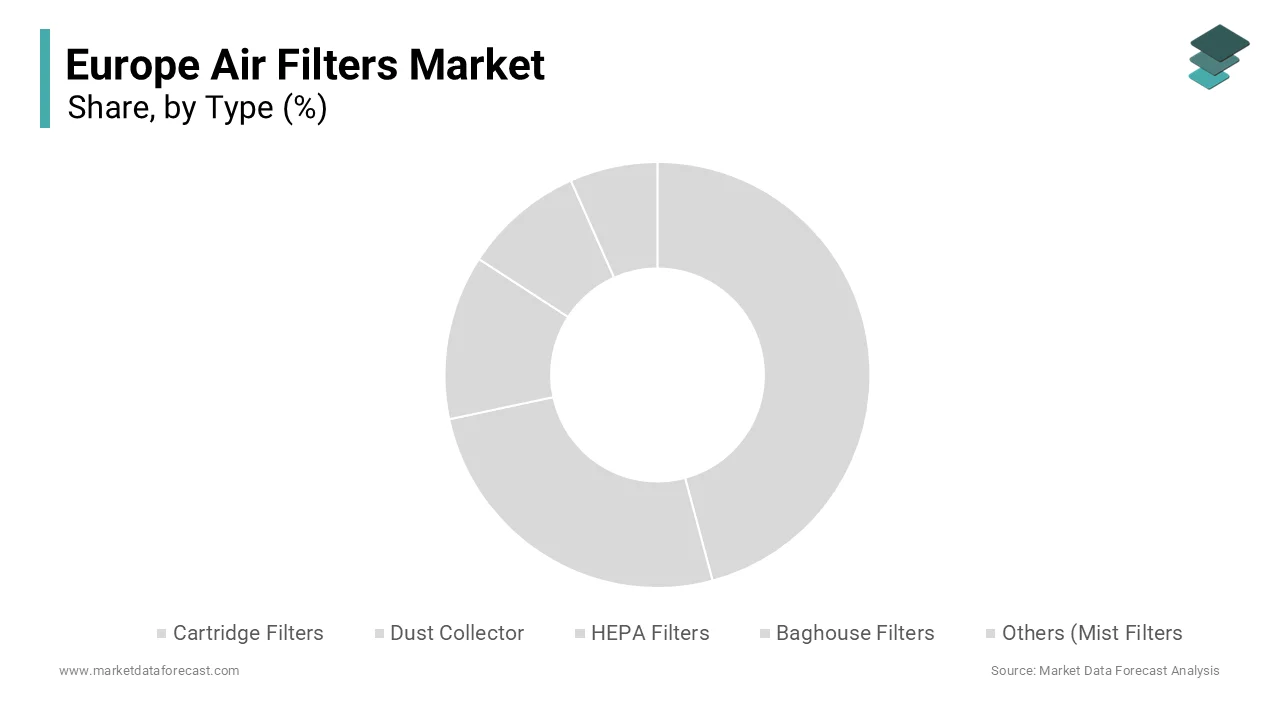
- Based on type, the HEPA filters segment accounted for 34.8% of the Europe air filters market share in 2025. The segment’s dominance is attributed to its superior filtration performance, ability to capture fine particulate matter, and widespread usage in critical applications requiring clean air environments.
- Based on end user, the industrial segment led the Europe air filters market with a 38.7% share in 2025. Growth in this segment is supported by increasing manufacturing output, stricter emission control regulations, and the need to maintain air quality standards in industrial facilities.
Regional Insights
- Western Europe remains the leading region due to strong regulatory frameworks, high industrialization levels, and advanced healthcare infrastructure. Germany, France, and the United Kingdom are major contributors supported by manufacturing expansion, automotive production, and environmental compliance mandates.
- Eastern Europe is witnessing steady growth driven by industrial development and infrastructure investments.
Competitive Landscape
The Europe air filters market is moderately consolidated with the presence of global filtration technology leaders and regional manufacturers. Companies are focusing on product innovation, sustainable filtration materials, and strategic partnerships to strengthen their market position. Key players operating in the Europe air filters market include Camfil Group, Mann+Hummel, Parker Hannifin Corporation, Donaldson Company Inc., Freudenberg Group, Bosch Rexroth AG, ABB Ltd., Alco Filters Pentair, Sogefi Group, Filtration Group Corporation, 3M Company, and Eaton Corporation PLC.
Europe Air Filters Market Size
The Europe air filters market size was valued at USD 5.48 billion in 2025 and is projected to reach USD 10.70 billion by 2034 from USD 5.90 billion in 2026, growing at a CAGR of 7.72%.
An air filter is a device used to remove airborne contaminants, including dust, pollen, smoke, bacteria, and gaseous pollutants, from the air to improve air quality and protect sensitive equipment. These systems range from simple panel filters in HVAC units to high efficiency particulate air (HEPA) and activated carbon filters used in hospitals, cleanrooms, and automotive cabins. The market is shaped by stringent EU environmental and occupational health regulations, rising urban air pollution, and growing public awareness of respiratory health. According to the European Environment Agency, the vast majority of people living in European urban centers are breathing air that fails to meet the health-based air quality standards recommended by global health authorities. Data from Eurostat indicates that a significant portion of the European population resides in urbanized areas, where the combination of heavy vehicle traffic and industrial operations leads to a higher concentration of atmospheric pollutants. Furthermore, health monitoring organizations have observed that chronic respiratory issues are widespread across Europe, which has led to an increased necessity and consumer demand for technologies that improve indoor air quality. This confluence of regulatory, demographic, and health factors positions air filtration not as a luxury but as a critical public health infrastructure component.
MARKET DRIVERS
Escalating Urban Air Pollution and Public Health Imperatives
Deteriorating urban air quality across the region is a key driver for air filter adoption in both public and private spaces. This fuels the growth of the Europe air filters market. The European Environment Agency reports that exposure to PM2.5 above WHO guidelines continues to cause significant premature mortality in the EU, though deaths have decreased compared to previous years. Cities like Paris, Milan, and Warsaw regularly exceed WHO annual PM2.5 limits of 5 micrograms per cubic meter, with winter inversions trapping pollutants at ground level. In response, municipalities are mandating enhanced filtration in public buildings. While Germany promotes improved school ventilation, a universal mandate requiring specific high-efficiency air filters (like MERV 13) in all classrooms is not documented as a 2024 city-wide ordinance for Berlin. The French health authority continues to update, strengthen, and enforce stringent air filtration requirements in medical facilities, requiring specialized, high-efficiency systems in high-risk zones. These regulatory shifts, coupled with rising asthma and allergy prevalence drive institutional procurement and heighten consumer willingness to invest in home air purifiers, transforming filtration from optional to essential.
Stringent EU Regulatory Frameworks on Indoor Air Quality and Energy Efficiency
European legislation increasingly links air filtration to broader climate and health policy objectives, which compels upgrades across multiple sectors, and contributes to the expansion of the Europe air filters market. The revised European Energy Performance of Buildings Directive (2024) requires that new and significantly renovated non-residential buildings install advanced monitoring and control devices to maintain high,,, healthy indoor air quality standards while maximizing energy efficiency. Simultaneously, the EU Ecolabel criteria for air cleaners now require verified removal efficiency for ultrafine particles and low ozone emission. Upcoming Euro 7 regulations, set for implementation starting in 2027, will introduce stricter emission limits for cars and heavy-duty vehicles, influencing the automotive industry to upgrade cabin air filtration technologies to further improve air quality. Implementation of stringent European green-deal, energy-efficiency, and air-quality regulations is expected to drive increased demand for advanced air filtration materials in both the building and automotive sectors. This regulatory ecosystem not only expands market volume but also elevates technical specifications, favoring innovators in nanofiber and antimicrobial filtration technologies.
MARKET RESTRAINTS
Volatility in Raw Material Costs and Supply Chain Disruptions
Persistent pressure from fluctuating prices of key inputs such as melt-blown polypropylene, activated carbon, and specialty fibers is limiting the growth of the Europe air filters market. Melt-blown resin prices experienced significant volatility in 2022 due to post-pandemic petrochemical shortages and rising energy costs in Europe, according to Platts. Activated carbon, particularly that sourced from Southeast Asian coconut shells, saw elevated freight and raw material costs in 2023, driven by logistical constraints and market demand. These fluctuations squeeze margins for mid tier manufacturers lacking vertical integration or hedging mechanisms. Furthermore, geopolitical tensions and trade barriers, such as anti dumping duties on Chinese filter media, complicate sourcing strategies. Furthermore, filtration manufacturers have continued to face supply chain challenges and input cost pressures, leading to potential delays in product launches, a trend observed across the broader manufacturing sector. This volatility impedes long term pricing stability and discourages investment in next generation filtration R&D among resource constrained players.
Fragmented Standards and Certification Complexity Across Member States
Significant disparities in testing protocols, labeling requirements, and performance validation persist across national markets create compliance burdens for manufacturers, and thereby impede the expansion of the Europe air filters market. EN 1822 governs HEPA filters, and EN 779 addresses general ventilation filters. However, countries like Germany (via VDI 6022) and France (via NF X43 400) impose additional national certifications for use in sensitive environments such as hospitals and laboratories. Diverse testing protocols for microbial resistance remain a challenge for manufacturers seeking uniform product approval across European markets, despite ongoing efforts to standardize efficacy requirements. Moreover, the lack of standardized metrics for emerging threats like wildfire smoke or nanoplastics leaves performance claims open to interpretation. Furthermore, market oversight in Germany indicates that a portion of air filtration products sourced from international markets fails to perform at the levels claimed by their manufacturers when subjected to rigorous regional testing. This regulatory fragmentation increases time to market, inflates certification costs, and erodes consumer trust, particularly in the booming e commerce segment where verification is limited.
MARKET OPPORTUNITIES
Integration of Smart Monitoring and IoT Enabled Filtration Systems
The convergence of air filtration with digital technology offers a transformative growth avenue for the Europe air filters market. Manufacturers are embedding sensors and connectivity into filters to provide real time air quality feedback, predictive maintenance alerts, and automated performance adjustment. Companies like Camfil and Mann+Hummel now offer smart HVAC filters that sync with building management systems to optimize airflow based on occupancy and pollution levels. According to various sources, a growing portion of new commercial construction in Western Europe is adopting IoT-enabled air quality monitoring systems to improve occupant health and comply with stricter environmental standards. In the residential sector, brands such as Philips and Dyson integrate app based dashboards showing PM2.5, VOC, and humidity data, fostering user engagement and timely filter replacement. This data driven approach not only enhances health outcomes but also creates recurring revenue through subscription based filter delivery services. As 5G and edge computing expand, these systems will evolve toward autonomous environmental regulation, positioning smart filtration as a cornerstone of healthy, responsive built environments.
Expansion of Circular Economy Models for Filter Recycling and Reuse
The shift toward sustainability is driving innovation in end-of-life management for air filters, a trend which is predicted to propel the expansion of the Europe air filters market. These products were traditionally treated as single-use waste. The EU’s Circular Economy Action Plan explicitly targets filtration media for recyclability improvements by 2030. In response, companies like Freudenberg Filtration Technologies have launched take back programs where used HVAC filters are disassembled, with metal frames recycled and synthetic media repurposed into acoustic insulation. Fraunhofer researchers are actively developing methods to improve the recycling rates of various composite materials and nonwoven filters to advance the circular economy. Additionally, startups such as FilterCycle in the Netherlands use chemical washing to regenerate HEPA media for non critical industrial applications. Extended Producer Responsibility schemes now being piloted in France and Sweden incentivize design for disassembly and use of mono material components. These initiatives reduce landfill burden, lower carbon footprints, and align with corporate net zero commitments—transforming filters from disposable consumables into managed assets within closed loop systems.
MARKET CHALLENGES
Intensifying Competition from Low Cost Asian Manufacturers
Air filter producers in the region face mounting pressure from Asian competitors offering comparable products at significantly lower prices, which in turn slows the growth of the Europe air filters market. European Commission data indicates that imports of air filtration equipment from key Asian manufacturing hubs have grown, with competitive pricing often below European production costs. While many meet basic EN standards, concerns persist about long term durability and absence of antimicrobial treatments. Research on air purifier efficiency indicates that non-standardized or lower-cost filters frequently suffer from performance degradation, losing filtering capacity faster than high-quality counterparts after prolonged use. Nevertheless, cost conscious buyers in retail and light industrial segments increasingly opt for these alternatives, especially amid economic uncertainty. This price competition forces European manufacturers to justify premiums through superior validation, service support, and sustainability credentials, challenging for SMEs without robust marketing or R&D budgets and threatening the viability of localized production.
Technological Gaps in Addressing Emerging Airborne Threats
Current filtration technologies struggle to effectively capture or neutralize novel airborne hazards, which hinders the expansion of the Europe air filters market. These hazards include engineered nanoparticles, microplastics, and antibiotic-resistant genes. Recent environmental research indicates that urban air contains significant amounts of fibrous, inhalable microplastics, which pose challenges for conventional, standard-rated air filtration systems. Similarly, wildfire smoke from Southern Europe and Canada introduces ultrafine carbon particulates that challenge conventional media. Existing HEPA filters capture particles but do not destroy biological agents, risking re aerosolization during handling. While photocatalytic oxidation and plasma technologies show promise, they remain costly and unproven at scale. Furthermore, discussions at respiratory health conferences have highlighted that air represents a significant, under-regulated pathway for human exposure to microplastics, driving calls for more advanced, comprehensive air quality solutions. This capability gap undermines consumer confidence and exposes vulnerabilities in critical settings like hospitals and schools, demanding urgent cross disciplinary innovation to future proof air filtration against evolving environmental and health threats.
REPORT COVERAGE
| REPORT METRIC | DETAILS |
| Market Size Available | 2025 to 2034 |
| Base Year | 2025 |
| Forecast Period | 2026 to 2034 |
| CAGR | 7.72% |
| Segments Covered | By Type, End User, and Region |
| Various Analyses Covered | Global, Regional, & Country Level Analysis; Segment-Level Analysis; DROC, PESTLE Analysis; Porter’s Five Forces Analysis; Competitive Landscape; Analyst Overview of Investment Opportunities |
| Regions Covered | UK, France, Spain, Germany, Italy, Russia, Sweden, Denmark, Switzerland, Netherlands, Turkey, and the Czech Republic |
| Market Leaders Profiled | Camfil Group, Mann+Hummel, Parker Hannifin Corporation, Donaldson Company Inc., Freudenberg Group, Bosch Rexroth AG, ABB Ltd., Alco Filters under Pentair, Sogefi Group, Filtration Group Corporation, 3M Company, and Eaton Corporation PLC |
SEGMENTAL ANALYSIS
By Type Insights
The HEPA filters segment held the majority share of 34.8% of the Europe air filters market in 2025. The supremacy of the segment is attributed to stringent health mandates in sensitive environments and rising public awareness of airborne pathogens. HEPA filtration has become non negotiable in European healthcare settings due to infection control protocols. The ECDC recommends high-efficiency air filtration to reduce airborne pathogen risks in critical healthcare areas, a practice aligned with European filtration standards. European health authorities are increasingly prioritizing advanced filtration systems in healthcare and care facilities to enhance infection control against respiratory diseases. Several European countries, including Germany, have implemented, or provided funding for, air quality improvements in facilities for vulnerable individuals to reduce infection risks. Additionally, several European schools have adopted air purification technologies, aiming to improve both respiratory health and cognitive environments for students. This institutional adoption, backed by public funding and legal mandates, creates a stable, high value demand stream that far exceeds residential or light commercial use. Beyond institutions, European households are increasingly investing in HEPA air purifiers due to rising allergy and asthma prevalence. The European Academy of Allergy and Clinical Immunology reports that over a hundred million people in Europe suffer from chronic allergic diseases, with climate change significantly lengthening the pollen season. According to industry market analysis, the demand for air purifiers in Europe remains high due to increased health consciousness regarding poor air quality and allergens. Brands like Philips and Dyson emphasize medical grade filtration in marketing, citing independent validation from bodies like TÜV Rheinland. Unlike industrial filters judged on dust holding capacity, HEPA units are valued for health outcomes, enabling premium pricing and recurring filter replacement revenue. This dual pull from public health policy and personal wellness cements HEPA as the cornerstone of Europe’s air filtration landscape.
The cartridge filters segment is on the rise and is expected to be the fastest growing segment in the market by witnessing a CAGR of 7.8% during the forecast period. This growth is driven by adoption in advanced manufacturing and additive production, as well as modularity and energy efficiency in retrofit applications. Cartridge filters are gaining traction in high precision industries such as metal 3D printing, pharmaceutical compounding, and battery electrode production, where fine particulate control is critical. In metal additive manufacturing, processes like selective laser melting generate nanoparticles below 1 micron that standard bag filters cannot capture efficiently. According to research, new metal 3D printer installations in Germany and Italy are increasingly featuring integrated cartridge filtration systems with advanced media. These filters offer higher surface area, lower pressure drop, and longer service life compared to traditional alternatives. The European Battery Alliance further accelerates demand, as cathode production facilities require ISO Class 8 cleanrooms maintained by high efficiency cartridge units. This shift toward miniaturized, high value manufacturing creates a premium niche where performance justifies investment. Industrial facilities are replacing aging baghouse systems with modular cartridge collectors to reduce energy consumption and maintenance costs. Furthermore, studies on industrial air pollution control indicate that cartridge filtration systems often demonstrate superior energy efficiency compared to equivalent baghouses due to optimized airflow geometry. Companies like Bosch and Siemens have retrofitted assembly plants across Central Europe with compact cartridge units that free up floor space while meeting EN 1834 emission limits. Additionally, quick change filter cartridges minimize downtime during replacement, critical in continuous production lines. As the EU’s Energy Efficiency Directive tightens industrial energy benchmarks, this operational advantage drives rapid adoption. Manufacturers such as Camfil and Nederman now offer IoT enabled cartridges with pressure sensors that signal end of life, enabling predictive maintenance and reducing unplanned stoppages, further enhancing total cost of ownership and accelerating market penetration.
By End User Insights
The industrial segment dominated the Europe air filters market and accounted for a 38.7% share in 2025. The dominance of the segment is driven by regulatory compliance needs and process critical filtration demands across heavy manufacturing. European industrial facilities must comply with the EU Industrial Emissions Directive, which sets strict limits on particulate matter released from combustion, material handling, and processing operations. Industries such as cement, steel, and power generation rely on high capacity baghouse and cartridge systems to meet BAT (Best Available Techniques) reference documents. European industrial emission rules necessitate that a vast number of industrial installations and large combustion plants adhere to strict environmental standards, requiring improved monitoring and advanced pollution control technology. Recent updates to Germany's Federal Immission Control Act are accelerating permitting processes for industrial modernization projects, including those aimed at improving emission controls. The Industrial Emissions Directive requires national authorities to enforce strict penalties for non-compliance, which can include heavy fines or the suspension of operations for installations that fail to meet emission standards. This regulatory backbone ensures consistent demand for durable, high throughput filters regardless of economic cycles, anchoring the industrial segment as the market’s structural core. Beyond compliance, air filtration is essential for product quality in sectors like automotive painting, food processing, and chemical synthesis. In automotive plants, even submicron dust can cause paint defects, costing thousands per vehicle in rework. Automotive suppliers are increasingly expected to adhere to high cleanliness standards, such as ISO cleanroom certifications, for specific assembly operations as part of quality management requirements. Similarly, food and beverage producers use hydrophobic filters to protect compressed air lines from microbial contamination, as mandated by EU Regulation 852/2004 on food hygiene. These applications treat filters not as expendables but as process enablers, justifying investment in premium media and smart monitoring systems that prevent costly production failures.
The healthcare end user segment is expected to exhibit a noteworthy CAGR of 9.2% from 2026 to 2034 owing to post pandemic infrastructure modernization, and rise of outpatient and specialized treatment centers. European governments are systematically upgrading hospital ventilation systems to prevent future pathogen outbreaks. European healthcare systems are leveraging EU Recovery and Resilience Facility funds to modernize infrastructure and improve energy efficiency, including investments in enhanced ventilation and air filtration systems. Following the COVID-19 pandemic, Spanish public hospitals are updating infection control protocols, which includes retrofitting and expanding negative pressure isolation capacity. Similarly, Swedish healthcare providers are increasingly adopting high-efficiency particle filtration in new and renovated clinical spaces, aligned with updated environmental health guidelines. These investments are not temporary but structural, embedding high grade filtration into long term healthcare infrastructure planning. Unlike cyclical industrial demand, this public health driven expansion offers predictable, decade long procurement pipelines. Beyond hospitals, the proliferation of day surgery clinics, oncology centers, and fertility labs is creating new filtration demand. These facilities require ultra clean environments to protect immunocompromised patients, often exceeding hospital standards. The rise in biologic treatments has driven growth in outpatient care facilities, with increasing adoption of cleanroom standards for handling and administration. IVF laboratories across Europe operate under strict regulatory standards for air quality to ensure optimal conditions for embryo development. This decentralization of advanced care shifts filtration demand from centralized hospitals to distributed specialty sites, multiplying the number of installations and driving innovation in compact, quiet, and energy efficient medical grade units tailored to smaller footprints.
REGIONAL ANALYSIS
Germany Air Filters Market Analysis
Germany led the Europe air filters market and captured a 26.5% share in 2025. This position of the German market is supported by its massive automotive manufacturing base and stringent industrial emission standards. The country’s market has a dual demand structure where original equipment manufacturers require high-performance cabin and engine filters for vehicles, while heavy industries invest heavily in dust collection systems to comply with federal regulations. The primary driver is the automotive sector. The automotive sector, which maintains high levels of passenger car production, continues to provide a steady and significant demand for various filtration components across the country. Furthermore, the implementation of the Federal Immission Control Act has forced power plants and cement factories to upgrade their filtration infrastructure, boosting sales of industrial bag and cartridge filters. According to reports from the German Engineering Federation, investments in air pollution control technologies have grown as companies work to comply with increasingly strict limits on particulate matter. The country also leads in the adoption of HEPA filters for HVAC systems in commercial buildings, fueled by heightened post-pandemic awareness of indoor air quality. The presence of global filtration giants headquartered in Germany ensures continuous innovation in nanofiber media and smart monitoring systems, solidifying its position as the technological and volume hub for the continent.
France Air Filters Market Analysis
France was the second largest player in the Europe air filters market and captured a 18.5% share in 2025. The demand for air filters in France is fuelled by its aggressive national policies targeting indoor air quality improvement and nuclear energy maintenance. The market reveals strong regulatory intervention, particularly the mandatory installation of high-efficiency air purification systems in sensitive public buildings such as schools and childcare facilities. A major growth factor is the Grenelle II Law and subsequent decrees which require regular monitoring of indoor air quality, prompting facility managers to replace outdated filtration units with advanced HEPA and carbon-based solutions. Data from the French Agency for Ecological Transition indicates that a vast number of public buildings have undergone environmental upgrades to comply with modern air quality and energy regulations. Additionally, the nuclear energy sector, which provides the vast majority of the nation's electricity, relies on specialized high-performance air filters to meet rigorous safety standards, creating a highly technical and valuable market segment. According to regulatory observations, maintenance activities for essential systems in nuclear facilities have increased as the industry focuses on ensuring the long-term safety and operational life of existing plants. The automotive industry also contributes significantly, with Renault and Stellantis driving demand for cabin air filters that remove allergens and pollutants. As per sources, the residential HVAC retrofit landscape is expanding rapidly as homeowners seek protection against seasonal pollen and urban smog, ensuring sustained growth across all filtration categories.
United Kingdom Air Filters Market Analysis
The United Kingdom holds a major share in the Europe air filters market due to its status as a dynamic hub for advanced filtration solutions driven by health consciousness and net-zero commitments. The market status in this region shows a shift toward smart filtration technologies integrated into building management systems and electric vehicle platforms. A key driver is the UK's Clean Air Strategy. According to the UK's Clean Air Strategy, the government has set ambitious legally binding targets to reduce particulate matter concentrations, requiring industrial operators and transport authorities to implement advanced filtration and emission-control technologies. Statistics from environmental authorities indicate that stricter enforcement of industrial emission standards has led to increased penalties for non-compliance, encouraging businesses to replace outdated filtration systems with high-efficiency alternatives. The rapid electrification of the bus and taxi fleets in major cities like London has also created new specifications for cabin filters that must handle different airflow dynamics while capturing ultrafine particles. According to data from building engineering associations, the commercial ventilation market has seen steady growth, driven by new regulatory requirements for improved air exchange and hygiene standards in offices and retail environments. Furthermore, the rising prevalence of respiratory conditions has spurred consumer demand for domestic air purifiers. This combination of regulatory pressure and health-driven consumer behavior ensures the UK remains a critical growth engine.
Italy Air Filters Market Analysis
Italy is moving ahead steadfastly in the Europe air filters market. It is renowned for its significant demand stemming from the preservation of cultural heritage and a robust luxury automotive sector. The market status here is unique due to the specific requirement for high-efficiency molecular filters in museums and historical sites to protect artifacts from acid rain and urban pollution, a niche where Italian engineers excel. The primary driver is the severe air quality issues in the Po Valley, one of the most polluted areas in Europe, which has compelled regional governments to enforce strict limits on industrial emissions and promote indoor air purification. Data from the Italian National Institute for Environmental Protection and Research indicates that air quality levels in several regions often surpass international standards, leading to the implementation of measures that require industrial facilities to upgrade their filtration and emission-control systems. Additionally, the presence of Ferrari, Lamborghini, and Maserati drives demand for premium engine and cabin filters that offer superior performance and durability. As per reports from industrial federations, the filtration sector has benefited from a growing focus on efficiency, supported by government incentives that encourage the installation of systems designed to reduce energy consumption and environmental impact. The tourism industry also plays a role, with hotels investing in advanced air cleaning systems to ensure guest safety and comfort. This blend of cultural preservation, environmental necessity, and high-end manufacturing sustains Italy's prominent position in the regional market.
Spain Air Filters Market Analysis
Spain is anticipated to expand notably in the Europe air filters market over the forecast period by functioning as a key growth market driven by tourism infrastructure development and increasing awareness of Mediterranean air quality challenges. The market status in this region is defined by a surge in installations within the hospitality and commercial real estate sectors, where air quality is becoming a competitive differentiator for attracting visitors and tenants. A major driving factor is the frequent occurrence of dust intrusions from the Sahara Desert, which deposit high levels of coarse and fine particulates across the peninsula, necessitating robust pre-filtration and final filtration stages in HVAC systems. Statistics from the Spanish State Meteorological Agency confirm that frequent dust events in the region significantly impact air quality, leading building managers to replace and upgrade air filters more often than in other parts of the continent. The renewable energy sector also contributes, as wind turbine manufacturers based in Spain require specialized inlet air filters to protect generators from abrasive sand and salt mist in coastal installations. Statistics from the Spanish State Meteorological Agency confirm that frequent dust events in the region significantly impact air quality, leading building managers to replace and upgrade air filters more often than in other parts of the continent. The construction boom in coastal regions for residential and tourist purposes further amplifies demand for fresh air handling units equipped with multi-stage filtration. This convergence of climatic realities and economic expansion positions Spain as a vital and evolving market for air filtration solutions.
COMPETITIVE LANDSCAPE
The Europe air filters market features intense competition among global engineering firms, specialized European manufacturers, and cost driven Asian exporters. Leading players differentiate through technological innovation, regulatory compliance, and sustainability credentials, particularly in high value segments like healthcare and semiconductors. Mid tier companies focus on niche industrial applications with customized solutions, while budget competitors target residential and light commercial sectors with standardized products. Regulatory complexity under EU directives creates barriers to entry but also raises compliance costs for all participants. The market rewards agility in adapting to evolving standards such as Euro 7 and revised EPBD guidelines. Digitalization is reshaping customer relationships, with data driven services becoming as critical as product performance. Despite price pressure from imports, European manufacturers maintain advantage through certification rigor, technical support, and alignment with the region’s stringent environmental and health policies.
KEY MARKET PLAYERS
Some of the notable key players in the Europe air filters market are
- Camfil Group
- Mann+Hummel
- Parker Hannifin Corporation
- Donaldson Company, Inc.
- Freudenberg Group
- Bosch Rexroth AG
- ABB Ltd.
- Alco Filters (Pentair)
- Sogefi Group
- Filtration Group Corporation
- 3M Company
- Eaton Corporation PLC
Top Players in the Market
- Headquartered in Sweden, Camfil is a global leader in air filtration and clean air solutions with a strong footprint across Europe. The company supplies advanced HEPA, ULPA, and molecular filters to healthcare, semiconductor, and commercial building sectors worldwide. Camfil emphasizes energy efficiency and sustainability, designing filters that reduce HVAC energy consumption. It also expanded its IoT enabled monitoring platform, Camfil Insight, which tracks filter performance in real time across thousands of European buildings. These actions reinforce Camfil’s position as an innovator in health focused, data driven air quality management.
- Based in Germany, MANN+HUMMEL is a major player in both industrial and automotive air filtration, serving OEMs and aftermarket channels globally. The company offers cabin air filters with multi layer media that capture ultrafine particles and allergens, alongside industrial dust collectors for manufacturing facilities. It also partnered with Siemens to integrate smart sensors into HVAC filters for predictive maintenance in commercial buildings. These initiatives align with EU circular economy goals and strengthen the company’s reputation for engineering excellence and environmental responsibility.
- Although US headquartered, Donaldson maintains significant manufacturing and R&D operations in the UK, Germany, and Italy, making it a key contributor to the Europe air filters market. The company specializes in high efficiency cartridge and dust collector filters for heavy industry, power generation, and gas turbines. It also launched its “Filter Life Cycle Assessment” tool, helping customers quantify carbon savings from extended filter life and reduced energy use. These moves enhance service responsiveness and support European decarbonization mandates, solidifying Donaldson’s role as a trusted partner in mission critical filtration applications.
Top Strategies Used by the Key Market Participants
Key players in the Europe air filters market are prioritizing the development of low energy and high efficiency filtration media to align with EU building and industrial decarbonization targets. They are integrating IoT sensors and digital platforms for real time performance monitoring and predictive maintenance. Companies are investing in bio based and recyclable materials to meet circular economy requirements and reduce carbon footprints. Strategic partnerships with HVAC and automotive OEMs ensure early integration into system design. Additionally, manufacturers are expanding local production capacity within Europe to shorten supply chains, comply with green public procurement rules, and respond faster to regulatory changes across member states.
MARKET SEGMENTATION
This research report on the European air filters market has been segmented and sub-segmented based on categories.
By Type
- Cartridge Filters
- Dust Collector
- HEPA Filters
- Baghouse Filters
- Others (Mist Filters and others)
By End User
- Residential
- Commercial
- Industrial
- Automotive
- Chemical
- Gas Turbines
- Semiconductors
- Pharmaceuticals
- Healthcare
- Others (Food & Beverage and others
By Country
- UK
- France
- Spain
- Germany
- Italy
- Russia
- Sweden
- Denmark
- Switzerland
- Netherlands
- Turkey
- Czech Republic
- Rest of Europe
Frequently Asked Questions
1. What is the Europe air filters market?
The Europe air filters market refers to the manufacturing, distribution, and application of air filtration systems used to remove contaminants, dust, and pollutants from air across residential, commercial, automotive, and industrial sectors.
2. What are air filters used for?
Air filters are used to improve indoor air quality, protect equipment, enhance engine performance, and comply with environmental and health regulations.
3. What are the main types of air filters available in Europe?
Key types include HEPA filters, activated carbon filters, electrostatic filters, fiberglass filters, pleated filters, and panel filters.
4. What factors are driving growth in the Europe air filters market?
Growth is driven by stringent air quality regulations, increasing awareness of health and hygiene, expansion of HVAC systems, industrial emissions control requirements, and growth in the automotive sector.
5. Which industries are major end users of air filters in Europe?
Major end users include automotive, manufacturing, healthcare, pharmaceuticals, food and beverages, residential housing, and commercial buildings.
6. Which countries are leading in the Europe air filters market?
Germany, France, the United Kingdom, Italy, and Spain are significant markets due to strong industrial activity and strict environmental standards.
7. How do EU environmental regulations influence the market?
European Union policies on emissions control, indoor air quality standards, and energy efficiency requirements encourage the adoption of advanced filtration technologies.
8. What role does the HVAC sector play in market demand?
Heating, ventilation, and air conditioning systems account for a substantial share of air filter demand in residential and commercial buildings.
9. What challenges does the Europe air filters market face?
Challenges include raw material cost fluctuations, replacement cycle variability, competition from low cost imports, and the need for high performance filtration solutions.
10. Who are the key players in the Europe air filters market?
Major companies include Camfil Group, Mann+Hummel, Parker Hannifin, Freudenberg Group, Donaldson Company, and other regional manufacturers.
Related Reports
Access the study in MULTIPLE FORMATS
Purchase options starting from
$ 2000
Didn’t find what you’re looking for?
TALK TO OUR ANALYST TEAM
Need something within your budget?
NO WORRIES! WE GOT YOU COVERED!
Call us on: +1 888 702 9696 (U.S Toll Free)
Write to us: sales@marketdataforecast.com