Europe Boat Market Size, Share, Trends & Growth Forecast Report By Type, By Size, By End User, and By Country (Italy, France, Spain, United Kingdom, Germany & Rest of Europe) – Industry Analysis and Forecast, 2026 to 2034
Europe Boat Market Summary
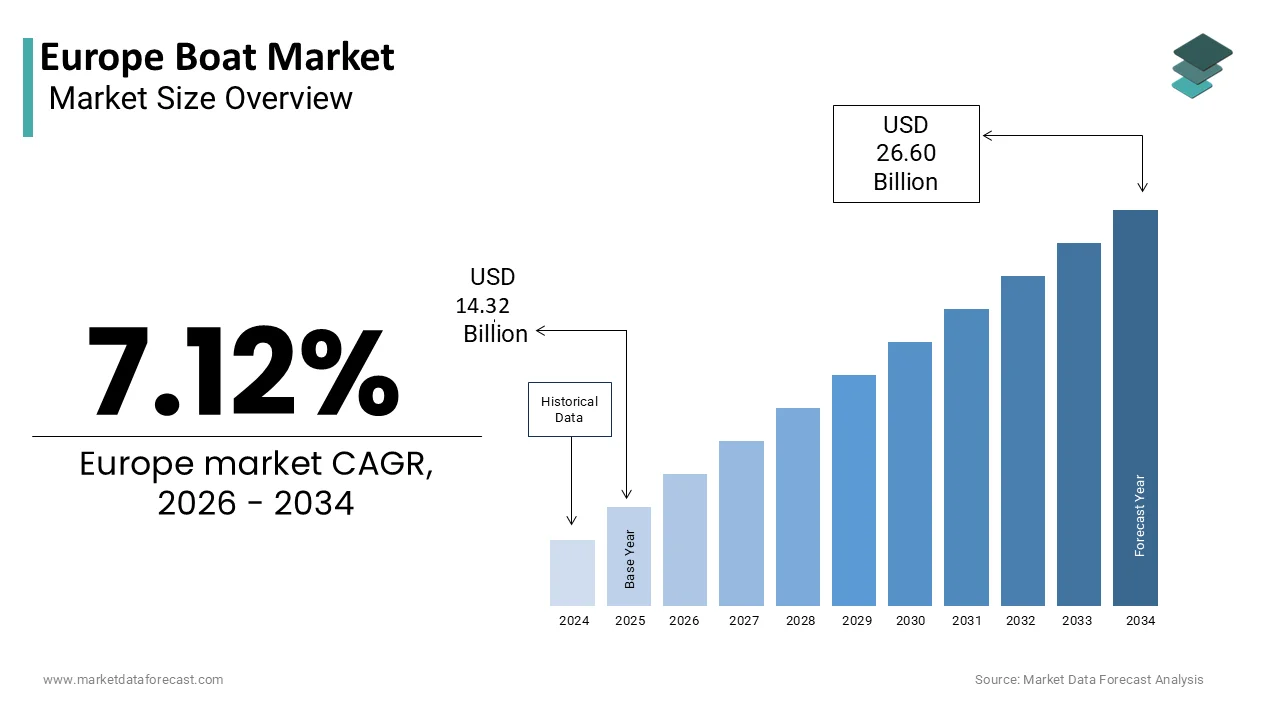
The Europe boat market was valued at USD 14.32 billion in 2025 and is projected to reach USD 26.60 billion by 2034, growing at a CAGR of 7.12% from 2026 to 2034, driven by strong coastal tourism demand, electrification of propulsion systems, and policy-backed blue economy initiatives.
Market Snapshot
2025 Market Size: USD 14.32 billion
2026 Market Size: USD 15.34 billion
2034 Forecast: USD 26.60 billion
CAGR (2026–2034): 7.12%
Base Year: 2025
Forecast Period: 2026–2034
Quick Growth Drivers
- Strong cultural affinity for nautical leisure across Mediterranean and Northern Europe
- Post-pandemic rebound in coastal and inland water tourism
- EU Blue Economy and Green Deal support for sustainable marine industries
- Expansion of marina modernization and shore power infrastructure
- Growth in charter, peer-to-peer rentals, and subscription boating models
Principal Restraints
- High total cost of ownership (mooring, maintenance, insurance, storage)
- Complex regulatory compliance under the EU Recreational Craft Directive
- Limited waterfront infrastructure and marina availability in urban centers
- Administrative challenges in cross-border vessel registration
High-Value Opportunities
- Rapid electrification of inland and coastal propulsion systems
- Expansion of boat-sharing and subscription platforms
- Hybrid propulsion adoption in mid-size and luxury yachts
- Offshore wind and eco-tourism commercial vessel demand
- Integration of circular manufacturing and lightweight composites
Key Market Challenges
- Supply chain vulnerability for engines, electronics, and lithium batteries
- Skilled labor shortages in marine engineering and composite fabrication
- Rising raw material costs due to geopolitical disruptions
- Long marina waiting lists in high-demand urban waterways
- Balancing sustainability mandates with luxury performance expectations
Fastest-Growing Segments
- Outboard Engines – fastest growth due to compact, electric-ready, and entry-level appeal
- Boats Under 20 Feet – driven by micro-mobility, electric tenders, and lake cruising
- Commercial End Users – growth fueled by offshore wind, eco-tourism, and municipal electric water transport
Regional Leadership & Dynamics
- Italy (28.1%) – Luxury yacht manufacturing powerhouse with strong domestic and export demand
- France (20.7%) – Balanced inland and coastal ecosystem with strong electrification policies
- Spain – Charter-driven market anchored by Balearic and Mediterranean tourism
- United Kingdom – Sailing heritage and electric marine innovation leadership
- Germany – Inland waterway strength and engineering-driven hybrid adoption
What Wins Commercially
- Electrified and hybrid propulsion integration
- EU EcoDesign and Recreational Craft Directive compliance
- Strategic marina partnerships with charging infrastructure
- Premium craftsmanship combined with digital customer engagement
- Subscription and fleet-based recurring revenue models
Top Strategic Ask for Executives
Accelerate electric and hybrid propulsion deployment, secure diversified supply chains for critical components, and invest in workforce development to sustain competitiveness in Europe’s regulation-intensive and sustainability-driven maritime ecosystem.
Leading Players
Some of the companies that are playing a dominating role in the Europe boat market include
- Beneteau Group
- Ferretti Group
- Azimut | Benetti Group
- Bavaria Yachtbau GmbH
- Princess Yachts Ltd.
- Sunseeker International
- Jeanneau
- Fairline Yachts Ltd.
- Dufour Yachts
- HanseYachts AG
Europe Boat Market Size
The European boat market was valued at USD 14.32 billion in 2025, is estimated to reach USD 15.34 billion in 2026, and is projected to reach USD 26.60 billion by 2034, growing at a CAGR of 7.12% from 2026 to 2034.
A boat is a watercraft of any size designed to float on and move through water. Unlike markets driven primarily by leisure, Europe’s boat sector is deeply interwoven with its extensive maritime heritage, dense network of navigable waterways, and robust coastal tourism infrastructure. The European boating market is driven by a massive fleet of recreational vessels, with a strong concentration of ownership in the Mediterranean nations due to the ideal climate and extensive coastlines. An extensive network of coastal and inland marinas across Europe supports a highly skilled workforce in marine engineering and advanced composite manufacturing. Critically, the market is undergoing a structural shift toward sustainability, with the EU’s Green Deal and upcoming Carbon Border Adjustment Mechanism accelerating the adoption of electric propulsion and circular design principles. This transformation, coupled with a strong cultural affinity for nautical lifestyles, defines the modern European boat market as one balancing tradition, regulation, and innovation.
MARKET DRIVERS
Strong Cultural Affinity for Nautical Leisure and Coastal Tourism
The region’s deep-rooted maritime culture and thriving coastal tourism economy elevate the growth of the European market. In Mediterranean countries like Italy, Greece, and Croatia, boating is not merely a recreational activity but a lifestyle embedded in the social and economic fabric. European coastal regions experienced a strong post-pandemic resurgence, with coastal and maritime tourism acting as a primary driver of economic growth and direct spending on tourism-related services. Italy maintains a leading position in Europe's leisure boating industry, hosting a vast network of marinas and a large fleet of registered boats, with high demand for coastal infrastructure. Furthermore, inland waterways in Germany, the Netherlands, and France sustain vibrant houseboat and canal boat communities. The Rhine-Main-Danube corridor acts as a vital, high-traffic arterial link for European inland navigation, supporting a busy mix of commercial, passenger, and leisure traffic between the North Sea and the Black Sea. This cultural normalization of boating, reinforced by generational knowledge transfer and public access programs, ensures consistent demand across new and pre-owned segments, insulating the market from short term economic fluctuations.
Policy Support for Blue Economy and Sustainable Marine Activities
The European Union’s strategic emphasis on the “blue economy” provides a powerful institutional enabler for the boat market through funding, infrastructure development, and regulatory incentives, which bolsters the expansion of the European boat market. The EU’s Integrated Maritime Policy allocates billions to sustainable marine sectors, including recreational boating, under frameworks like Horizon Europe and the European Maritime Fisheries and Aquaculture Fund. The European Commission is actively supporting the modernization of marina infrastructure through EU-wide funding initiatives, focusing on shore power, waste management, and digital navigation technology to improve sustainability. Additionally, national programs such as France’s “Plan Plaisance” and Italy’s “Bonus Barca” offer tax credits for purchasing eco-friendly vessels, directly stimulating demand. European policies are increasingly recognizing the recreational boating sector as a vital economic engine for coastal communities, supporting significant employment and fostering a shift towards more sustainable industry practices. The EU is converting recreational boating into a tool for sustainable maritime policy by merging regional development goals with environmental responsibility.
MARKET RESTRAINTS
High Ownership Costs and Complex Regulatory Compliance
The substantial total cost of ownership, compounded by fragmented and stringent regulatory requirements across member states, degrades the growth of the European boat market. Beyond purchase price, owners face annual expenses including mooring fees, insurance, maintenance, and winter storage. Long-term ownership expenses for mid-sized motor yachts are substantial, generally making consistent, high-end, or prime-location usage economically unfeasible for average, middle-income households. Simultaneously, compliance with the EU Recreational Craft Directive, CE marking, noise emission limits, and national registration rules creates administrative burdens. For instance, transferring a boat between EU countries often requiresre-certificationn due to differing interpretations of safety standards. These financial and bureaucratic barriers suppress first-time buyer entry and accelerate fleet aging, limiting market renewal and innovation diffusion despite strong underlying interest.
Limited Access to Waterfront Infrastructure and Urbanization Pressures
Urban development along coastlines and rivers has significantly constrained public access to launching and mooring facilities, which acts as a structural restraint on the European boat market. In Southern Europe, prime waterfront land is increasingly allocated to luxury real estate and tourism resorts, reducing space for community boat ramps and affordable marinas. The European Environment Agency reports that a significant, growing portion of the Mediterranean coastline is being converted into man-made, artificial surfaces, which limits natural access due to increased commercial and residential development. In major Mediterranean port cities such as Barcelona and Nice, the commercialization of harbor areas and the prioritization of superyacht marinas have reduced public access for smaller boaters and reduced the availability of traditional public boat launches. Similarly, inland waterways face congestion and restricted access. Demand for permanent boat moorings in Amsterdam is extremely high, resulting in long-term waiting lists for residents looking to secure a mooring spot. This scarcity of accessible infrastructure disproportionately affects younger and lower-income demographics, stifling grassroots participation and narrowing the market to affluent segments, thereby limiting long term growth potential.
MARKET OPPORTUNITIES
Electrification of Propulsion Systems for Inland and Coastal Waters
The rapid electrification of boat propulsion, particularly for inland waterways and protected coastal zones where emissions and noise restrictions are tightening, is setting up new opportunities for the growth of the European boat market. The EU’s Alternative Fuels Infrastructure Regulation mandates the installation of shore power and charging points in all major ports by 2030, creating the necessary refueling backbone. European interest in sustainable marine travel is rising significantly, evidenced by a massive increase in electric and hybrid vessel availability across major regional hubs and lake districts. Targeted financial incentives and tax adjustments in leading nations are making electric propulsion more accessible, encouraging the conversion of existing fleets and the purchase of new low-emission models. Leading shipbuilders are successfully integrating electric motors into their popular recreational lines, providing enough endurance for standard daily activities and professional urban transport. This shift aligns with EU biodiversity goals for sensitive aquatic ecosystems, positioning electric boating as a cornerstone of sustainable nautical tourism.
Growth in Shared Mobility and Boat Subscription Models
The emergence of boat sharing and subscription services is likely to promote a disruptive opportunity to broaden market access and reduce ownership barriers, which is anticipated to contribute to the expansion of the European boat market. Platforms like Click&Boat, SamBoat, and GetMyBoat have gained traction across Europe, offering peer-to-peer and professional charters for durations ranging from hours to seasons. Nautical sharing platforms are experiencing increased demand across Europe, with a growing number of first-time users accessing peer-to-peer boat rentals and contributing to higher rental activity. This model lowers entry costs, builds user confidence, and generates data on usage patterns that inform future product design. Moreover, corporate partnerships are expanding their reach. AXA and Allianz now offer bundled insurance for short-term rentals, while marinas in Croatia and Greece integrate sharing platforms into their booking systems. These services boost manufacturing revenue through consistent fleet sales and maintenance contracts, all while democratizing boating and attracting a younger audience.
MARKET CHALLENGES
Supply Chain Vulnerability Due to Geopolitical Disruptions
Its dependence on global supply chains for key components, which are increasingly exposed to geopolitical and logistical risks, is a serious challenge to the European boat market. Production involves a hybrid approach: European-built hulls using local composites, combined with Asian and North American components for engines, electronics, and lithium batteries. A large majority of marine diesel engines installed in European Union boats are imported, primarily from manufacturing hubs in Japan and the United States. Shipping delays caused by the 2024 Red Sea crisis, resulting from redirected routes around Africa, forced European shipyards to slow or temporarily pause production lines due to delayed engine deliveries. Similarly, EU restrictions on imports of Russian materials caused increased volatility in raw material prices, placing upward pressure on the cost of inputs for industrial resins. These disruptions expose the market’s fragility, inflate lead times, and erode profit margins, particularly for small and medium enterprises lacking inventory buffers or alternative suppliers.
Workforce Shortage in Skilled Marine Trades
A persistent and worsening shortage of skilled labour in composite fabrication, marine engineering, and electrical systems installation impedes the expansion of the European boat market. Boatbuilding companies in Italy and France are facing significant challenges in finding skilled technical workers, leading to prolonged vacancies and increased difficulty in filling crucial roles. This gap stems from an aging workforce; a notable share of marine technicians are above 50 years old, and insufficient vocational training pipelines. Traditional apprenticeships have declined, while younger workers gravitate toward digital or service sectors perceived as more stable. The consequence is production bottlenecks, quality inconsistencies, and delayed deliveries. Beneteau reported significant growth in its boating division in 2023, achieving record earnings through a high-value, high-performance strategy rather than reducing output due to labor shortages. The maritime industry's ability to innovate, expand, and meet the surge in demand for advanced electric and hybrid ships will be severely constrained by skills shortage, absent purposeful funding for education and attractive career paths.
REPORT COVERAGE
| REPORT METRIC | DETAILS |
| Market Size Available | 2025 to 2034 |
| Base Year | 2025 |
| Forecast Period | 2026 to 2034 |
| Segments Covered | By Type, Size, End User, and Region. |
| Various Analyses Covered | Global, Regional, and Country-Level Analysis, Segment-Level Analysis, Drivers, Restraints, Opportunities, Challenges; PESTLE Analysis; Porter’s Five Forces Analysis, Competitive Landscape, Analyst Overview of Investment Opportunities |
| Countries Covered | UK, France, Spain, Germany, Italy, Russia, Sweden, Denmark, Switzerland, Netherlands, Turkey, Czech Republic, Rest of Europe |
| Market Leaders Profiled | Beneteau Group, Ferretti Group, Azimut | Benetti Group, Bavaria Yachtbau GmbH, Princess Yachts Ltd., Sunseeker International, Jeanneau, Fairline Yachts Ltd., Dufour Yachts, Viking Yachts, Galeon Shipyards, Cranchi Yachts, HanseYachts AG, Lagoon, Sealine Boats, Nimbus Boats, Axopar Boats, Bella Boats, Mercury Marine |
SEGMENTAL ANALYSIS
By Type Insights
The inboard engine systems segment dominated the European market by accounting for a 64.6% share in 2025. The dominance of the inboard engine systems segment is driven by the continent’s strong preference for larger, cabin-equipped vessels designed for coastal cruising and inland waterway navigation, where inboard configurations offer superior stability, interior space, and seakeeping. Unlike outboard motors that mount externally, inboard engines are integrated within the hull, enabling sleeker deck layouts and quieter operation, critical for the luxury and liveaboard segments prevalent in Mediterranean and Northern European markets. In Europe, larger pleasure craft and yachts increasingly feature inboard propulsion systems to meet consumer preferences for greater onboard comfort, quieter operation, and extended cruising range. Italian and French builders like Azimut and Jeanneau exclusively use inboard diesel or hybrid systems in their mid to large yachts, reinforcing this standard. Additionally, EU noise emission regulations under the Recreational Craft Directive favor inboard setups due to lower decibel levels, further entrenching their dominance in a regulatory environment that prioritizes environmental and acoustic performance.
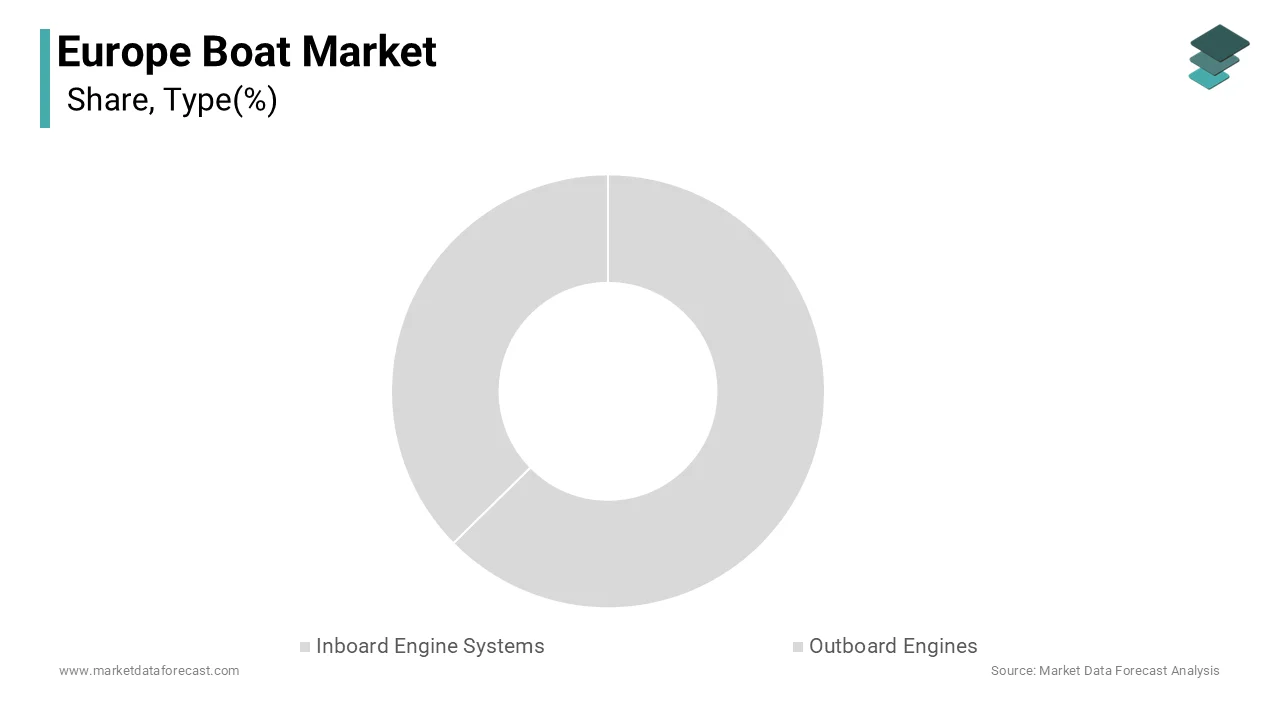
The outboard engines segment is likely to experience the fastest CAGR of 7.2% from 2026 to 2034 due to rising demand for compact, versatile, and easily maintainable craft used in day boating, fishing, and water sports—particularly among younger and first-time buyers. Outboards offer significant advantages in shallow waters and inland lakes, where their tilt capability prevents grounding, making them ideal for the Nordic archipelagos and Alpine lake regions. The adoption of electric outboards is rising in Sweden, particularly on protected lakes, as part of a wider national shift toward sustainable maritime transportation. Similarly, major marine engine manufacturers are expanding their electric portfolios with high-torque, lower-horsepower motors to meet the growing demand from eco-conscious boating enthusiasts in Western Europe. National incentives also help. The French government is supporting the maritime energy transition by offering subsidies for the purchase of electric-powered vessels. This convergence of accessibility, regulatory alignment, and technological innovation positions outboards as the gateway segment for future boating participation in Europe.
By Size Insights
The 20 to 50 foot size segment held the majority share of 58.5% of the European boat market in 2025. The supremacy of the 20 to 50 foot size segment is attributed to an optimal balance between affordability, functionality, and comfort, catering to the core demographic of middle to upper income families and semi-professional charter operators. These vessels are large enough to accommodate overnight cabins, galleys, and marine sanitation systems required for coastal cruising, yet small enough to be managed by two people withouta professional crew. The Italian Marine Industry Association reports that the domestic recreational boating sector experienced record growth in 2023, with substantial demand for smaller craft driven by tourism and chartering across Italian coastal destinations. The segment also aligns with marina infrastructure; most EU berths are sized for 30 to 45-foot vessels, optimizing mooring economics. Furthermore, this size class qualifies for national subsidies in countries like Spain and Greece, where governments support nautical tourism through fleet renewal grants. Its versatility across private ownership, bareboat charters, and coastal patrol ensures sustained demand across diverse end uses.
The boats under 20 feet segment is on the rise and is expected to be the fastest growing segment in the market by witnessing a CAGR of 8.5% during the forecast period, owing to the rise of micro mobility on water, including electric tenders, fishing skiffs, and day cruisers used on lakes, rivers, rs and sheltered coastal zones. Urban dwellers in cities like Amsterdam, Berlin, and Copenhagen increasingly adopt small electric boats for recreation anshort-distancece commuting, supported by municipal policies promoting zero-emission water transport. Driven by government environmental investments, tax incentives for business, and expanding public charging infrastructure, the adoption of smaller electric vessels is increasing across the Netherlands. Similarly, Scandinavian countries report growing use of small RIBs for fjord exploration and angling. Incentivized by the removal of value-added tax on purchasing electric vessels, Norway is seeing a rapid rise in the popularity of small, electric-powered boats. Low acquisition cost and minimal maintenance make this segment highly accessible, serving as an entry point for new boaters and a practical tool for commercial operators like harbor pilots and eco tour guides.
By End User Insights
The recreational boating segment led the European market by accounting for a significant share in 2025. The leading position of the recreational boating segment is credited to Europe’s deep cultural integration of nautical leisure into social life, particularly in Southern and Western coastal nations. From weekend sailing in the Aegean to canal holidays in the Loire Valley, recreational use spans private ownership, peer-to-peer rentals, and bareboat charters. According to the European Commission, EU coastal regions saw a significant rise in visitor accommodation nights during 2023, with nautical and marine tourism activities generating substantial economic value and robust growth, confirming a full recovery in the sector's economic performance. National policies reinforce this trend. Italy’s “Bonus Nautica” and Croatia’s charter incentives directly subsidize private and commercial recreational vessels. Moreover, the EU’s Blue Economy strategy explicitly supports recreational boating as a sustainable economic driver in peripheral regions. This institutional and cultural endorsement ensures that leisure remains the bedrock of European boat demand, far exceeding commercial applications in volume and economic impact.
The commercial end-user segment is expected to exhibit a noteworthy CAGR of 9.1% from 2026 to 2034. The swift growth of this segment is propelled by the expansion of professional maritime services, including eco tourism,m water tax, harbor maintenance,nce and offshore wind farm support. The EU’s push for clean urban mobility has spurred municipal investment in electric water buses. Paris launched its “Yacht Bus” service on the Seine in 2023 uswith 12-meterlectric catamarans, with similar projects underway in Hamburg and Lisbon. European nations are actively planning a massive expansion of offshore wind power to decarbonize the energy sector, with ambitious long-term capacity goals set for the middle of the century. The rapid expansion of offshore wind projects is driving high demand for specialized, low-emission vessels, such as fast crew boats and service operation vessels, for maintenance and personnel transfer. European shipyards are responding to the growing offshore wind market by focusing on innovative, eco-friendly vessel technology, including hybrid and electric-powered crew transfer vessels. Investment in the offshore wind supply chain, including new vessel production and infrastructure, is increasing, particularly in Europe. Additionally, marine protected areas across the Mediterranean now mandate low-impact inspection boats for conservation monitoring. This diversification into regulated, publicly funded, and sustainability-driven roles transforms commercial boating from a niche into a high-growth pillar of the European maritime economy.
COUNTRY LEVEL ANALYSIS
Italy Boat Market Analysis
Italy outperformed other countries in the European boat market and captured a 28.1% share in 2025. The dominance of the Italian market is driven by a world-leading concentration of yacht builders, including Ferretti Beneteau Group Italia and Sanlorenzo, which export globally while serving a robust domestic clientele. Italy’s extensive coastline and dense network of port facilities support a deeply rooted boating culture, driving high demand for both small and large recreational watercraft. According to the Italian Marine Industry Association, the national boating sector recently achieved record-high turnover, confirming Italy’s global leadership in manufacturing and its significant economic contribution to skilled employment in marine engineering. Government support through the “Bonus Nautica” scheme, which offers tax credits for new boat purchases, further stimulates demand. Italy’s focus on design craftsmanship and innovation in hybrid propulsion ensures its continued leadership in the premium segment, making it the undisputed epicenter of European boating excellence.
France Boat Market Analysis
France followed closely in the European boat market and occupied a 20.7% share in 2025. The expansion of the French market is supported by its balanced mix of inland waterway cruising, coastal sailing,g and commercial charter operations. France possesses the largest natural and man-made inland waterway network in Europe, supporting a thriving sector for both tourism-related boating and residential barges. The French inland waterway network is experiencing sustained, high levels of popularity for recreational boating, with numerous private, chartered, and residential vessels utilizing VNF-managed canals and rivers annually. Coastal regions like Brittany and the Côte d’Azur drive demand for sailboats and motor yachts, while national policies actively promote electrification. To promote environmental sustainability, the French government is actively investing in the modernization of waterway infrastructure, focusing on improving shore power capabilities to support the growing electric boat sector. French builders such as Jeanneau and Beneteau lead mid-size production yachts, exporting widely while maintaining strong domestic sales. This combination of geographic diversity, policy support,t and industrial scale makes France a resilient and influential force in the European boat market.
Spain Boat Market Analysis
Spain is also a major player inthe Europeane boat market, with demand heavily shaped by its role as a global nautical tourism destination. The Spanish archipelagos, particularly the Balearics, constitute one of Europe’s premier, heavily visited charter destinations, with a substantial, growing fleet of medium-to-large sailing yachts and catamarans supporting a massive, year-round nautical tourism industry. Major Spanish coastal cities have heavily invested in modernizing their port infrastructure to offer high-capacity, premium mooring facilities, turning them into major hubs for both luxury superyachts and recreational sailing vessels. Government initiatives such as the “Plan de Impulso a la Náutica” provide grants for fleet renewal and digital booking platforms, boosting sector competitiveness. Additionally, Spain’s warm climate enables year-round boating, supporting a large base of domestic owners. This tourism-driven ecosystem, backed by public investment and favorable geography, positions Spain as a dynamic and commercially oriented market in Southern Europe.
United Kingdom Boat Market Analysis
The United Kingdom is growing steadily in the European boat market due to its rich sailing heritage and advanced marine technology sector. Owing to its extensive shoreline and legacy ports like Southampton and Cowes, the United Kingdom maintains a vibrant, long-standing culture of both competitive racing and recreational sailing. The Royal Yachting Association is currently assessing the state of the sport, amidst efforts to understand changing participation rates, while simultaneously observing a shift toward the adoption of electric tenders and day boats on sheltered UK waters. The UK is also a hub for innovation. Companies like Artemis Technologies are developing hydrofoiling electric ferries for urban waterways. Post Brexit, the government introduced the “Green Boating Initiative” offering grants for zero-emission propulsion retrofits. While luxury motor yachts are less dominant than in Southern Europe, the UK excels in performance sailboats and commercial workboats, ensuring its relevance through technical leadership and grassroots participation.
Germany Boat Market Analysis
Germany is likely to expand in the European boat market during the forecast period, owing to its extensive inland waterway network and engineering precision. Germany's extensive, interconnected river and canal network supports a thriving, large-scale community of recreational watercraft and houseboats. Driven by increasingly strict environmental and emissions regulations in city water zones, the adoption of electric boats is experiencing significant growth. German manufacturers like Bavaria Yachtbau emphasize quality engineering and hybrid propulsion, exporting globally while serving a discerning domestic market. Additionally, Germany leads in boat safety standards and vocational training, ensuring high build quality and operator competence. This focus on inland mobility, technical reliability, and environmental compliance establishes Germany as a sophisticated and sustainably oriented market in Central Europe.
COMPETITIVE LANDSCAPE
The European boat market features intense competition among established luxury builderss mass production manufacturers,s and emerging electric boat startups. Italian and French companies dominate the premium anmid-sizeze segments, respectively, by leveraging heritage design and scale. Competition is increasingly defined by sustainability credentials, ls with regulatory compliance and environmental performance becoming key differentiators. Smaller yards face pressure from rising material costs and skilled labor shortages,ges yet benefit from niche specialization in customer-friendly craft. The market is also witnessing consolidation as larger groups acquire innovative startups to access electric propulsion technology. Unlike commoditized sectors, success here hinges on balancing artisanal quality, regulatory adherence, and digital customer engagement in a culturally rich but highly fragmented regional landscape.
KEY MARKET PLAYERS
Some of the companies that are playing a dominating role in the global European Boat Market include:
- Beneteau Group
- Ferretti Group
- Azimut | Benetti Group
- Bavaria Yachtbau GmbH
- Princess Yachts Ltd.
- Sunseeker International
- Jeanneau (part of Groupe Bénéteau)
- Fairline Yachts Ltd.
- Dufour Yachts
- Viking Yachts (European distribution)
- Galeon Shipyards
- Cranchi Yachts
- HanseYachts AG
- Lagoon (catamarans, part of Groupe Beneteau)
- Sealine Boats
- Nimbus Boats
- Axopar Boats
- Bella Boats (Finnmaster Group)
- Mercury Marine (outboard engines supplier)
TOP LEADING PLAYERS IN THE MARKET
- Ferretti Group is an Italian luxury yacht manufacturer renowned for its premium motor yachts under brands such as Riva, Pershing,g and Custom Line. The company plays a pivotal role in the European boat market by setting benchmarks in design innovation,n marine engineerin g,ing and sustainable luxury. Ferretti has strengthened its position by launching hybrid propulsion systems across mid-sizesize range and investing in digital shipyard technologies to reduce build times. It also expanded its service network across Mediterranean marinas to enhance the owner experience. These initiatives reinforce Ferretti’s global reputation while deepening its integration into Europe’s high-end boating ecosystem through localized support and eco-conscious product development.
- Groupe Beneteau is a French multinational and one of the world’s largest sailboat and motorboat manufacturers with a strong presence across Europe through brands like Jeanneau, Lagoo,n and Prestige. The company contributes significantly to democratizing boating by offering accessible yet technologically advanced vessels. Beneteau has reinforced its market position by accelerating its electric and hybridboat programa, ms including the launch of fully electric outboard models for inland waters. It also partnered with European marinas to install charging infrastructure and introduced subscription-based ownership models. These actions align with EU sustainability goals and broaden participation in nautical leisure across diverse consumer segments.
- Sanlorenzo S.p.A. is an Italian builder semi-customtom superyachts known for its artisanal craftsmanship and innovative use of materials such as carbon fiber and sustainable interiors. The company serves a discerning global clientele while maintaining deep roots in the European market through its facilities in La Spezia and Viareggio. Sanlorenzo has strengthened its position by developing a dedicated hybrid propulsion platform for yachts over 30 meters and achieving certification under the EU’s EcoDesign for Energy Related Products framework. It also launched a circular economy program to recycle composite waste from production. These efforts position Sanlorenzo as a leader in responsible luxury boating with influence extending far beyond Europe.
TOP STRATEGIES USED BY THE KEY MARKET PARTICIPANTS
Key players in the European boat market are primarily focused on the electrification of propulsion systems development of hybrid and fully electric models, and the integration of circular economy principles in manufacturing. Companies are investing in lightweight composite materials and modular construction to improve efficiency and reduce environmental impact. Strategic partnerships with marina operators to deploy shore power and charging infrastructure are critical for enabling zero-emission boating. Additionally, firms are expanding digital services, including remote diagnostics, virtual showrooms, ms and subscription models to attract younger demographics. Emphasis on compliance with EU EcoDesign and Recreational Craft Directives ensures market access while enhancing brand credibility in sustainability-conscious regions.
MARKET SEGMENTATION
This research report on the europe boat market is segmented and sub-segmented into the following categories.
By Type
- Inboard Engine Systems
- Outboard Engines
By Size
- Under 20 Feet
- 20 to 50 Feet
- Above 50 Feet
By End User
- Recreational
- Commercial
By Country
- Italy
- France
- Spain
- United Kingdom
- Germany
- Rest of Europe
Frequently Asked Questions
1. What are the main segments in the Europe Boat Market?
Main segments in the Europe Boat Market include recreational boats, leisure yachts, inboard motorboats, sailboats, and personal watercraft. Recreational boating leads due to rising interest in water-based leisure, while luxury yachts cater to high-end tourism and charters. Other areas cover maintenance, repair, and emerging electric propulsion options
2. Which countries dominate the Europe Boat Market?
Italy, Germany, France, and the UK dominate the Europe Boat Market with strong manufacturing bases and yacht-building expertise. Italy excels in luxury yachts, Germany in engineering-focused inboard boats, and France in leisure craft. Northern Europe like Scandinavia contributes to sailboat and sustainable boating innovations.
3. What drives growth in the Europe Boat Market?
Growth in the Europe Boat Market is driven by increasing disposable incomes, rising popularity of water tourism, and demand for eco-friendly vessels with hybrid propulsion. Technological integrations like IoT, AI navigation, and smart sensors enhance safety and appeal. Chartering and short-term rentals also boost accessibility for new users.
4. What trends shape the Europe Boat Market?
Key trends in the Europe Boat Market include sustainable materials, hybrid and electric engines for emissions compliance, digital aftermarket services, and AI-enabled safety features. There's a shift toward compact watercraft for charters and tech-savvy designs attracting younger buyers to Mediterranean hubs.
5. How to buy boats in the Europe Boat Market?
To buy boats in the Europe Boat Market, research dealers in key hubs like Italy or Germany, inspect vessels thoroughly, and check VAT status for EU compliance. Use platforms listing new and used options, secure financing or insurance, and consider brokers for cross-border deals to navigate regulations smoothly.
6. What regulations apply in the Europe Boat Market?
Regulations in the Europe Boat Market cover emissions standards, safety certifications, VAT on imports, and EU-wide product directives. Buyers must ensure vessels meet Schengen navigation rules, radio licensing, and insurance requirements, especially for cross-border use or non-EU purchases.
7. Who are major players in the Europe Boat Market?
Major players in the Europe Boat Market include Italian builders like Ferretti and Sanlorenzo, German engineering firms, and French leisure craft makers. They innovate in hybrid yachts and digital features, competing in recreational and luxury segments across Western and Eastern Europe.
8. What is the role of recreational boating in the Europe Boat Market?
Recreational boating forms a core part of the Europe Boat Market, fueled by coastal tourism and family leisure along Mediterranean and Nordic waters. It includes pontoons, sailboats, and RIBs for charters, with growth from eco-upgrades and entry-level ownership pathways for urban dwellers
9. Are there used boats available in the Europe Boat Market?
Yes, the Europe Boat Market offers abundant used boats via specialized platforms and dealers, often cheaper in certain countries. Buyers should verify ownership, VAT paid status, and condition through surveys to avoid legal issues, especially for international transport or resale.
10. What about yacht charters in the Europe Boat Market?
Yacht charters thrive in the Europe Boat Market, particularly in the Mediterranean, providing access to luxury vessels without ownership costs. Options range from crewed superyachts to self-drive motorboats, supporting tourism with flexible rentals and seasonal demand peaks.
Related Reports
Access the study in MULTIPLE FORMATS
Purchase options starting from
$ 2000
Didn’t find what you’re looking for?
TALK TO OUR ANALYST TEAM
Need something within your budget?
NO WORRIES! WE GOT YOU COVERED!
Call us on: +1 888 702 9696 (U.S Toll Free)
Write to us: sales@marketdataforecast.com