Europe Glasshouse Market Size, Share, Trends & Growth Forecast Report, Segmented By Type, Covering Material, Application, Technology, And By Country (UK, France, Spain, Germany, Italy, Russia, Sweden, Denmark, Switzerland, Netherlands, Turkey, Czech Republic and Rest of Europe), Industry Analysis From (2026 to 2034)
Europe Glasshouse Market Report Summary
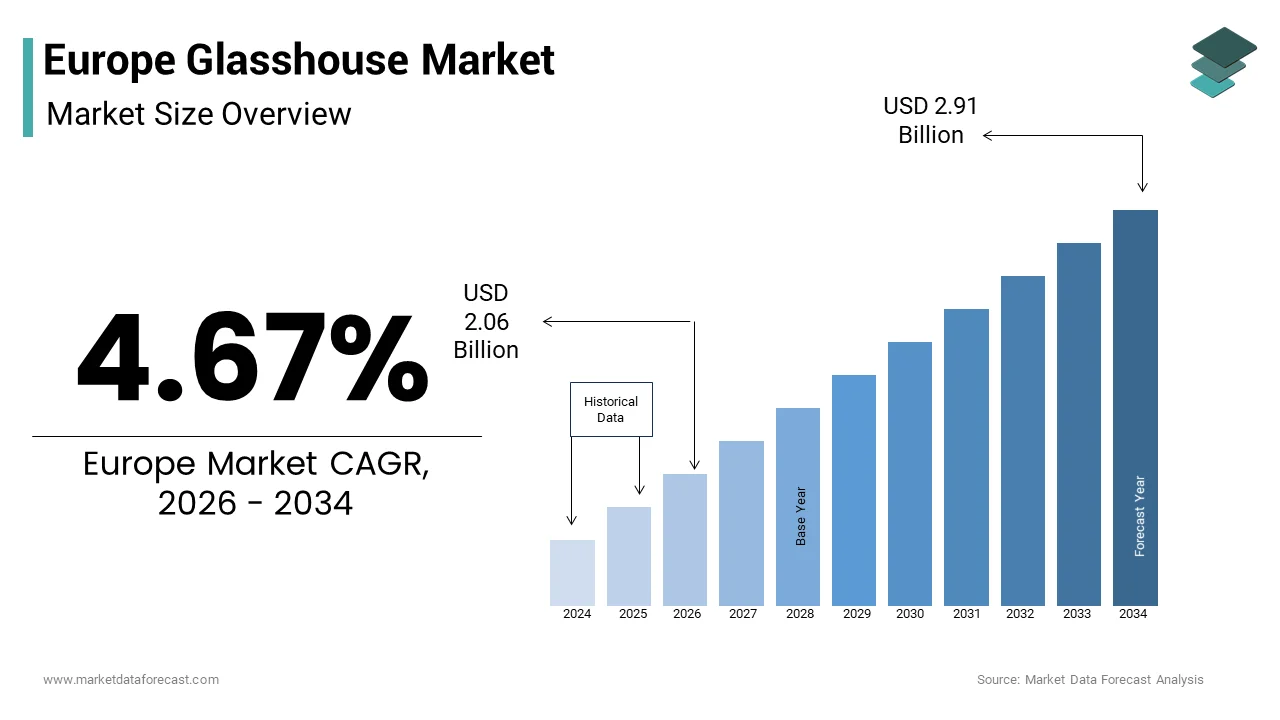
The Europe glasshouse market was valued at USD 1.97 billion in 2025, is estimated to reach USD 2.06 billion in 2026, and is projected to reach USD 2.91 billion by 2034, growing at a CAGR of 4.67% during the forecast period from 2026 to 2034.
The growth of the Europe glasshouse market is driven by increasing demand for controlled environment agriculture, rising need for year-round crop production, and growing emphasis on sustainable farming practices. The expansion of high-value horticulture crops, along with advancements in greenhouse technologies such as climate control and energy-efficient systems, is further fueling market growth. Additionally, increasing consumer preference for locally grown, organic, and pesticide-free produce is supporting the adoption of glasshouse farming across Europe.
Key Market Trends
- Growing adoption of advanced greenhouse technologies, including automated climate control and precision farming systems.
- Increasing focus on sustainable and energy-efficient glasshouse solutions to reduce environmental impact.
- Rising demand for off-season production of fruits, vegetables, and ornamental plants.
- Expansion of commercial greenhouse farming driven by urbanization and food security concerns.
- Integration of smart agriculture technologies such as IoT and data-driven crop monitoring systems.
Segmental Insights
- Based on type, the commercial glasshouses segment was the largest and held a dominant share of the Europe glasshouse market in 2025. The segment’s dominance is attributed to the increasing adoption of large-scale greenhouse farming for commercial crop production.
- Based on covering material, the glass segment accounted for the largest share of the Europe glasshouse market in 2025, driven by its superior light transmission, durability, and suitability for high-yield cultivation.
- Based on technology, the heating segment held 40.3% of the Europe glasshouse market share in 2025. The growth of this segment is driven by the need to maintain optimal growing conditions in colder climates across Europe.
Regional Insights
The Europe glasshouse market is witnessing steady growth across key countries, supported by technological advancements and strong agricultural infrastructure.
- The Netherlands was the largest contributor, accounting for 36.4% of the Europe glasshouse market share in 2025, driven by its advanced greenhouse farming systems and global leadership in horticulture.
- Spain is experiencing growth due to its favorable climate for off-season vegetable production catering to Northern European markets.
- Germany is expanding steadily, supported by a wealthy consumer base and strong demand for organic and locally produced food.
- Italy’s market growth is driven by its extensive production of fruits, vegetables, and ornamental flowers.
- France is benefiting from strong government support for agricultural modernization and food sovereignty initiatives.
Competitive Landscape
The Europe glasshouse market is highly competitive, with key players focusing on innovation, sustainable solutions, and advanced greenhouse technologies to strengthen their market position. Companies are investing in energy-efficient structures, automation, and smart farming systems to improve productivity and reduce operational costs. Strategic collaborations and global expansions are key strategies adopted by market participants. Prominent players in the Europe glasshouse market include Dalsem Greenhouse Projects BV, Richel Group, Certhon, Van der Hoeven Horticultural Projects BV, Priva, Rough Brothers Inc., Agra Tech Inc., Nexus Corporation, Luiten Greenhouses BV, Alcomij BV, Asthor Agrícola S.A., Europrogress Srl, Harnois Industries, Kubo Greenhouse Projects, and Sotrafa S.A., among others.
Europe Glasshouse Market Size
The Europe glasshouse market size was valued at USD 1.97 billion in 2025 and is anticipated to reach USD 2.06 billion in 2026 to reach USD 2.91 billion by 2034, growing at a CAGR of 4.67% during the forecast period from 2026 to 2034.
Introduction to the Europe Glasshouse Market
The glasshouse is the design construction and operation of advanced controlled environment agriculture structures, primarily utilized for the cultivation of high value crops, such as vegetables flowers and ornamental plants. These facilities leverage sophisticated climate control systems lighting technologies and hydroponic methods to optimize yield and quality regardless of external weather conditions. The sector is pivotal in addressing food security and sustainability goals within the region. As per Eurostat data the European Union produced approximately 62 million tons of fresh vegetables in 2023 with a significant portion originating from protected cultivation systems. The Netherlands remains a global leader in this domain with over 10000 hectares of glasshouses contributing substantially to national agricultural output. According to the Food and Agriculture Organization, protected agriculture can increase crop yields by up to 10 times compared to open field farming while using significantly less water. This efficiency aligns with the European Green Deal objectives promoting resource efficient and climate neutral agriculture. The integration of renewable energy sources such as geothermal heat and solar power into glasshouse operations further enhances their environmental profile.
MARKET DRIVERS
Stringent Environmental Regulations and Sustainability Mandates Drive Adoption
The stringent regulatory environment focused on sustainable agricultural practices and environmental protection is leveraging the growth of Europe glasshouse market. European policies, such as the European Green Deal and the Farm to Fork Strategy impose rigorous standards on pesticide use fertilizer application and water consumption. According to the European Commission, the target to reduce nutrient losses by at least 50% by 2030 requires farmers to adopt precision agriculture techniques that are inherently supported by glasshouse technologies. Glasshouses enable closed loop water systems and precise nutrient delivery minimizing waste and runoff. Modern glasshouses often utilize combined heat and power systems or geothermal energy reducing reliance on fossil fuels. In the Netherlands, government incentives have led to a 90% reduction in pesticide use in greenhouses since 2004. This regulatory pressure compels traditional open field farmers to transition to protected cultivation to maintain compliance and market access. Additionally, consumer demand for locally grown and residue free produce supports this shift. The ability of glasshouses to provide consistent quality and supply throughout the year further aligns with retail standards. These factors collectively create a robust demand for advanced glasshouse infrastructure as growers seek to meet regulatory requirements while enhancing operational efficiency and sustainability.
Growing Demand for Year Round Fresh Produce and Food Security Drives Investment
The growing demand for year round availability of fresh high quality produce is also escalating the growth of Europe glasshouse market. Consumers are increasingly prioritizing local sourcing to reduce food miles and ensure freshness leading to higher demand for domestically grown vegetables and fruits. According to the European Commission, imports of fresh vegetables into the European Union exceed 10 million tons annually highlighting a dependency on external sources that glasshouses can mitigate. Protected cultivation allows for continuous production cycles independent of seasonal variations ensuring a stable supply. As per Eurostat, the self-sufficiency rate for certain vegetables like tomatoes and cucumbers has improved in countries with extensive glasshouse sectors such as Spain and the Netherlands. The COVID 19 pandemic exposed vulnerabilities in global supply chains prompting governments and retailers to invest in local production capabilities. Glasshouses offer higher yields per square meter compared to open fields making them ideal for regions with limited arable land. For instance in the United Kingdom vertical farming and glasshouse projects have received significant funding to enhance domestic food security. The ability to control growing conditions also reduces crop failure risks associated with extreme weather events which are becoming more frequent due to climate change. This reliability attracts investment from both private entities and public sectors aiming to strengthen regional food resilience and meet consumer expectations for consistent quality and availability.
MARKET RESTRAINTS:
High Initial Capital Investment and Operational Costs Restrain Market Entry
The high initial capital investment required for constructing state of the art facilities coupled with significant ongoing operational costs is limiting the growth of Europe glasshouse market. Modern glasshouses equipped with automated climate control lighting and irrigation systems require substantial financial outlay. According to the research, the cost of building a high tech glasshouse can range from 100 to 200 Euros per square meter depending on the level of technology integrated. This barrier prevents small and medium sized farmers from entering the market or upgrading existing infrastructure. Additionally, energy costs constitute a significant portion of operational expenses particularly for heating and lighting during winter months. As per a study, energy prices in the European Union increased by an average of 30% in 2022 due to geopolitical tensions affecting natural gas supplies. This volatility impacts profitability and discourages new investments. In countries like Germany and France high electricity rates have forced some growers to reduce production hours or switch to less energy intensive crops. The long payback period for glasshouse investments further exacerbates the financial risk.
Labor Shortages and Skills Gap Impact Operational Efficiency
The shortage of skilled labor and technical expertise by affecting operational efficiency, which is another factor limiting the growth of Europe glasshouse market. Modern glasshouses require specialized knowledge in horticulture automation and data analysis to manage complex systems effectively. According to the European Centre for the Development of Vocational Training, there is a growing mismatch between the skills available in the labor market and those required by the agricultural technology sector. Many traditional farmers lack the technical proficiency to operate sophisticated climate control and monitoring software. Recruiting young talent to the sector is difficult due to perceptions of agriculture as labor intensive and low tech. This skills gap leads to suboptimal utilization of technology resulting in lower yields and higher operational costs. The reliance on seasonal migrant labor, which has been disrupted by regulatory changes and travel restrictions further compounds the problem. Addressing this challenge requires comprehensive training programs and educational initiatives to equip the workforce with necessary digital and horticultural skills.
MARKET OPPORTUNITIES:
Integration of Renewable Energy and Circular Economy Principles Presents Opportunities
The integration of renewable energy sources and circular economy principles is certainly creating new opportunities for the growth of Europe glasshouse market. Governments and consumers are increasingly favoring sustainable production methods creating demand for carbon neutral glasshouses. Geothermal energy biomass and waste heat from industrial processes are being utilized to power glasshouses reducing operational costs and environmental impact. In Iceland and the Netherlands, geothermal heated glasshouses have demonstrated significant cost savings and emission reductions. As per the European Commission, the Circular Economy Action Plan encourages the reuse of resources such as water and nutrients in agricultural systems. Closed loop hydroponic systems in glasshouses allow for nearly 100% water recycling minimizing waste. Additionally, the use of biological pest control instead of chemical pesticides aligns with sustainability goals and enhances product value. Companies developing innovative energy storage solutions and smart grid integration technologies can capitalize on this trend. Partnerships between energy providers and agricultural firms facilitate the development of hybrid energy systems.
Expansion of Urban Agriculture and Vertical Farming Concepts Creates New Avenues
The expansion of urban agriculture and vertical farming concepts by bringing production closer to consumers is also to set up opportunities for the expansion of growth of Europe glasshouse market. Rapid urbanization and the desire for fresh local produce have spurred interest in integrating glasshouses into urban landscapes such as rooftops and abandoned industrial sites. Urban glasshouses reduce transportation costs and carbon emissions associated with long distance logistics. As per the European Urban Initiative, several cities including Paris and Berlin have launched pilot projects for rooftop greenhouses to enhance food security and community engagement. These installations often utilize advanced hydroponic and aeroponic systems that require less space and water than traditional methods. The integration of glasshouses into building designs also provides insulation and improves energy efficiency for the structures below. Technology providers offering modular and scalable glasshouse solutions can tap into this emerging market. Additionally, urban farms serve educational and recreational purposes fostering community involvement and awareness about sustainable food production. Government grants and municipal support for green infrastructure projects further stimulate growth.
MARKET CHALLENGES
Climate Change and Extreme Weather Events Pose Operational Risks
The climate change and the increasing frequency of extreme weather events is a significant challenge for the growth of Europe glasshouse market. Glasshouses are vulnerable to damage from heavy snowfall strong winds hailstorms and flooding, which can disrupt production and incur high repair costs. As per the World Meteorological Organization, rising temperatures also affect internal climate control requiring more energy for cooling during summer months. This increases operational expenses and carbon footprints contradicting sustainability goals. Furthermore, changing precipitation patterns can lead to water scarcity or excess impacting irrigation systems. However, these upgrades require additional capital which may be prohibitive for smaller operators. The unpredictability of weather patterns complicates long term planning and insurance coverage. Insurance premiums for agricultural facilities have risen reflecting the heightened risk profile.
Supply Chain Disruptions for Specialized Components Hinder Construction and Maintenance
The supply chain disruptions for specialized components, such as high transparency glass steel frames and electronic sensors is likely to be a challenge for the growth of Europe glasshouse market. The construction and maintenance of modern glasshouses rely on a complex global supply chain that has been volatile in recent years. The semiconductor crisis has particularly impacted the availability of control systems and sensors essential for automated glasshouse operations. As per the European Commission, the dependence on imports for critical raw materials such as rare earth elements used in electronics exposes the sector to geopolitical risks. Trade restrictions and tariffs further complicate procurement and increase costs. These disruptions force contractors to hold higher inventory levels tying up capital and increasing storage costs. Additionally, the lack of standardized components across different manufacturers complicates maintenance and replacement processes. Small and medium sized enterprises are disproportionately affected as they lack the bargaining power to secure priority supply. The uncertainty surrounding supply availability hinders project planning and execution leading to cost overruns and customer dissatisfaction.
REPORT COVERAGE
| REPORT METRIC | DETAILS |
| Market Size Available | 2025 to 2034 |
| Base Year | 2025 |
| Forecast Period | 2026 to 2034 |
| CAGR | % |
| Segments Covered | By Type, Covering Material, Technology, Application, and Region |
| Various Analyses Covered | Global, Regional & Country Level Analysis, Segment-Level Analysis, DROC, PESTLE Analysis, Porter’s Five Forces Analysis, Competitive Landscape, Analyst Overview on Investment Opportunities |
| Regions Covered | UK, France, Spain, Germany, Italy, Russia, Sweden, Denmark, Switzerland, Netherlands, Turkey, Czech Republic and Rest of Europe |
| Market Leaders Profiled | Dalsem Greenhouse Projects BV, Richel Group, Certhon, Van der Hoeven Horticultural Projects BV, Priva, Rough Brothers Inc., Agra Tech, Inc., Stuppy Greenhouse, Nexus Corporation, Luiten Greenhouses BV, Alcomij BV, Asthor AgrÃcola, S.A., Ceres Greenhouse Solutions, Europrogress Srl, GGS Structures Inc., Harnois Industries, HortiMaX, Kubo Greenhouse Projects, Rovero, Sotrafa S.A. |
SEGMENTAL ANALYSIS
By Type Insights
The commercial glasshouses segment was the largest by holding a dominant share of the Europe glasshouse market in 2025. This dominance is primarily attributed to the intensive cultivation of vegetables such as tomatoes cucumbers and peppers as well as ornamental flowers which require precise climate control to meet retail quality standards. Commercial growers utilize advanced glasshouses to achieve year round production ensuring consistent supply to supermarkets and export markets. The economies of scale associated with large facilities allow for the integration of automated harvesting irrigation and climate control systems which reduce labor costs and increase yield efficiency. Furthermore, strict European regulations on pesticide residues drive commercial operators to adopt integrated pest management systems inherent to controlled environments. The ability to certify produce as sustainable and locally grown enhances market access and profitability. Investment in commercial glasshouses is also supported by government subsidies aimed at modernizing agricultural infrastructure. These factors collectively ensure that commercial operations remain the backbone of the European protected agriculture sector driving sustained demand for high performance glasshouse structures and technologies.
The domestic glasshouses segment is projected to witness a fastest CAGR of 6.8% from 2026 to 2034 owing to the increasing consumer interest in home gardening organic produce and mental well-being activities in urban and suburban areas. Consumers are increasingly viewing gardening as a hobby that provides fresh herbs and vegetables while reducing household carbon footprints. The rise of balcony and rooftop gardening in cities like Berlin and Paris has spurred demand for compact and modular glasshouse units. Manufacturers are responding with user friendly designs that require minimal assembly and maintenance appealing to novice gardeners. Social media platforms have further popularized urban farming inspiring younger demographics to invest in personal growing spaces. Additionally, the desire for self-sufficiency and resilience against supply chain disruptions encourages households to cultivate their own food. The availability of affordable DIY kits and online gardening communities supports this trend.
By Covering Material Insights
The glass segment was the largest by holding a dominant share of the Europe glasshouse market in 2025 with the exceptional optical properties of glass which allows maximum photosynthetically active radiation to reach plants thereby enhancing growth and yield. According to the Wageningen University and Research, center glass greenhouses provide the most stable and predictable climate conditions essential for high value crops such as roses and specialty vegetables. Glass is also highly durable with a lifespan exceeding 20 years, making it a cost effective long term investment for commercial growers. In the Netherlands, which hosts the world’s most advanced glasshouse cluster nearly all commercial facilities utilize diffuse glass to optimize light distribution. As per the Dutch Greenhouse Delta association the use of anti reflective coated glass can increase light transmission by up to 3% resulting in significant yield improvements. Furthermore, glass is fully recyclable aligning with European sustainability goals and circular economy principles. The material’s resistance to weathering and chemical degradation ensures minimal maintenance requirements compared to plastic alternatives. Although the initial cost is higher the longevity and performance benefits justify the investment for professional growers. Regulatory standards for food safety also favor glass due to its inert nature and ease of cleaning.
The polycarbonate segment is expected to witness a fastest CAGR of 7.5% in coming yearswith the superior thermal insulation properties of multi wall polycarbonate sheets which significantly reduce heating costs a critical factor given rising energy price in Europe. The material is also lightweight and highly impact resistant reducing structural support requirements and maintenance costs associated with hail or storm damage. Polycarbonate is easier to install and allows for flexible design configurations appealing to both commercial and semi commercial users. Advances in UV coating technology have improved the longevity of polycarbonate sheets addressing previous concerns about yellowing and degradation. The material’s versatility enables its use in various applications from hobby greenhouses to large scale nurseries. Government incentives for energy efficient agricultural structures further promote the adoption of polycarbonate.
By Technology Insights
The heating segment was the largest by holding 40.3% of the Europe glasshouse market share in 2025 with the climatic conditions in Northern and Central Europe, where maintaining optimal growing temperatures during winter months is essential for continuous crop production. Traditional gas boilers remain widespread but there is a rapid shift towards sustainable heating solutions, such as combined heat and power units geothermal systems and biomass boilers. The transition away from fossil fuels is driven by carbon taxes and sustainability mandates forcing growers to upgrade their heating infrastructure. As per Eurostat, energy intensity in the agricultural sector has decreased by 15% since 2010 due to the adoption of high efficiency heating technologies. The integration of smart climate control systems allows for precise temperature regulation optimizing energy use and plant growth. Investments in heat storage facilities also enable growers to utilize excess heat during peak production periods. These technological advancements and regulatory pressures ensure that heating remains the most significant technology segment in the European glasshouse market driving continuous innovation and replacement cycles.
The cooling and ventilation segment is esteemed to witness a fastest CAGR of 8.2% from 2026 to 2034. The growth of the segment is driven by the increasing frequency of heatwaves and higher average summer temperatures across Europe, which pose risks of heat stress to crops. According to the European Environment Agency the number of hot days in Europe has doubled since 1980 necessitating advanced cooling solutions to maintain optimal growing conditions. Modern glasshouses are increasingly equipped with evaporative cooling pads fogging systems and automated roof vents to regulate temperature and humidity. The integration of sensors and artificial intelligence allows for real time adjustment of ventilation rates based on external weather conditions improving energy efficiency. Growing awareness of the importance of air circulation in preventing fungal diseases such as botrytis also drives adoption. In Southern Europe, where summer temperatures frequently exceed 35 degrees Celsius cooling systems are becoming indispensable for viable production. Government grants for climate adaptation technologies further support this trend. The shift towards sealed environments for better pest control also requires mechanical ventilation and cooling rather than passive methods.
COUNTRY LEVEL ANALYSIS
Netherlands Glasshouse Market Analysis
The Netherlands was the top performer of the Europe glasshouse market by holding 36.4% of the share in 2025 with the status as the world’s second largest agricultural exporter by value. The country is home to the Westland region known as the Glass Cit, which contains over 10000 hectares of high tech greenhouses. The Netherlands leads in innovation with widespread adoption of geothermal heating LED lighting and robotic harvesting systems. As per the study, the country achieves the highest yield per square meter globally due to advanced climate control and breeding techniques. Government policies strongly support sustainability with targets to make greenhouse horticulture climate neutral by 2040. This has led to extensive investments in residual heat utilization and closed loop water systems. The presence of major technology suppliers and research institutions creates a vibrant ecosystem that drives continuous improvement. Dutch growers are early adopters of new technologies setting benchmarks for the rest of Europe. The collaborative model between government industry and knowledge institutes ensures rapid dissemination of best practices.
Spain Glasshouse Market Analysis
Spain glasshouse market growth is likely to grow with its mild climate to produce off season vegetables for Northern European consumers. The region of Almeria known as the Sea of Plastic hosts the largest concentration of greenhouses in Europe covering over 30000 hectares. According to the Spanish Ministry of Agriculture Fisheries and Food, the country is the leading producer of tomatoes peppers and cucumbers in the European Union. As per the study, government investments in modernization have increased by 10% annually driven by retailer demands for higher standards. Water scarcity is an issue prompting the adoption of advanced desalination and drip irrigation technologies. The strategic location and logistical infrastructure facilitate rapid distribution to European markets.
Germany Glasshouse Market Analysis
Germany glasshouse market growth is likely to grow with a wealthy consumer base and a strong emphasis on local and organic food. According to the German Agricultural Society, the area under glass has remained stable but productivity has increased due to technological upgrades. Germany is a leader in greenhouse technology manufacturing with companies supplying heating ventilation and control systems globally. Energy costs are a major concern leading to rapid adoption of combined heat and power units and biomass systems. The Organic Farming Act promotes pesticide free production which is easier to achieve in controlled environments. Consumer willingness to pay premium prices for locally grown produce supports the economic viability of high tech greenhouses. Research institutions such as the Julius Kuehn Institute contribute to innovation in plant protection and breeding. The integration of digital farming tools is widespread among German growers.
Italy Glasshouse Market Analysis
Italy glasshouse market growth is driven by its extensive production of vegetables fruits and ornamental flowers. The country has a long history of protected cultivation particularly in regions like Sicily Campania and Liguria. According to the Italian National Institute of Statistics, the value of greenhouse produced crops exceeds 3 billion Euros annually. Italy is a leading producer of strawberries kiwis and cut flowers, which rely heavily on protected environments. The market is characterized by a mix of traditional structures and modern high tech glasshouses. As per the Confederation of Italian Farmers there is a ongoing modernization process supported by EU rural development funds to improve energy efficiency and water management. The tourism sector also drives demand for high quality local produce encouraging investment in premium greenhouse facilities. Climate change impacts such as irregular rainfall and extreme heat are prompting growers to adopt more resilient technologies. The presence of specialized machinery manufacturers supports the local supply chain. Government incentives for renewable energy integration are accelerating the transition to sustainable practices.
France Glasshouse Market Analysis
France glasshouse market growth is expected to grow with the strong government support for agricultural modernization and food sovereignty. The country has significant greenhouse activity in regions like Brittany and the South East producing tomatoes salads and berries. The goal is to reduce the carbon footprint of food consumption by increasing local production. French retailers are increasingly sourcing locally to meet consumer preferences for freshness and sustainability. Energy transition is a key focus with growers adopting biomass and solar thermal systems. The country is also a hub for research in agroecology and biological control methods. Regulatory pressure to reduce pesticide use drives the adoption of closed loop systems. The presence of major retail chains facilitates long term contracts for greenhouse growers.
COMPETITIVE LANDSCAPE
The competition in the Europe glasshouse market is characterized by a mix of established engineering firms and specialized technology providers vying for dominance in the protected agriculture sector. Leading companies leverage their technical expertise and project management capabilities to deliver turnkey solutions that integrate structure climate control and automation. The market sees intense rivalry in innovation particularly regarding energy efficiency and sustainability features which are critical due to stringent European regulations. Price competition is moderate in the high end segment where performance and reliability are prioritized but remains significant for standard structures. Strategic collaborations with research institutions and universities drive continuous improvement in cultivation techniques and material science. Companies differentiate themselves through proprietary technologies such as advanced lighting systems and closed loop water management solutions. The threat of new entrants is moderate due to high capital requirements and complex engineering knowledge needed.
KEY MARKET PLAYERS
A few of the market players that are dominating the Europe glasshouse market are
- Dalsem Greenhouse Projects BV
- Richel Group
- Certhon
- Van der Hoeven Horticultural Projects BV
- Priva
- Rough Brothers Inc.
- Agra Tech, Inc.
- Stuppy Greenhouse
- Nexus Corporation
- Luiten Greenhouses BV
- Alcomij BV
- Asthor AgrÃcola, S.A.
- Ceres Greenhouse Solutions
- Europrogress Srl
- GGS Structures Inc.
- Harnois Industries
- HortiMaX
- Kubo Greenhouse Projects
- Rovero
- Sotrafa S.A.
Top Players In The Market
- Richel Group stands as a premier manufacturer of agricultural greenhouses and equipment with a strong presence across Europe. The company specializes in designing turnkey solutions for professional growers including multi span glasshouses and plastic tunnels. Richel has recently focused on expanding its digital offerings by integrating smart climate control systems into its structures. They have strengthened their market position through strategic partnerships with technology providers to offer comprehensive automation packages. Their commitment to sustainability is evident in the development of energy efficient designs that reduce heating costs.
- KUBO Greenhouse Projects is a leading Dutch company renowned for its innovative ultra climate greenhouse concepts. The company contributes significantly to the global market by providing sustainable and high yield cultivation systems. KUBO has recently intensified its focus on energy neutral growing by developing advanced geothermal and residual heat integration solutions. They have strengthened their position by collaborating with research institutions to optimize crop performance under controlled conditions. Their patented Next Generation Growing method allows for precise climate management reducing resource consumption. KUBO actively participates in international projects demonstrating the viability of sustainable horticulture.
- Certhon Building Solutions is a key player in the Europe glasshouse market known for its high tech construction and installation services. The company delivers state of the art greenhouses equipped with advanced lighting and irrigation systems. Certhon has recently expanded its capabilities in vertical farming and urban agriculture projects. They have strengthened their market position by investing in modular construction techniques that reduce build times and costs. Their focus on precision engineering ensures optimal light transmission and structural integrity. Certhon collaborates closely with growers to design facilities that maximize productivity and sustainability. Their commitment to quality and innovation makes them a preferred choice for commercial growers seeking cutting edge solutions. Certhon’s proactive approach to emerging trends ensures their continued relevance and success in the competitive European landscape.
Top Strategies Used By Key Market Participants
Key players in the Europe glasshouse market primarily employ strategies focused on technological integration and sustainability to maintain competitive advantage. Companies are increasingly incorporating Internet of Things sensors and artificial intelligence into their structures to enable precise climate control and resource management. This digital transformation enhances yield predictability and operational efficiency for growers. Strategic partnerships with energy providers facilitate the adoption of renewable heating sources, such as geothermal and biomass systems. Manufacturers are also investing in research and development to create modular and scalable designs that reduce construction time and costs. Marketing efforts emphasize the environmental benefits of modern greenhouses including reduced water usage and carbon footprints. Additionally, firms are expanding their service portfolios to include maintenance and consulting ensuring long term customer relationships. These multifaceted strategies enable market participants to address regulatory pressures and meet the evolving needs of sustainable agriculture while driving growth and profitability in the dynamic European environment.
MARKET SEGMENTATION
This research report on the Europe glasshouse market is segmented and sub-segmented into the following categories.
By Type
- Commercial Glasshouses
- Domestic Glasshouses
By Covering Material
- Glass
- Polycarbonate
- Polyethylene
By Application
- Horticulture
- Crop Production
- Research
- Others
By Technology
- Heating
- Cooling
- Ventilation
- Others
By Country
- UK
- France
- Spain
- Germany
- Italy
- Russia
- Sweden
- Denmark
- Switzerland
- Netherlands
- Turkey
- Czech Republic
- Rest of Europe
Frequently Asked Questions
What is currently driving growth in the Europe glasshouse market?
Increasing demand for high-quality crops and controlled environment farming is driving growth.
Why are glasshouses widely used in European agriculture?
They provide controlled conditions that improve crop yield and quality.
How would you explain a glasshouse in simple terms?
It is a structure with transparent walls used to grow plants under controlled conditions.
Where are glasshouses most commonly used across Europe?
They are widely used in horticulture, vegetable farming, and floriculture.
What makes glasshouses important for modern farming systems?
They enable year-round cultivation and protect crops from external conditions.
From a grower’s perspective, are glasshouses a worthwhile investment?
Yes, they improve productivity and ensure consistent crop output.
What challenges are affecting the Europe glasshouse market?
High initial costs and energy consumption are key challenges.
How is climate variability influencing glasshouse adoption in Europe?
Unpredictable weather is increasing reliance on controlled growing environments.
Which crops contribute the most to glasshouse demand?
Vegetables, fruits, and ornamental plants are major contributors.
Is the Europe glasshouse market growing steadily?
Yes, it is expanding with increasing adoption of protected cultivation methods.
Access the study in MULTIPLE FORMATS
Purchase options starting from
$ 2000
Didn’t find what you’re looking for?
TALK TO OUR ANALYST TEAM
Need something within your budget?
NO WORRIES! WE GOT YOU COVERED!
Call us on: +1 888 702 9696 (U.S Toll Free)
Write to us: sales@marketdataforecast.com