Europe Leisure Market Size, Share, Trends & Growth Forecast Report – Segmented By Traveler Type, Age Group, Expenditure Type, Sales Channel, and Country (UK, France, Spain, Germany, Italy, Russia, Sweden, Denmark, Switzerland, Netherlands, Turkey, Czech Republic & Rest of Europe), Industry Analysis From 2026 to 2034
Europe Leisure Market Report Summary
The Europe leisure market was valued at USD 521.55 billion in 2025, is estimated to reach USD 615.64 billion in 2026, and is projected to reach USD 2,319.68 billion by 2034, growing at a CAGR of 18.04% during the forecast period. The growth of the Europe leisure market is driven by increasing international tourism, rising disposable incomes, and growing consumer preference for experiential travel and recreational activities. Europe remains one of the most attractive leisure destinations due to its rich cultural heritage, historical landmarks, diverse landscapes, and world renowned entertainment attractions. The expansion of tourism infrastructure, increasing popularity of digital travel platforms, and rising demand for leisure experiences such as theme parks, events, and cultural tourism are further supporting the growth of the leisure market across Europe.
Key Market Trends
- Increasing demand for experiential tourism including cultural tours, adventure travel, and entertainment based activities.
- Rising popularity of group travel packages offered by tour operators and travel platforms.
- Growing use of digital booking platforms and mobile applications for travel planning and reservations.
- Expansion of theme parks, entertainment venues, and live events attracting domestic and international tourists.
- Increasing interest in wellness tourism, eco tourism, and personalized travel experiences.
Segmental Insights
- Based on traveler type, the group traveler segment held the largest share of the Europe leisure market in 2025. Group travel is widely preferred due to its cost efficiency, organized itineraries, and convenience for tourists visiting multiple destinations.
- Based on age group, the generation X segment dominated the Europe leisure market in 2025. This demographic group often has higher disposable income and strong interest in cultural tourism, international travel, and leisure experiences.
- Based on expenditure type, the lodging segment accounted for the largest share of the Europe leisure market in 2025. Accommodation services such as hotels, resorts, and vacation rentals represent a major portion of tourist spending during leisure travel.
Regional Insights
- The Europe leisure market is experiencing strong growth across several countries due to increasing tourism activities and the development of travel infrastructure.
- France accounted for the largest share of the Europe leisure market in 2025. The country’s status as one of the most visited destinations globally, supported by its cultural heritage, renowned cuisine, historical attractions, and diverse landscapes, is a major factor driving market growth.
- Other European countries are also witnessing increasing tourism demand supported by expanding travel services, entertainment attractions, and digital travel booking platforms.
Competitive Landscape
The Europe leisure market is highly competitive with the presence of global entertainment companies, travel service providers, and tourism operators. Companies are focusing on expanding travel experiences, developing new entertainment attractions, and enhancing digital booking platforms to attract international travelers. Strategic partnerships, acquisitions, and investments in tourism infrastructure are helping companies strengthen their presence across the European leisure ecosystem. Prominent players in the Europe leisure market include The Walt Disney Company, Merlin Entertainments, Universal Parks and Resorts, Parques Reunidos, Compagnie des Alpes, Village Roadshow Limited, TUI Group, Booking Holdings Inc., Expedia Group Inc., Trip.com Group Limited, CVC Capital Partners, and Live Nation Entertainment Inc.
Europe Leisure Market Size
The Europe leisure market size was valued at USD 521.55 billion in 2025 and is projected to reach USD 2,319.68 billion by 2034 from USD 615.64 billion in 2026, growing at a CAGR of 18.04%.

Leisure encompasses a vast and diverse ecosystem of activities undertaken during discretionary time, ranging from cultural tourism, heritage exploration, and outdoor recreation to entertainment, gaming, and wellness pursuits. This sector functions as a critical component of the continental social fabric and economic engine, deeply intertwined with the region's rich historical assets and natural landscapes. The operational environment is characterized by a highly mobile population with strong legal protections for rest and vacation time. According to Eurostat, individuals in the European Union engage in leisure and personal care activities daily, which is indicating the centrality of free time in their lives. Furthermore, as per the European Commission, many EU residents take holidays lasting several nights away from home and this indicates a robust culture of travel and exploration. The region benefits from the Schengen Area, which facilitates seamless cross-border movement for millions of citizens, thereby expanding the addressable market for leisure operators. As per the World Tourism Organization, Europe remains the most visited region globally, attracting international arrivals who contribute significantly to local leisure economies. This landscape is increasingly shaped by a demographic shift toward experience-based consumption, where consumers prioritize memorable engagements over material goods, which is driving innovation across all leisure sub-sectors.
MARKET DRIVERS
Statutory Mandates for Paid Leave and Work-Life Balance
The comprehensive legislative framework across European nations that guarantees substantial paid annual leave and promotes a healthy work-life balance is fuelling the expansion of the Europe leisure market. As per the European Commission, the Working Time Directive mandates paid annual leave for all workers, with many member states offering even more by national law. This statutory entitlement ensures that a vast majority of the workforce has dedicated, uninterrupted time available for leisure activities, creating a predictable and sustained demand cycle for tourism, entertainment, and recreational services. Unlike regions where vacation time is discretionary or limited, the European model institutionalizes leisure as a fundamental right, which is leading to high participation rates in holidays and weekend getaways. The cultural norm of disconnecting during summer months, particularly in Southern Europe, further amplifies seasonal peaks in leisure consumption. Additionally, the widespread adoption of shorter working weeks in countries like Belgium and ongoing trials of four-day workweeks in the UK and Iceland are freeing up additional hours for personal pursuits. This structural availability of time acts as the foundational driver, ensuring that the leisure market remains resilient and vibrant regardless of minor economic fluctuations, as the time resource is legally protected and culturally entrenched.
Rising Disposable Income and Shift Toward Experiential Consumption
The growing allocation of household budgets toward experiences rather than material goods, which is fueled by rising disposable incomes in key Western and Northern European economies further contributing to the Europe leisure market growth. According to Eurostat, household expenditure on recreation and culture has shown consistent growth, outpacing spending on durable goods in several member states. Consumers, particularly from the millennial and Generation Z demographics, increasingly view travel, dining, festivals, and adventure sports as essential components of their identity and well-being. This shift in preference drives demand for high-quality, unique, and immersive leisure experiences that offer social currency and personal fulfillment. The growth of the "experience economy" has prompted providers to innovate with curated tours, wellness retreats, and interactive entertainment options that command premium pricing. Furthermore, the post-pandemic phenomenon of "revenge travel" has accelerated this trend, with individuals prioritizing memorable trips over savings. The willingness to spend on quality leisure time is further supported by strong social safety nets in many European countries, which reduce the need for excessive precautionary savings. This behavioral evolution ensures that the leisure market continues to expand as consumers actively seek to enrich their lives through diverse and engaging activities.
MARKET RESTRAINTS
High Inflation and Escalating Cost of Living Pressures
The persistent inflationary environment and the subsequent rise in the cost of living across Europe act as a significant restraint on the leisure market in Europe, which is eroding the real purchasing power of consumers and forcing trade-offs in discretionary spending. As per Eurostat, consumer prices for recreation and culture services have increased, driven by higher energy costs, labor shortages, and supply chain disruptions. This price escalation makes leisure activities such as dining out, attending events, and traveling increasingly expensive for average households. Consequently, many consumers are forced to downgrade their leisure choices, opting for local staycations instead of international trips or choosing free public amenities over paid attractions. The squeeze on disposable income is particularly acute in Southern and Eastern European nations where wage growth has not kept pace with inflation. Families are increasingly prioritizing essential expenditures like housing, food, and utilities, pushing leisure to the bottom of the budget hierarchy. The uncertainty regarding future economic stability further encourages a saving mindset, which is dampening the willingness to commit to non-essential bookings. This financial pressure creates a barrier to entry for lower-income demographics and limits the frequency of participation for the middle class, thereby constraining overall market growth and revenue potential for leisure operators.
Environmental Regulations and Sustainability Constraints
The intensifying focus on environmental sustainability and the implementation of strict regulations to combat climate change pose formidable challenges to certain segments of the Europe leisure market, particularly those reliant on carbon-intensive activities. As per the European Green Deal, the European Union has committed to becoming climate neutral by 2050, which is leading to policies that discourage short-haul flights, restrict vehicle access in historic city centers, and impose higher taxes on high-emission tourism operations. Several countries, including France and Austria, have introduced restrictions on domestic flights where train alternatives exist, directly impacting the accessibility and convenience of certain leisure destinations. Additionally, overtourism concerns have prompted cities like Venice, Barcelona, and Amsterdam to implement caps on visitor numbers, introduce entry fees, and limit short-term rental accommodations. These measures, while necessary for long-term ecological preservation, immediately constrain supply and increase operational costs for businesses. The requirement for leisure providers to invest in green technologies and sustainable practices adds financial burdens, especially for small and medium-sized enterprises. The shifting regulatory landscape creates uncertainty and forces a restructuring of traditional leisure models, slowing down expansion in high-impact sectors and altering consumer behavior toward more restrained and eco-conscious choices.
MARKET OPPORTUNITIES
Expansion of Wellness and Health Oriented Leisure Activities
The growing global emphasis on holistic well-being presents a promising opportunity for the Europe leisure market to expand its wellness and health-oriented offerings, capitalizing on the region's natural thermal resources and spa traditions. As per the Global Wellness Institute, the wellness tourism economy in Europe is projected to grow significantly faster than general tourism, driven by an aging population and heightened health consciousness among younger demographics. European countries possess a unique advantage with thousands of natural thermal springs and historic spa towns, particularly in Germany, Hungary, and the Czech Republic, which can be modernized to attract a broader audience seeking stress relief and preventive health measures. There is immense potential to integrate digital health monitoring, personalized nutrition, and mental health workshops into traditional spa and resort packages, creating hybrid experiences that appeal to modern consumers. The rise of "wellness staycations" and corporate retreats focused on burnout prevention offers a lucrative avenue for hotels and leisure centers to diversify their revenue streams. Furthermore, the integration of nature-based therapies such as forest bathing and coastal walking trails aligns with the European love for the outdoors. By positioning leisure not just as entertainment but as a vital component of physical and mental health, operators can tap into a high-value market segment willing to pay premiums for restorative experiences.
Digital Integration and Immersive Heritage Experiences
The convergence of advanced digital technologies with Europe's unparalleled cultural heritage offers a lucrative opportunity to create immersive and interactive leisure experiences that attract tech-savvy tourists and locals alike. As per data from the European Commission, the digitization of cultural heritage is a key priority, with funding available to develop augmented reality, virtual reality, and mixed reality applications for museums, historical sites, and galleries. Leisure operators can leverage these technologies to bring history to life, allowing visitors to visualize ancient ruins in their original glory or interact with historical figures through holographic displays. This approach not only enhances the visitor experience but also helps manage overtourism by distributing crowds to less visited sites through gamified digital trails and virtual queues. The development of metaverse-based leisure platforms could allow global audiences to explore European landmarks remotely, creating new revenue channels through virtual ticket sales and digital merchandise. Additionally, the use of artificial intelligence to personalize itineraries and recommend hidden gems based on user preferences can significantly increase engagement and spending. By blending the old with the new, the European leisure market can rejuvenate interest in traditional attractions and open up entirely new dimensions of cultural consumption.
MARKET CHALLENGES
Labor Shortages and Skills Gaps in the Hospitality Sector
The Europe leisure market faces a critical challenge in the form of severe labor shortages and skills gaps, particularly within the hospitality, tourism, and entertainment sectors, which threaten service quality and operational capacity. As per Eurofound, the accommodation and food service activities sector consistently reports some of the highest vacancy rates across the European Union, exacerbated by an aging workforce and a perception of low wages and precarious working conditions. The post-pandemic exodus of workers to other industries has left many hotels, restaurants, and theme parks understaffed, forcing them to reduce operating hours or limit customer capacity. The shortage of skilled professionals such as chefs, tour guides, and event managers hampers the ability of businesses to deliver high-quality experiences that meet rising consumer expectations. Recruitment difficulties are compounded by strict immigration policies in some member states, limiting the pool of available international labor. The lack of adequate training programs and career progression pathways further deters young people from entering the sector. Addressing this workforce crisis requires significant investment in automation, improved working conditions, and vocational training, yet the immediate impact remains a bottleneck for growth and a risk to the reputation of European leisure destinations.
Climate Change Impacts on Seasonal Leisure Patterns
The accelerating effects of climate change pose a profound and existential challenge to the Europe leisure market by disrupting traditional seasonal patterns and threatening the viability of weather-dependent activities. As per the European Environment Agency, rising temperatures, more frequent heatwaves, and changing precipitation patterns are altering the attractiveness of popular summer destinations in Southern Europe, while simultaneously affecting winter sports industries in the Alps due to reduced snowfall. Ski resorts face shortened seasons and increased costs for artificial snowmaking, jeopardizing their economic sustainability. Conversely, extreme heat in Mediterranean regions during peak summer months is deterring tourists, leading to a shift in travel times that many businesses are ill-equipped to handle. Coastal erosion and rising sea levels threaten beach resorts and infrastructure, requiring costly adaptation measures. The unpredictability of weather makes planning difficult for both operators and consumers, leading to last-minute cancellations and revenue volatility. Adapting to these climatic shifts requires massive investment in infrastructure resilience, diversification of offerings to include all-weather activities, and strategic marketing to promote shoulder seasons. The inability to adapt quickly could result in the decline of established leisure hubs and a redistribution of tourist flows that destabilizes local economies dependent on seasonal income.
REPORT COVERAGE
| REPORT METRIC | DETAILS |
| Market Size Available | 2025 to 2034 |
| Base Year | 2025 |
| Forecast Period | 2026 to 2034 |
| CAGR | 18.04% |
| Segments Covered | By Traveler Type, Age Group, Expenditure Type, Sales Channel, and Region |
| Various Analyses Covered | Global, Regional, & Country Level Analysis; Segment-Level Analysis; DROC, PESTLE Analysis; Porter’s Five Forces Analysis; Competitive Landscape; Analyst Overview of Investment Opportunities |
| Regions Covered | UK, France, Spain, Germany, Italy, Russia, Sweden, Denmark, Switzerland, Netherlands, Turkey, and the Czech Republic |
| Market Leaders Profiled | The Walt Disney Company, Merlin Entertainments, Universal Parks and Resorts, Parques Reunidos, Compagnie des Alpes, Village Roadshow Limited, TUI Group, Booking Holdings Inc., Expedia Group Inc., Trip.com Group Limited, CVC Capital Partners, and Live Nation Entertainment Inc |
SEGMENTAL ANALYSIS
By Traveler Type Insights
The group traveller segment led the market by holding the leading share of the Europe leisure market in 2025. The growth of the group traveller segment in the European market can be credited to the enduring cultural preference for shared experiences, family holidays, and organized social travel across the continent. The deeply ingrained European tradition of taking annual holidays with extended family members, often spanning three generations, is further driving the dominance of the group traveller segment in the European market. According to Eurostat, many EU residents took holidays lasting several nights, with a significant majority traveling with family members rather than alone. In Southern European countries like Italy and Spain, multi-generational travel is particularly prevalent, where grandparents, parents, and children vacation together for extended periods during summer breaks. This cultural norm necessitates larger accommodation units, group dining options, and activities suitable for diverse age ranges, driving substantial revenue in the resort and cruise sectors. The school holiday calendar across Europe further synchronizes these family trips, creating massive peaks in demand for group-oriented services. Families prioritize destinations that offer safety, convenience, and a variety of activities to keep all age groups engaged, leading to higher per-trip expenditures compared to solo travelers. The emotional value placed on creating shared memories ensures that families continue to prioritize group travel even during economic downturns, making it the most stable and voluminous segment in the market.
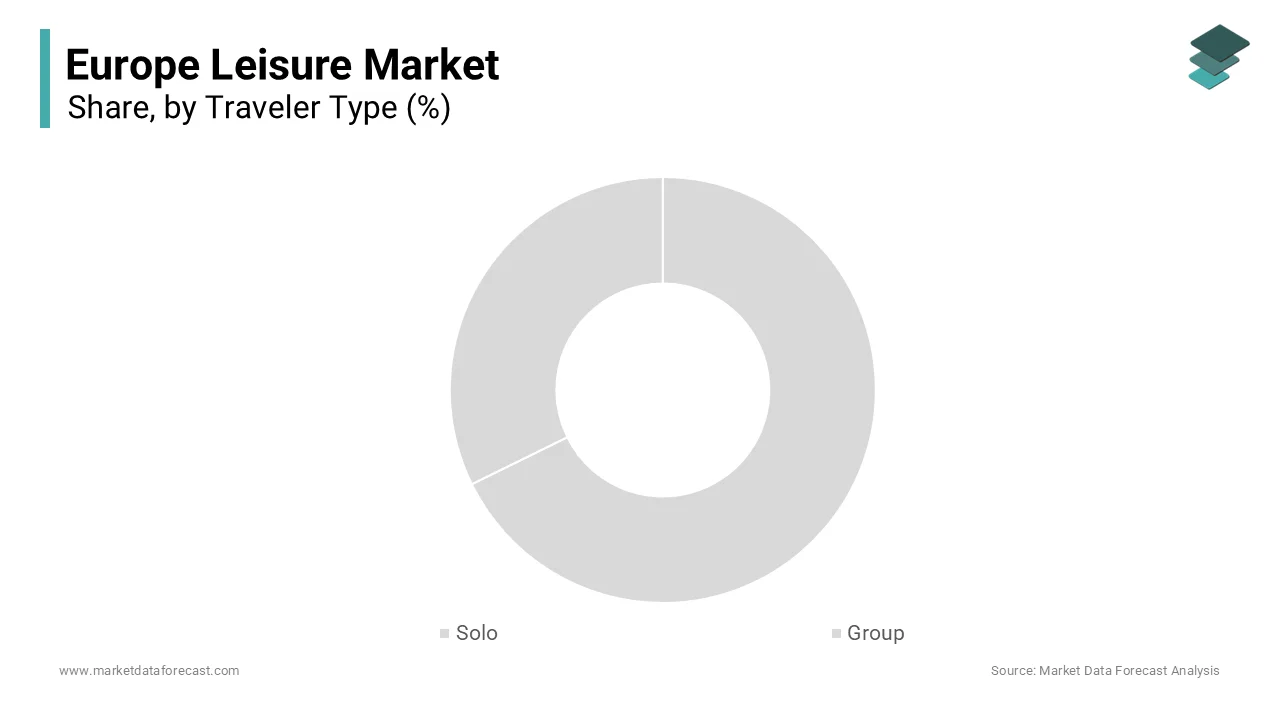
The solo traveller segment is anticipated to grow at a CAGR of 10.12% over the forecast period in the European market due to the shifting demographic trends, increasing independence, and the destigmatization of traveling alone. The surge in solo travel segment in the European market is primarily driven by the dramatic increase in single-person households across Europe, which has fundamentally altered consumption patterns in the leisure sector. According to Eurostat, single-person households now account for a significant portion of all households in the European Union, which is a figure that has risen steadily due to later marriages, higher divorce rates, and an aging population. This demographic shift creates a vast pool of individuals with the autonomy and disposable income to pursue travel without needing to coordinate with partners or family members. Unlike previous generations where solo travel was often associated with loneliness, modern singles view it as an empowering act of self-discovery and freedom. The availability of single-supplement-free accommodations and tailored solo tour packages has further facilitated this trend. Urban professionals in major cities like London, Berlin, and Paris are increasingly taking short breaks to recharge, prioritizing personal time over social obligations. The flexibility to choose destinations, pacing, and activities without compromise appeals strongly to this growing demographic, driving rapid growth in bookings for solo-friendly hotels, hostels, and experiences.
By Age Group Insights
The generation X segment had the leading share of the European leisure market in 2025 due to their peak earning potential, established careers, and strong propensity for high-value family and luxury travel. The growth of the Generation X segment is further anchored in their current life stage, where many have reached the zenith of their careers and possess the highest disposable incomes of any generational cohort. According to Eurostat, individuals aged 40 to 55 consistently report higher net earnings, allowing them to allocate significant portions of their budget to premium leisure activities. Unlike younger generations who may face student debt or entry-level wages, and older generations who might be on fixed pensions, Generation X has the financial flexibility to afford luxury resorts, long-haul flights, and exclusive experiences. They are the primary decision-makers for expensive family holidays, often bearing the cost for both their children and aging parents, effectively multiplying their spending impact. This cohort values quality and comfort, willing to pay premiums for direct flights, spacious accommodations, and personalized services. Their spending habits drive the market for high-end cruise lines, ski chalets, and cultural tours that offer depth and exclusivity. The combination of financial stability and a desire to maximize life experiences before retirement ensures that Generation X remains the dominant force in terms of total expenditure within the leisure sector.
The generation Z segment is anticipated to witness the fastest CAGR of 12.2% over the forecast period in the European leisure market owing to their digital nativity, desire for authentic experiences, and early adoption of new travel trends. The status of generation Z as true digital natives who rely heavily on social media platforms for inspiration, booking, and sharing their travel experiences is further contributing to the growth of the Gen Z segment in the European leisure market. As per the European Commission, Gen Z individuals use platforms like TikTok, Instagram, and YouTube as their primary source of travel information, often discovering hidden gems and trending destinations before they hit the mainstream. This immediate access to visual content creates rapid spikes in demand for specific locations, activities, or aesthetics, forcing the market to adapt quickly to viral trends. Their comfort with mobile booking apps and digital wallets streamlines the purchase process, enabling impulse bookings for weekend getaways and last-minute events. The desire to curate a personal brand through travel content drives them to seek unique, photogenic, and "Instagrammable" experiences that differentiate them from others. This behavior stimulates innovation in the leisure sector, with providers creating immersive installations and themed events specifically designed for social sharing. The speed at which Gen Z adopts and discards trends keeps the market dynamic and fast-paced, driving rapid growth in niche segments like eco-tourism, adventure sports, and festival travel.
By Expenditure Type Insights
The lodging segment had the major share of the European leisure market in 2025. The lodging segment is serving as the foundational cost component for almost all types of travel and staycation activities across the continent. Its dominance is intrinsic to the nature of leisure travel, which typically requires overnight accommodation. The fundamental requirement for a place to sleep and rest during any leisure trip lasting more than a single day that constitutes the majority of European holidays is further contributing to the leading position of lodging segment in the European market. According to Eurostat, EU residents typically spend several nights on holiday, meaning accommodation costs accumulate significantly over the duration of the trip. Whether travelers choose luxury hotels, budget hostels, vacation rentals, or camping sites, this expense is non-negotiable and often represents the largest single line item in a travel budget. The diversity of the European lodging market, ranging from historic castles to modern eco-lodges, caters to every budget and preference, ensuring broad participation. In popular urban destinations like Paris, London, and Rome, high demand and limited supply drive up nightly rates, further inflating the segment's total value. The rise of alternative accommodation platforms has expanded the inventory but has not diminished the overall spend, as travelers often opt for entire apartments for groups, which can be costlier than individual hotel rooms. The sheer volume of overnight stays generated by hundreds of millions of tourists annually cements lodging as the undisputed leader in expenditure.
The events and entertainment segment is anticipated to showcase the fastest CAGR of 11.5% over the forecast period. The surging demand for live experiences, festivals, and immersive cultural activities post-pandemic and the intense pent-up demand for live gatherings, concerts, and festivals that emerged following the relaxation of pandemic restrictions are propelling the growth of the events and entertainment segment in the European market. As per the European Festivals Association, attendance at music and cultural festivals across Europe has rebounded strongly, with many events reporting record ticket sales and sell-out crowds. Consumers, particularly younger demographics, are prioritizing "being there" over passive consumption, driving a renaissance in live performance venues, sporting events, and large-scale exhibitions. The emotional value of shared live experiences has led to a willingness to pay higher prices for tickets, VIP access, and merchandise. The proliferation of niche festivals focusing on specific genres, foods, or lifestyles has diversified the market, attracting specialized audiences from across borders. Major cities are investing heavily in event infrastructure to attract international tourists, recognizing the multiplier effect of events on local economies. The scarcity of dates for top-tier artists and teams creates a sense of urgency, prompting fans to book early and spend generously. This cultural shift toward valuing live moments ensures that the events sector will outpace traditional expenditure categories in growth rate.
REGIONAL ANALYSIS
France Leisure Market Analysis
France led the leisure market in Europe in 2025 with the highest share of the regional market due to its status as the most visited country in the world, boasting an unparalleled combination of cultural heritage, culinary excellence, and diverse landscapes. The ability to attract both mass tourism and high-end luxury travelers year-round is also boosting the French market expansion. According to Statista, France accounts for a significant portion of European leisure expenditure, reflecting its dominance in international arrivals and domestic tourism. Paris serves as a global magnet for culture and fashion, while the French Riviera, Alps, and countryside offer varied leisure options from skiing to wine tasting. The government's strong support for the arts and preservation of historical sites ensures a constant flow of cultural tourists. The French lifestyle itself, with its emphasis on long meals, café culture, and August holidays, drives substantial domestic spending on dining and accommodation. The extensive high-speed rail network facilitates easy access to regions, dispersing leisure traffic beyond the capital. The blend of iconic landmarks, world-class gastronomy, and natural beauty ensures France remains the primary engine of the European leisure economy.
Spain Leisure Market Analysis
Spain held a promising share of the European leisure market in 2025 due to its Mediterranean climate, extensive coastline, and vibrant culture that makes it the premier destination for sun-and-sea tourism in Europe. The nation benefits from a long tourist season that extends well beyond the summer months, attracting visitors from Northern Europe seeking warmth. As per the Spanish Ministry of Industry and Tourism, tourism contributes significantly to the national GDP, with millions of international arrivals annually drawn to destinations like Barcelona, Madrid, and the Balearic Islands. The Spanish model of leisure is heavily oriented towards outdoor activities, beach clubs, and nightlife, driving high expenditure in hospitality and entertainment. The country's rich tapestry of festivals, from La Tomatina to Semana Santa, adds unique cultural drawcards. The development of high-quality golf resorts and wellness centers has diversified its offering beyond traditional beach holidays. The affordability relative to other Western European nations, combined with excellent air connectivity, makes Spain a top choice for both budget and luxury travelers. The deep integration of tourism into the national identity and economy secures Spain's position as a critical pillar of the regional leisure market.
Germany Leisure Market Analysis
Germany is anticipated to hold a prominent share of the market over the forecast period owing to its robust domestic tourism sector, high disposable income, and a strong preference for nature-based and cultural leisure activities. The fact that Germans are among the biggest spenders on travel in Europe, often prioritizing quality and sustainability is further boosting the German market expansion. According to the German National Tourist Board, domestic travel within Germany is extremely popular, with citizens exploring the Black Forest, Bavarian Alps, and historic cities like Munich and Berlin. The German leisure market is driven by a mature population that values health, wellness, and outdoor sports such as hiking and cycling. The country hosts numerous world-renowned Christmas markets, music festivals, and trade fairs that attract millions of visitors annually. The strong automotive culture also supports a vibrant road trip and camping scene. High standards of infrastructure and service quality ensure a premium experience for both domestic and international guests. The emphasis on eco-friendly tourism and certified sustainable operators aligns with national values, driving growth in green leisure segments. The combination of economic strength and diverse leisure offerings cements Germany's role as a top-tier market.
Italy Leisure Market Analysis
Italy is expected to command for a significant portion of the European market during the forecast period. Italy is renowned for its unmatched density of art, history, and culinary traditions that make it a bucket-list destination for travelers worldwide. As per ISTAT, Italy receives a large number of international tourists annually, contributing substantially to the service sector economy. Cities like Rome, Florence, and Venice are perennial favourites for cultural tourism, while the Amalfi Coast, Tuscany, and Italian Lakes attract luxury seekers. The Italian concept of dolce far niente or the sweetness of doing nothing drives a market for slow travel and immersive stays in agri-turismos and villas. Food and wine tourism is a massive driver, with regions like Piedmont and Sicily drawing gourmands globally. The fashion and design scenes in Milan add a modern leisure dimension. Despite challenges with overtourism in some areas, the allure of Italian heritage remains irresistible. The deep emotional connection travelers feel towards Italian culture ensures sustained high expenditure and loyalty, securing Italy's position as a leading leisure destination.
United Kingdom Leisure Market Analysis
The United Kingdom is anticipated to showcase a prominent CAGR in the European leisure market during the forecast period owing to its dynamic mix of historic royalty, contemporary arts, and vibrant urban life, centered largely around London but extending to scenic rural areas. The British market status is defined by high domestic spending power and a strong culture of short breaks and city tourism. According to VisitBritain, the UK attracts millions of overseas visitors who come for its museums, theaters and historical landmarks, many of which are free to enter, which is driving spend in retail and hospitality. The West End theater district is a global powerhouse for entertainment leisure. The countryside, including the Lake District and Scottish Highlands, offers robust opportunities for outdoor leisure and eco-tourism. The pub culture and festival scene are integral to the British leisure identity, generating significant revenue. The weak pound in certain periods has historically boosted inbound tourism, while strong domestic demand supports the market during fluctuations. The diversity of offerings, from royal pageantry to cutting-edge music festivals, creates a multifaceted leisure ecosystem. The concentration of global financial wealth in London also fuels a high-end luxury leisure segment. This unique blend of tradition and modernity secures the UK a leading position in the European hierarchy.
COMPETITIVE LANDSCAPE
The competition within the Europe leisure market is intense and characterized by a rivalry between large integrated tourism groups, specialized attraction operators, and agile independent boutique providers. Major conglomerates leverage their extensive networks and economies of scale to offer comprehensive packages while niche players compete on uniqueness and localized authenticity. The market sees constant innovation as companies race to integrate augmented reality and interactive elements into their offerings to enhance visitor engagement. Differentiation increasingly depends on the ability to provide sustainable and responsible tourism options that align with European environmental values. Price competition remains fierce particularly in the budget accommodation and flight sectors where margins are thin and volume is critical. The threat of climate change forces all participants to adapt their business models to ensure resilience against shifting weather patterns. Talent acquisition for skilled hospitality and entertainment staff is another critical battleground affecting service quality. This dynamic environment requires continuous investment in technology and infrastructure to maintain relevance and capture the attention of discerning travelers.
KEY MARKET PLAYERS
Some of the notable key players in the Europe leisure market are
- The Walt Disney Company
- Merlin Entertainments
- Universal Parks and Resorts
- Parques Reunidos
- Compagnie des Alpes
- Village Roadshow Limited
- TUI Group
- Booking Holdings Inc.
- Expedia Group Inc.
- Trip.com Group Limited
- CVC Capital Partners
- Live Nation Entertainment Inc.
Top Players in the Market
- TUI Group stands as the world leading integrated tourism enterprise with a dominant footprint across the European leisure landscape. The company contributes significantly to the global market by operating a vast network of hotels, cruise ships, and travel agencies that set industry standards for package holidays. TUI recently strengthened its European position by accelerating its sustainability strategy through the introduction of more fuel efficient aircraft and eco certified hotel resorts. The firm actively invests in digital platforms to personalize customer journeys and streamline booking processes for millions of travelers. Strategic expansions into emerging destinations and the enhancement of its cruise fleet demonstrate a commitment to diversifying its portfolio. By focusing on high quality experiences and responsible tourism practices TUI reinforces its reputation as a pioneer in shaping the future of global leisure travel. These initiatives ensure the company remains at the forefront of innovation and customer satisfaction in a competitive environment.
- Compagnie des Alpes operates as a premier European player specializing in leisure destinations including ski resorts and theme parks with a growing global influence. The group drives international standards in mountain tourism and family entertainment through its management of iconic sites like Parc Astérix and major Alpine ski domains. Compagnie des Alpes has recently bolstered its market stance by acquiring strategic assets in Southern Europe to extend its seasonal operational reach beyond winter sports. The company focuses heavily on enhancing visitor experiences via digital integration and sustainable infrastructure upgrades such as snowmaking efficiency and renewable energy usage. Their dedication to creating year round attractions helps mitigate climate risks and ensures consistent revenue streams. By leveraging expertise in site management and guest services the group continues to expand its footprint through partnerships and targeted investments. These efforts solidify its status as a key architect of diverse leisure experiences across the continent and beyond.
- Merlin Entertainments is a global leader in location based family entertainment operating a vast portfolio of theme parks and attractions throughout Europe. The company contributes to the worldwide leisure sector by delivering immersive branded experiences featuring properties like Legoland and Madame Tussauds. Merlin recently enhanced its European presence by opening new interactive attractions and upgrading existing sites with advanced technology to boost engagement. The firm prioritizes sustainability by implementing carbon reduction targets and waste minimization programs across all its operations. Strategic collaborations with popular intellectual property owners allow Merlin to create unique and timely content that draws repeat visitors. Their focus on localizing global brands while maintaining high operational standards ensures broad appeal across different cultural markets. By continuously innovating in ride technology and guest interaction Merlin maintains its position as a top destination operator. These actions drive growth and reinforce its leadership in the competitive family entertainment segment globally.
Top Strategies Used by Key Market Participants
Key players in the Europe leisure market primarily focus on diversifying their portfolios to include year round attractions that reduce dependency on seasonal weather patterns. Companies are heavily investing in sustainability initiatives such as carbon neutral operations and eco friendly infrastructure to meet evolving consumer expectations. Another major strategy involves leveraging digital technologies to personalize customer experiences and streamline booking and entry processes. Providers are forming strategic partnerships with global entertainment brands to create exclusive and immersive themed attractions. Firms are also expanding into emerging markets within Eastern and Southern Europe to capture growing demand from rising middle classes. There is a significant push toward developing multi generational offerings that cater to diverse age groups within single families. Finally companies are prioritizing health and safety protocols to build trust and ensure long term customer loyalty in a post pandemic landscape.
MARKET SEGMENTATION
This research report on the European leisure market has been segmented and sub-segmented based on categories.
By Traveler Type
- Solo
- Group
By Age Group
- Baby Boomers
- Generation X
- Millennials
- Generation Z
By Expenditure Type
- Lodging
- Transportation
- Food and Beverages
- Events and Entertainment
- Others
By Sales Channel
- Conventional Channels
- Online Channels
By Country
- UK
- France
- Spain
- Germany
- Italy
- Russia
- Sweden
- Denmark
- Switzerland
- Netherlands
- Turkey
- Czech Republic
- Rest of Europe
Frequently Asked Questions
1.What is the Europe Leisure Market?
It refers to the industry that includes recreational activities, entertainment services, tourism, sports, and leisure facilities across European countries.
2.What factors are driving the growth of the Europe Leisure Market?
Growth is driven by increasing disposable income, rising tourism activities, and growing consumer interest in entertainment and recreational experiences.
3.What types of activities are included in the leisure market?
The leisure market includes activities such as theme parks, sports events, cultural attractions, gaming, entertainment centers, and outdoor recreation.
4.Which countries contribute significantly to the Europe Leisure Market?
Major contributors include the United Kingdom, Germany, France, Spain, and Italy.
5.What role does tourism play in the leisure market?
Tourism significantly supports the leisure market by increasing demand for entertainment venues, attractions, and recreational services.
6.What are leisure facilities?
Leisure facilities include amusement parks, cinemas, sports complexes, museums, entertainment centers, and recreational parks.
7.What challenges affect the Europe Leisure Market?
Challenges include seasonal demand fluctuations, economic uncertainties, and high operational costs.
8.How is digital technology influencing the leisure market?
Digital technologies support online ticket booking, virtual experiences, and improved customer engagement.
9.What role do sports and fitness activities play in the leisure market?
Sports and fitness activities attract large numbers of participants and spectators, contributing to market growth.
10.How are companies improving customer experience in the leisure market?
Companies are introducing innovative attractions, digital services, and personalized entertainment experiences.
Related Reports
Access the study in MULTIPLE FORMATS
Purchase options starting from
$ 2000
Didn’t find what you’re looking for?
TALK TO OUR ANALYST TEAM
Need something within your budget?
NO WORRIES! WE GOT YOU COVERED!
Call us on: +1 888 702 9696 (U.S Toll Free)
Write to us: sales@marketdataforecast.com