Europe Outboard Motors Market Size, Share, Trends & Growth Forecast Report, Segmented By Type, Application, And By Country (UK, France, Spain, Germany, Italy, Russia, Sweden, Denmark, Switzerland, Netherlands, Turkey, Czech Republic and Rest of Europe), Industry Analysis From (2026 to 2034)
Europe Outboard Motors Market Size
The Europe outboard motors market size was valued at USD 201 million in 2025 and is anticipated to reach USD 213.66 million in 2026 to reach USD 348.33 million by 2034, growing at a CAGR of 6.30% during the forecast period from 2026 to 2034.
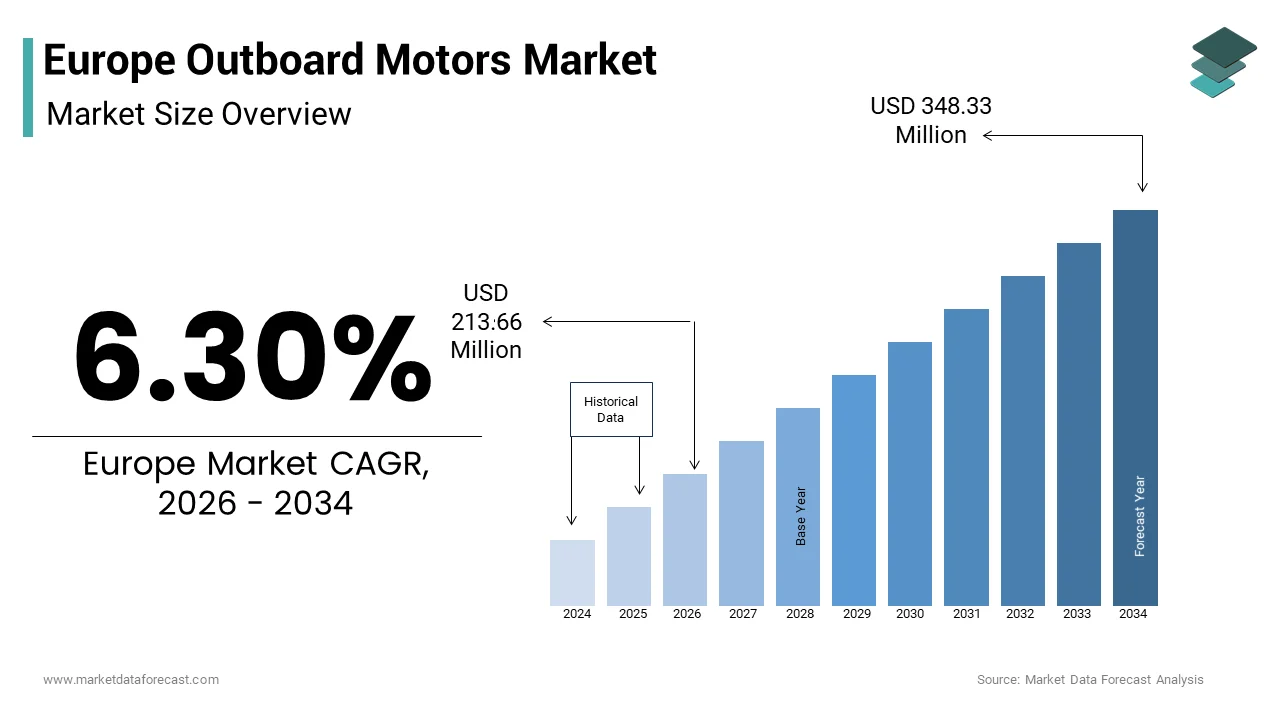
An outboard motor is a self-contained propulsion system for boats, featuring an engine, gearbox, and propeller in one unit mounted on the outside of the boat's transom (rear). These engines are mounted on the transom of the boat and provide both propulsion and steering capabilities offering versatility and ease of maintenance compared to inboard systems. The region’s extensive coastline and abundant inland waterways create a favorable environment for boating activities. As per Eurostat the European Union possesses approximately 68000 kilometers of coastline providing ample access to marine recreational opportunities. This geographical advantage supports a robust culture of leisure boating and maritime tourism. According to the European Boating Industry (EBI), approximately 48 million European citizens participate in recreational boating activities annually. This robust participant base supports over 32,000 companies (mostly SMEs) and 280,000 direct jobs within the sector. The economic significance of the blue economy is further emphasized by the European Commission which states that the sustainable blue economy contributes significantly to employment and growth in coastal regions. Environmental regulations are increasingly shaping the market with strict emission standards driving technological innovation. The Water Framework Directive mandates high standards for water quality influencing the adoption of cleaner propulsion technologies. Furthermore the rise in disposable income and the post pandemic surge in outdoor recreational activities have revitalized interest in boating. Consequently the convergence of geographical advantages regulatory frameworks and shifting consumer preferences defines the current landscape of the outboard motors market in Europe.
MARKET DRIVERS
Surge in Recreational Boating Participation Drives Demand for Versatile Propulsion
The increasing popularity of recreational boating and marine tourism across the region greatly contributes to the growth of the Europe outboard motors market. Consumers are increasingly seeking outdoor activities that offer social distancing and connection with nature a trend accelerated by recent global health concerns. According to the European Boating Industry (EBI), the number of registered pleasure craft in Europe exceeded 6.5 million units in 2024. A significant portion utilizes outboard propulsion due to its versatility, ease of maintenance, and lower entry cost for new boaters. Outboard motors are preferred for smaller vessels which dominate the recreational segment because they are easier to maintain and replace than inboard engines. The Mediterranean and Baltic regions are key hubs for marine tourism attracting millions of visitors annually who engage in sailing fishing and water sports. Based on data from Eurostat and UNWTO, coastal tourism is a primary economic driver in Southern Europe, with over 51% of all EU hotel bed capacity concentrated in coastal regions, fueling the local demand for rental and excursion boats powered by outboards. This influx of tourists stimulates the rental market for boats which in turn drives the procurement of reliable and efficient outboard motors. Additionally the growing trend of boat ownership among younger demographics in Northern Europe contributes to market expansion. Manufacturers are responding by developing lighter and more fuel efficient models that appeal to entry level boaters. The integration of digital controls and smart features also enhances the user experience making boating more accessible. Consequently the sustained growth in recreational participation and tourism infrastructure underpins the steady demand for outboard motors in the region.
Stringent Environmental Regulations Accelerate Adoption of Clean Propulsion Technologies
The European Union’s commitment to environmental sustainability has led to the implementation of rigorous emission standards for marine engines, which further boosts the expansion of the Europe outbound motors market. These new regulations compel manufacturers to innovate and adopt cleaner technologies. The Recreational Craft Directive sets strict limits on exhaust emissions and noise levels for outboard motors pushing the industry towards four stroke engines and electric alternatives. According to the European Environment Agency transport sectors including maritime are under increasing pressure to reduce their carbon footprint to meet the goals of the European Green Deal. This regulatory landscape favors outboard motors that offer lower emissions and higher fuel efficiency. While marine engines follow RCD II, the industry is increasingly aligning with the technical benchmarks of Stage V (Regulation 2016/1628) used in other sectors to streamline the production of low-emission engine blocks and alternative fuel systems. As per the International Maritime Organization global efforts to reduce greenhouse gas emissions from ships are gaining momentum influencing regional policies. Consequently there is a noticeable shift towards electric outboard motors particularly for inland waterways and protected marine areas where noise and pollution are critical concerns. Governments in countries like Norway and the Netherlands are offering incentives for the adoption of electric marine propulsion systems. These initiatives encourage consumers and commercial operators to transition away from traditional combustion engines. The development of advanced battery technologies and charging infrastructure supports this transition. Thus regulatory pressure acts as a catalyst for technological advancement and market transformation towards sustainable outboard motor solutions.
MARKET RESTRAINTS
High Initial Costs and Maintenance Expenses Restrict Market Accessibility
The high initial purchase price and ongoing maintenance costs associated with advanced outboard motors, particularly electric and high performance four stroke models, are a significant hindrance to the growth of the Europe outbound motors market. While electric outboards offer environmental benefits their upfront cost is substantially higher than conventional gasoline engines due to the expense of battery packs and electric drivetrains. According to the European Boating Industry the average cost of an electric outboard motor can be two to three times higher than a comparable combustion engine. This price disparity discourages price sensitive consumers and small scale commercial operators from adopting newer technologies. Additionally the limited lifespan of batteries and the need for specialized charging infrastructure add to the total cost of ownership. As per Eurostat and European Central Bank (ECB) reporting, while headline inflation has stabilized, sustained high interest rates have increased the cost of financing for recreational craft. This has led to a measurable contraction in discretionary spending on mid-to-high-tier leisure boats and luxury outboard accessories across the Eurozone. The economic uncertainty following recent global events has further tightened household budgets. Maintenance of modern outboard motors also requires specialized technical expertise which can be scarce and expensive in certain regions. The complexity of electronic control systems in newer models increases repair costs compared to older mechanical engines. Thus, the financial burden associated with acquiring and maintaining advanced outboard motors limits market penetration especially among entry level users and smaller businesses.
Limited Charging Infrastructure Hinders Widespread Electric Motor Adoption
The lack of adequate charging infrastructure for electric outboard motors remains a critical obstacle to their widespread adoption and the expansion of the Europe outbound motors market. Unlike electric vehicles which benefit from an expanding network of public charging stations marine charging points are scarce particularly in remote coastal areas and smaller marinas. Under the framework of the Alternative Fuels Infrastructure Regulation (AFIR), the deployment of shore-side electricity is currently prioritized for commercial ports. Data indicates a significant infrastructure deficit in secondary marinas and recreational harbors, particularly in Southern and Eastern Europe, where the lack of fast-charging capabilities limits the range and utility of electric outboards. This insufficiency creates range anxiety for boat owners who fear being stranded without power. The logistical challenges of installing charging stations in marine environments including exposure to saltwater and varying tidal conditions further complicate infrastructure development. As per the International Energy Agency the investment in marine charging infrastructure lags behind that of road transport due to lower visibility and perceived demand. Without a reliable network of charging points the practicality of electric outboards for longer trips or extended use is compromised. This limitation restricts the appeal of electric motors to short distance users in well serviced areas. Furthermore the lack of standardized charging connectors and protocols adds to the confusion and inconvenience for users. Until the infrastructure gap is addressed the growth of the electric outboard segment will remain constrained. Hence, the inadequacy of charging facilities acts as a major restraint preventing the full realization of the potential for clean marine propulsion.
MARKET OPPORTUNITIES
Expansion of Aquaculture and Commercial Fishing Creates Demand for Workboat Propulsion
The growing aquaculture and commercial fishing sectors in the region create major potential for the Europe outboard motors market. Specifically, there is high demand for robust and fuel-efficient models. Aquaculture is one of the fastest growing food production sectors in the EU requiring reliable boats for farm maintenance feeding and harvesting operations. According to the European Market Observatory for Fisheries and Aquaculture Products (EUMOFA), while production volume has stabilized at approximately 1.13 million tonnes, the production value has seen consecutive growth, reaching over €4.1 billion. This economic strength drives demand for reliable workboat outboards in the mussel, trout, and seabass farming sectors. These operations often take place in coastal and inland waters where maneuverability and shallow draft are essential making outboard powered workboats ideal. The need for dependable propulsion in harsh marine environments drives demand for high durability outboard motors. Additionally the modernization of small scale fisheries supports the replacement of aging engines with newer more efficient models to comply with environmental regulations. As per the General Fisheries Commission for the Mediterranean sustainable fishing practices are being promoted which include the use of cleaner and quieter engines to minimize impact on marine life. Government subsidies and grants aimed at modernizing fishing fleets provide financial incentives for upgrading propulsion systems. Manufacturers can capitalize on this trend by offering specialized workboat engines with enhanced torque and corrosion resistance. Thus, the expansion of the blue economy sectors offers a lucrative avenue for market growth beyond the recreational segment.
Technological Advancements in Electric Propulsion Open New Avenues for Differentiation
Rapid advancements in electric propulsion technology and battery efficiency drive growth prospects for manufacturers in the Europe outbound motors market. These improvements enable manufacturers to differentiate products and capture new market segments. Innovations in lithium ion battery chemistry have led to higher energy densities and faster charging times making electric outboards more practical for a wider range of applications. According to the European Battery Alliance investments in battery research and development are accelerating leading to cost reductions and performance improvements. These technological breakthroughs enable the production of electric outboards with longer runtimes and greater power output rivaling traditional combustion engines. The integration of smart technologies such as remote monitoring and diagnostic systems enhances user convenience and safety. As per the Fraunhofer Institute for Systems and Innovation Research digitalization in the marine sector is creating new value propositions for customers including predictive maintenance and optimized energy management. Manufacturers who invest in these technologies can position themselves as leaders in sustainability and innovation. The growing consumer awareness of environmental issues further drives demand for eco friendly products. Collaborations between motor manufacturers and battery suppliers can lead to integrated solutions that offer superior performance. Additionally the development of modular battery systems allows users to customize power capacity according to their needs. So, technological innovation in electric propulsion provides a strategic opportunity for companies to expand their market share and meet evolving customer expectations.
MARKET CHALLENGES
Supply Chain Disruptions and Raw Material Scarcity Impact Production Stability
Ongoing supply chain disruptions and scarcity of critical raw materials required for manufacturing are slowing down the expansion of the Europe outboard motors market. The production of outboard motors relies on a complex global supply chain for components such as aluminum alloys electronic chips and composite materials. According to European Central Bank (ECB) reports from early 2025, while broad supply chain pressures have stabilized, manufacturing cycles in advanced economies remain weak. The marine industry continues to face "choppy waves of demand" and high turnover in skilled labor, which impacts the stability of production for high-tech outboard components. The shortage of semiconductors used in engine control units and digital displays has led to production delays and increased costs. As per the European Aluminium Association fluctuations in aluminum prices due to energy costs and trade policies impact the manufacturing expenses of engine housings and propellers. Geopolitical tensions and trade restrictions further exacerbate supply uncertainties making it difficult for manufacturers to secure consistent supplies of raw materials. The reliance on imports for certain components exposes European manufacturers to external shocks. Additionally the transition to electric motors increases dependency on rare earth elements and battery materials such as lithium and cobalt which are subject to volatile markets. These supply chain vulnerabilities affect the ability of manufacturers to meet demand and maintain profitable margins. Therefore, managing supply chain risks and diversifying sourcing strategies remain critical challenges for industry participants.
Climate Change and Unpredictable Weather Patterns Affect Boating Seasons
Climate change and resulting unpredictable weather patterns are a growing challenge for the European outboard motors market. These factors directly affect boating seasons and usage frequency. Extreme weather events such as storms heatwaves and flooding can disrupt recreational boating activities and damage marine infrastructure. According to the European Environment Agency the frequency and intensity of extreme weather events in Europe have increased in recent years impacting coastal and inland waterways. Shorter and less predictable boating seasons reduce the utilization rate of boats and outboard motors affecting consumer willingness to invest in new equipment. In some regions rising water temperatures and algal blooms restrict access to certain water bodies limiting opportunities for boating. As per the World Meteorological Organization changes in precipitation patterns affect water levels in rivers and lakes potentially restricting navigation for smaller vessels. These environmental changes require manufacturers to design more resilient engines capable of operating in varied conditions. However the overall uncertainty dampens consumer confidence and demand. Additionally the need for adaptation measures such as improved mooring and storage facilities adds to the cost of boat ownership. Consequently the environmental impacts of climate change present a structural challenge to the market requiring stakeholders to adapt to changing conditions and mitigate risks.
REPORT COVERAGE
| REPORT METRIC | DETAILS |
| Market Size Available | 2025 to 2034 |
| Base Year | 2025 |
| Forecast Period | 2026 to 2034 |
| CAGR | 6.30% |
| Segments Covered | By Type, Application, and Region. |
| Various Analyses Covered | Global, Regional, and Country Level Analysis; Segment-Level Analysis, DROC; PESTLE Analysis; Porter’s Five Forces Analysis; Competitive Landscape; Analyst Overview of Investment Opportunities |
| Regions Covered | UK, France, Spain, Germany, Italy, Russia, Sweden, Denmark, Switzerland, Netherlands, Turkey, Czech Republic, and the Rest of Europe |
| Market Leaders Profiled | SECO GmbH, Yamaha Motor Co., Ltd., Suzuki Motor Corporation, Torqeedo GmbH, Honda Motor Co., Ltd., DEUTZ AG, E.P. Barrus Ltd., Marine Tech, Vector Outboards, and Selva S.p.A. |
SEGMENTAL ANALYSIS
By Type Insights
In 2025, the outboard electric propulsion motor segment led the Europe outboard motors market and occupied a 58.1% share. This leading position of the segment is mainly attributed to the increasing regulatory pressure to reduce noise and emissions in sensitive marine environments such as lakes rivers and coastal protected areas. Unlike traditional combustion engines electric propulsion motors offer zero emissions at the point of use and significantly lower noise levels which aligns with the European Union’s stringent environmental directives. According to the European Boating Industry the demand for silent and clean propulsion systems has risen sharply as many inland waterways impose strict noise limits during peak tourist seasons. The advancement in battery technology particularly lithium ion batteries has also enhanced the performance and range of electric propulsion motors making them a viable alternative for day cruising and short distance travel. As per the International Energy Agency the cost of lithium ion battery packs has decreased by nearly 90 percent over the last decade improving the affordability of electric marine propulsion. Furthermore the ease of maintenance associated with electric motors which have fewer moving parts than internal combustion engines appeals to recreational boat owners seeking lower long term operating costs. The integration of smart features such as remote control via smartphone apps and regenerative charging capabilities further enhances user experience. Hence, the combination of regulatory compliance technological advancements and operational benefits sustains the leadership of the outboard electric propulsion motor segment in the European market.
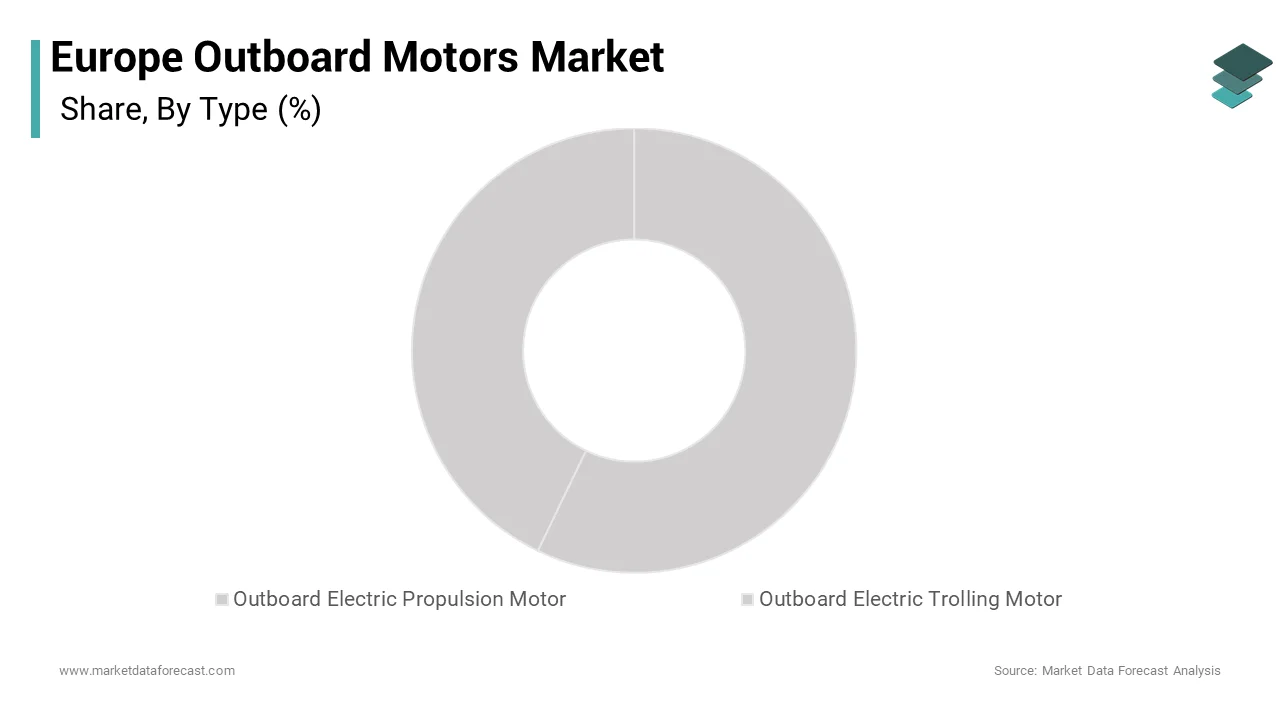
The outboard electric trolling motor segment is estimated to register the fastest CAGR of 14.2% from 2026 to 2034 due to the rising popularity of recreational fishing and the need for precise maneuverability in shallow waters. Trolling motors are essential for anglers who require quiet and controlled movement to approach fish without startling them. According to the European Anglers Alliance (EAA), Europe is home to more than 25 million recreational anglers. This massive demographic generates a total annual economic impact exceeding €20 billion, supporting approximately 350,000 full-time jobs and creating a robust market for specialized, high-performance fishing outboards. The shift towards catch and release practices and sustainable fishing methods encourages the use of electric trolling motors to minimize disturbance to aquatic ecosystems. As per the Food and Agriculture Organization of the United Nations recreational fishing contributes significantly to local economies in coastal and inland regions driving investment in high quality gear. Technological innovations such as GPS guided spot lock systems and wireless foot controls have transformed trolling motors into sophisticated navigation tools enhancing their appeal to serious anglers. The lightweight design and portability of modern electric trolling motors also make them attractive for users of small boats and kayaks. Additionally government initiatives promoting eco friendly tourism in natural reserves favor the adoption of non polluting propulsion methods. Consequently the specific functional advantages and technological enhancements drive the rapid expansion of the outboard electric trolling motor segment.
By Application Insights
The civil entertainment segment dominated the Europe outboard motors market and accounted for a 65.2% share in 2025. This dominance of the segment is driven by the widespread participation in leisure boating activities including sailing yachting and water sports across the continent. The cultural significance of maritime leisure in Europe combined with high disposable incomes supports a robust market for recreational vessels equipped with outboard motors. According to the European Commission tourism accounts for approximately 10 percent of the European Union’s gross domestic product with coastal and marine tourism being a major component. The Mediterranean region in particular attracts millions of tourists annually who engage in boat rentals and leisure cruises driving demand for reliable and efficient outboard engines. As per the United Nations World Tourism Organization international tourist arrivals in Southern Europe have rebounded strongly post pandemic reaching pre 2019 levels in 2024. This resurgence in tourism stimulates the rental market for boats which typically utilize outboard motors for their versatility and ease of handling. The growing trend of second home ownership in coastal areas also contributes to private boat purchases. Manufacturers cater to this segment by offering a wide range of horsepower options suitable for various boat sizes and activities. The emphasis on user friendly features such as electric start and digital throttles enhances the recreational experience. Thus, the strong foundation of marine leisure and tourism ensures the continued dominance of the civil entertainment segment.
The commercial segment is anticipated to witness the fastest CAGR of 9.8% during the forecast period owing to the modernization of small scale fisheries and the expansion of aquaculture operations. Commercial users including fishing fleets and farm service providers require durable and fuel efficient outboard motors for daily operations in demanding marine environments. According to the European Market Observatory for Fisheries and Aquaculture Products (EUMOFA), the value of EU aquaculture production grew by 42% in real terms between 2013 and 2022, a trend primarily driven by rising prices rather than volume, which has remained largely stagnant or declined in recent years. Aquaculture farms rely on workboats equipped with outboard motors for tasks such as net maintenance feeding and harvesting which require precise maneuverability and reliability. As per the General Fisheries Commission for the Mediterranean (GFCM), efforts to sustainably manage fish stocks have prioritized the reduction of fishing effort and the implementation of more selective gear, such as the use of 40mm square mesh netting in bottom trawls, to minimize bycatch and protect juvenile fish.The replacement of aging two stroke engines with cleaner and more efficient four stroke or electric models is driven by environmental regulations and operational cost savings. Government subsidies aimed at fleet renewal and sustainability encourage commercial operators to upgrade their equipment. Additionally the growth of marine services such as pilotage and harbor maintenance creates niche demand for specialized outboard powered vessels. Consequently the economic vitality of the blue economy sectors and regulatory incentives drive the rapid growth of the commercial application segment.
COUNTRY ANALYSIS
Germany Outboard Market Analysis
Germany was the top performing market for outboard motors in Europe by holding a 18.3% share in 2025. Its position is driven by its extensive network of rivers lakes and canals which support a vibrant culture of inland boating and fishing. According to the German Federal Ministry of Transport and Digital Infrastructure there are over 7000 kilometers of navigable waterways in Germany providing ample opportunities for recreational and commercial boating. The presence of major automotive and engineering companies fosters a strong manufacturing base for high precision marine components including outboard motors. As per the German Marine Industries Association (BVWW), the market is currently transitioning from a post-pandemic peak to a consolidation phase. There is a distinct "metric swap" toward electric outboard systems for use on sensitive inland lakes where combustion engines face increasing restrictions. The strict enforcement of environmental regulations on inland waters drives the adoption of electric and low emission outboard motors. Germany’s central location in Europe also makes it a key distribution hub for marine equipment. The country’s strong economy and high disposable income support consumer spending on leisure activities. Additionally the popularity of fishing sports in regions like Bavaria and Mecklenburg Vorpommern contributes to steady demand for trolling motors. Therefore, Germany’s geographical advantages industrial strength and regulatory framework sustain its leadership in the European outboard motors market.
United Kingdom Outboard Market Analysis
The United Kingdom was the second largest player in the Europe outboard motors market and captured a 15.4% share in 2025 because of the UK is characterized by a strong coastal tourism industry and a deep rooted fishing heritage that drives demand for versatile marine propulsion. According to the British Marine Federation the UK has one of the longest coastlines in Europe supporting a diverse range of boating activities from leisure cruising to commercial fishing. The popularity of rigid inflatable boats and small fishing vessels which predominantly use outboard motors is high among both recreational and professional users. As per the Office for National Statistics marine tourism contributes significantly to the coastal economy with millions of visitors engaging in water based activities annually. The UK’s island geography necessitates reliable transportation between coastal communities and islands further supporting the commercial use of outboard motors. Post Brexit adjustments have influenced supply chains but domestic manufacturing and assembly capabilities remain robust. The government’s focus on blue growth and sustainable marine industries encourages the adoption of cleaner technologies. Additionally the strong presence of marine clubs and associations fosters a community of enthusiastic boaters. So, the UK’s coastal assets and maritime culture maintain its prominent position in the regional market.
France Outboard Market Analysis
France maintains a significant presence in the Europe outboard motors market owing to its extensive coastline along the Atlantic Ocean and the Mediterranean Sea which are major hubs for nautical tourism. According to the French Ministry of Ecological Transition, Metropolitan France features 3,427 kilometers of coastline (extending to 18,000 km including overseas territories), which anchors Europe’s largest motorboating market. The Mediterranean region particularly the French Riviera is a global destination for luxury yachting and leisure boating driving demand for high performance outboard motors. As per the French Nautical Industries Federation the domestic production of pleasure craft is significant with a strong export orientation. The government’s support for sustainable tourism promotes the use of eco friendly propulsion systems in protected marine areas. The prevalence of inland waterways such as the Canal du Midi also supports the use of smaller outboard powered boats for leisure and tourism. France’s strong agricultural and fishing sectors contribute to the commercial demand for durable workboat engines. Additionally the country hosts major international boat shows which stimulate market activity and innovation. Hence, France’s geographical diversity and tourism strength drive steady demand for outboard motors.
Italy Outboard Market Analysis
Italy is moving ahead steadfastly in the Europe outboard motors market due to its strong manufacturing base in the marine sector and a deeply ingrained leisure boating culture. The Mediterranean climate and extensive coastline make boating a popular year round activity for both residents and tourists. As per the Italian Association of Marine Industries the export of Italian made boats and marine equipment is a key economic driver supporting local manufacturing jobs. The popularity of small to medium sized boats for coastal exploration and fishing sustains demand for versatile outboard engines. Italy’s numerous islands and archipelagos require reliable marine transportation further boosting commercial applications. The government’s investment in port infrastructure and marina development enhances the accessibility of boating activities. Additionally the presence of renowned engine manufacturers in Italy fosters innovation and competition in the outboard motor segment. Thus, Italy’s industrial prowess and favorable climate ensure its significant role in the European market.
Sweden Outboard Market Analysis
Sweden is predicted to grow notably in the Europe outboard motors market from 2026 and 2034 owing to its vast archipelago and thousands of lakes which create ideal conditions for boating and fishing. The Swedish culture emphasizes outdoor life and connection with nature driving consistent demand for reliable and environmentally friendly outboard motors. As per the Swedish Marine Industries Association there is a strong trend towards electrification in the marine sector supported by government incentives and environmental awareness. The extensive coastline and inland waterways require versatile propulsion systems for both leisure and commercial purposes such as ferry services and fishing. Sweden’s leadership in sustainability encourages the adoption of electric and hybrid outboard motors particularly in sensitive ecological areas. The presence of innovative marine technology companies fosters the development of advanced propulsion solutions. Additionally the popularity of summer house living along the coast boosts seasonal boat usage. Consequently Sweden’s natural assets and commitment to sustainability maintain its position as a key market participant.
COMPETITIVE LANDSCAPE
The competition in the Europe outboard motors market is intense characterized by the presence of established global brands and specialized regional manufacturers. Leading companies compete on the basis of technological innovation product reliability and environmental compliance. The market sees frequent launches of new engine models featuring improved fuel efficiency lower noise levels and advanced digital controls. Differentiation is achieved through unique selling propositions such as proprietary propulsion technologies and comprehensive warranty packages. Established players leverage their extensive dealer networks and strong brand reputations to maintain customer loyalty. New entrants often focus on niche segments such as electric propulsion or lightweight portable motors to gain foothold. Strategic alliances with boat builders and rental agencies are common to secure bulk orders and increase visibility. Price competition exists but is secondary to performance and durability which are critical for marine applications. Regulatory adherence to European emission standards is a key competitive factor influencing product design and marketing. Intellectual property protection is crucial as companies safeguard their engineering innovations. Overall the competitive landscape drives continuous improvement in product quality and sustainability fostering a dynamic and evolving market environment.
KEY MARKET PLAYERS
A few of the market players that are dominating the Europe outboard motors market
- SECO GmbH
- Yamaha Motor Co., Ltd.
- Suzuki Motor Corporation
- Torqeedo GmbH
- Brunswick Corporation
- Honda Motor Co., Ltd.
- DEUTZ AG
- E.P. Barrus Ltd.
- Marine Tech
- Vector Outboards
- Selva S.p.A.
Top Players In The Market
- Yamaha Motor Co Ltd is a dominant force in the global marine industry with a substantial presence in the Europe outboard motors market. The company is renowned for its reliability innovation and extensive product range covering recreational and commercial applications. Yamaha contributes to the global market by setting benchmarks in fuel efficiency and durability through advanced engineering. In Europe the company has strengthened its position by expanding its network of authorized dealers and service centers. Recent actions include the launch of new electric outboard models and the integration of digital helm systems to enhance user experience. Yamaha actively participates in European boat shows to showcase its latest technologies and engage with customers. The company also focuses on sustainability by developing cleaner combustion engines and promoting responsible boating practices. Its commitment to quality and customer support ensures strong brand loyalty among European consumers. Yamaha leverages its global manufacturing capabilities and local market insights to maintain its competitive edge. Consequently, the company continues to drive growth in the dynamic European marine sector.
- Brunswick Corporation is a leading manufacturer of marine products including the prestigious Mercury Marine brand which holds a significant position in the Europe outboard motors market. The company offers a diverse portfolio of outboard engines known for their performance technology and versatility. Brunswick contributes to the global market by pioneering innovations such as joystick piloting and autonomous docking features. In Europe the company has focused on expanding its distribution channels and enhancing after sales support services. Recent initiatives include the introduction of high horsepower four stroke engines and electric propulsion solutions tailored for European waterways. Brunswick collaborates with boat builders to integrate its engines seamlessly into new vessel designs. The company also invests in digital platforms that provide real time diagnostics and maintenance alerts to users. By prioritizing technological advancement and customer engagement Brunswick strengthens its market presence. Its strategic focus on sustainability and operational excellence enables it to meet the evolving demands of European boaters and regulatory requirements effectively.
- Honda Motor Co Ltd is a key player in the Europe outboard motors market recognized for its innovative four stroke engine technology and environmental stewardship. The company provides a wide range of outboard motors that are celebrated for their quiet operation low emissions and fuel efficiency. Honda contributes to the global market by advancing clean marine propulsion technologies and setting high standards for reliability. In Europe the company has expanded its product lineup to include lightweight and portable models suitable for small boats and dinghies. Recent actions involve the development of hybrid propulsion systems and the enhancement of digital connectivity features for better user control. Honda partners with European distributors to ensure widespread availability and timely service support. The company emphasizes sustainable manufacturing practices and compliance with strict European emission norms. By focusing on innovation and environmental responsibility Honda appeals to eco conscious consumers. Its dedication to quality and customer satisfaction reinforces its reputation as a trusted provider of marine propulsion solutions in the European region.
Top Strategies Used By The Key Market Participants
Key players in the Europe outboard motors market primarily focus on product innovation and diversification to meet evolving consumer demands and regulatory standards. Companies invest heavily in research and development to create fuel efficient and low emission engines including electric and hybrid models. Strategic partnerships with boat manufacturers and distributors help expand market reach and ensure seamless integration of propulsion systems. Manufacturers also prioritize enhancing after sales services and digital support platforms to improve customer retention. Expansion into emerging segments such as electric trolling motors and commercial workboats allows firms to capture new revenue streams. Marketing efforts emphasize sustainability and performance to align with European environmental values. Additionally companies optimize their supply chains to mitigate risks associated with raw material scarcity and logistical disruptions. By combining technological leadership with robust distribution networks and customer centric services key participants strengthen their competitive positions and drive sustainable growth in the European market.
MARKET SEGMENTATION
This research report on the Europe outboard motors Market is segmented and sub-segmented into the following categories.
By Type
- Outboard Electric Propulsion Motor
- Outboard Electric Trolling Motor
By Application
- Civil Entertainment
- Municipal
- Commercial
- Others
By Country
- UK
- France
- Spain
- Germany
- Italy
- Russia
- Sweden
- Denmark
- Switzerland
- Netherlands
- Turkey
- Czech Republic
- Rest of Europe
Frequently Asked Questions
What is currently driving growth in the Europe outboard motors market?
Rising recreational boating activities and marine tourism are driving market growth.
Why are outboard motors widely used in marine applications across Europe?
They offer flexibility, ease of maintenance, and efficient propulsion for boats.
How would you explain outboard motors in simple terms?
They are external engines mounted on boats to provide propulsion.
Where are outboard motors most commonly used across Europe?
They are widely used in recreational boats, fishing vessels, and small commercial boats.
What makes outboard motors important for modern boating?
They provide reliable performance and easy control for various marine activities.
From a user’s perspective, are outboard motors a worthwhile investment?
Yes, they offer efficiency, portability, and ease of maintenance.
What challenges are affecting the Europe outboard motors market?
Stringent emission regulations and high costs are key challenges.
How is marine tourism influencing demand for outboard motors?
Growing tourism is increasing demand for recreational boating equipment.
Which segments contribute the most to outboard motor demand?
Recreational boating and fishing sectors are major contributors.
Is the Europe outboard motors market growing steadily?
Yes, it is expanding with increasing interest in marine activities.
Access the study in MULTIPLE FORMATS
Purchase options starting from
$ 2000
Didn’t find what you’re looking for?
TALK TO OUR ANALYST TEAM
Need something within your budget?
NO WORRIES! WE GOT YOU COVERED!
Call us on: +1 888 702 9696 (U.S Toll Free)
Write to us: sales@marketdataforecast.com