Europe Used Electric Vehicle Market Size, Share, Trends, & Growth Forecast Report By Vehicle Type (Sport Utility Vehicles (SUVs), Hatchbacks), Fuel Type, Sales Channel, End Use and Country (UK, France, Spain, Germany, Italy, Russia, Sweden, Denmark, Switzerland, Netherlands, Turkey, Czech Republic and Rest of Europe), Industry Analysis From 2026 to 2034
Europe Used Electric Vehicle Market Report Summary
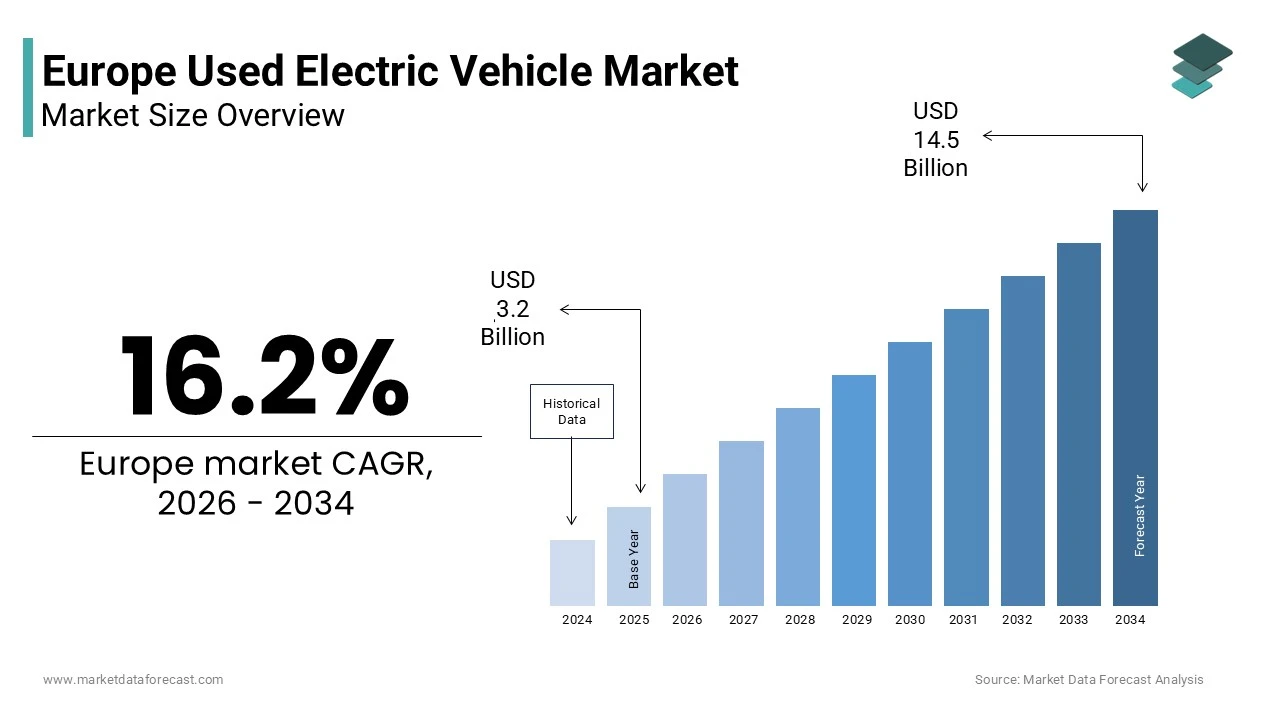
The Europe used electric vehicle market was valued at USD 3.2 billion in 2025, is estimated to reach USD 3.9 billion in 2026, and is projected to reach USD 14.5 billion by 2034, growing at a CAGR of 16.2% during the forecast period from 2026 to 2034. The growth of the Europe used electric vehicle market is driven by increasing adoption of electric mobility, rising cost of new electric vehicles, and strong regulatory push toward decarbonization across the region. The growing electrification of corporate fleets and the steady inflow of off-lease vehicles into the secondary market are further supporting market expansion. Moreover, the rapid development of charging infrastructure and increasing consumer awareness regarding sustainable transportation are enhancing the attractiveness of pre-owned electric vehicles among cost-conscious buyers.
Key Market Trends
- Rising availability of off-lease electric vehicles is driven by corporate fleet electrification and sustainability mandates across Europe.
- Increasing expansion of public charging infrastructure, reducing range anxiety and improving confidence in used electric vehicle ownership.
- Growing demand for affordable and sustainable mobility solutions among price-sensitive consumers and urban populations.
- Rising adoption of digital platforms and peer-to-peer marketplaces for transparent and efficient used EV transactions.
- Emergence of battery health certification and vehicle-to-grid technologies is enhancing the value proposition and consumer trust.
Segmental Insights
- Based on vehicle type, the sport utility vehicle segment was the largest and held a significant share of the Europe used electric vehicle market in 2025. The segment’s dominance is attributed to strong consumer preference for spacious, versatile, and family-friendly vehicles with enhanced safety features and performance.
- Based on fuel type, the battery electric vehicle segment accounted for the largest share of the Europe used electric vehicle market in 2025. The leadership of this segment is driven by stringent emission regulations, government incentives, and increasing preference for zero-emission mobility solutions.
- Based on sales channel, the franchised dealers segment was the largest, occupying a prominent share of the Europe used electric vehicle market in 2025. The dominance of this segment stems from the trust associated with certified pre-owned programs, warranty offerings, and professional servicing support.
Regional Insights
The Europe used electric vehicle market is witnessing rapid growth across major countries, supported by strong policy frameworks, infrastructure development, and increasing EV adoption rates.
- Germany was the largest contributor, accounting for 28.3% of the Europe used electric vehicle market share in 2025, driven by its strong automotive industry, large EV production base, and extensive charging infrastructure.
- The United Kingdom holds a significant position in the market, supported by strict emission regulations, clean air zones, and increasing consumer awareness regarding electric mobility.
- France continues to perform strongly, fueled by government incentives, urban demand for compact EVs, and expanding charging networks.
- The Netherlands and Norway are emerging as key markets due to high EV penetration, strong sustainability initiatives, and well-developed charging infrastructure.
Competitive Landscape
The Europe used electric vehicle market is characterized by increasing competition among automotive manufacturers, leasing companies, digital platforms, and dealerships. Market players are focusing on certified pre-owned programs, digital transformation, and battery transparency to build consumer trust and improve market penetration. Strategic initiatives such as partnerships with charging infrastructure providers, expansion of online marketplaces, and investment in battery refurbishment technologies are strengthening competitive positioning. Prominent players in the Europe used electric vehicle market include Volkswagen AG, Ayvens, BMW AG, Tesla, Mercedes-Benz Group AG, Renault Group, Stellantis N.V., BYD Co. Ltd., Auto1 Group SE, AutoScout24 GmbH, and Mobile.de GmbH.
Europe Used Electric Vehicle Market Size
The Europe used electric vehicle market size was valued at USD 3.2 billion in 2025 and is anticipated to reach USD 3.9 billion in 2026 from USD 14.5 billion by 2034, growing at a CAGR of 16.2% during the forecast period from 2026 to 2034
The used electric vehicle is the secondary trade of battery electric vehicles and plug in hybrid electric vehicles across the European continent. As new electric vehicle prices remain elevated due to supply chain complexities and advanced technology integration, the pre owned segment offers a viable entry point for cost conscious consumers. According to the European Environment Agency, transport accounts for approximately 25% of total greenhouse gas emissions in Europe, necessitating a rapid shift toward electrification. This regulatory pressure accelerates the turnover of corporate fleets into the secondary market. The infrastructure development is also pivotal, with the Alternative Fuels Infrastructure Regulation mandating member states to install sufficient charging points. This foundational support enhances consumer confidence in purchasing pre owned electric units.
MARKET DRIVERS
Accelerating Corporate Fleet Electrification Mandates Drive Secondary Supply
The stringent environmental regulations and corporate sustainability goals are compelling businesses to electrify their vehicle fleets at an unprecedented pace is propelling the growth of Europe used electric vehicle market. Many large corporations and government entities operate under strict carbon reduction targets that require them to replace internal combustion engine vehicles with zero emission alternatives within specific timelines. As per the European Commission, companies are increasingly adopting Environmental Social and Governance criteria that prioritize low carbon transportation options. This systematic replacement cycle ensures a steady influx of relatively new electric vehicles into the used market, often with comprehensive service histories and lower mileage compared to privately owned counterparts. For instance, major leasing companies in countries like Germany and France are updating their portfolios every three to four years by creating a robust supply of off lease electric vehicles. According to LeasePlan, now part of Ayvens, the residual values of electric vehicles have stabilized as battery technology improves by making these off lease units attractive to second hand buyers. The availability of such well maintained vehicles reduces the perceived risk associated with buying used electric cars, particularly concerning battery degradation. This consistent supply chain from corporate sources provides a reliable inventory base that supports market liquidity.
Expanding Public Charging Infrastructure Alleviates Range Anxiety for Second Hand Buyers
The rapid expansion of public charging infrastructure significantly mitigates range anxiety, which has historically been a primary deterrent for potential buyers of used electric vehicles. This factor is accelerating the growth of Europe used electric vehicle market. As the network of charging stations becomes denser and more reliable, consumers feel more confident in purchasing pre owned electric models without fearing inconvenience during long distance travel or daily commutes. The presence of fast charging hubs in urban centers and along highways enhances the practicality of owning an older electric vehicle, as users can quickly replenish battery levels during trips. As per data from Transport and Environment, the improvement in charging accessibility correlates directly with increased consumer willingness to consider electric vehicles in the secondary market. Additionally, the standardization of charging connectors and payment systems simplifies the user experience, removing technical barriers that previously discouraged adoption. This infrastructural maturity assures buyers that even if a used vehicle has a slightly reduced range due to battery aging, the extensive network allows for flexible and convenient charging options. Consequently, the perceived utility of used electric vehicles increases, driving demand among budget conscious consumers who seek sustainable transportation without the premium price tag of new models.
MARKET RESTRAINTS
Persistent Concerns Regarding Battery Degradation and Replacement Costs Restrain Market Growth
The persistent consumer apprehension regarding battery degradation and the prohibitive costs associated with battery replacement is restricting the growth of Europe used electric vehicle market. Unlike internal combustion engines, where mechanical wear is more predictable and repairable, electric vehicle batteries lose capacity over time, directly impacting the vehicle range and overall usability. Potential buyers often lack access to transparent and standardized data on the state of health of the battery, leading to uncertainty about the remaining lifespan of the vehicle. According to a study by the International Council on Clean Transportation, battery degradation rates vary significantly depending on usage patterns and climate conditions by making it difficult for second hand buyers to assess true value. The cost of replacing a depleted battery pack can amount to several thousand euros, which often exceeds the residual value of older electric models. Furthermore, the lack of universal standards for battery health certification means that buyers must rely on varying diagnostic tools provided by different manufacturers, which may not be comparable.
Inconsistent Residual Value Predictions Create Financial Uncertainty for Stakeholders
The volatility and inconsistency in residual value predictions for used electric vehicles for both dealers and consumers is also impeding the growth of Europe used electric vehicle market. Unlike conventional vehicles, where depreciation curves are well established and predictable, electric vehicles suffer from rapid technological obsolescence and fluctuating battery performance metrics, making it challenging to forecast their future worth accurately. This unpredictability makes lenders and leasing companies cautious, often resulting in higher interest rates or stricter financing terms for used electric vehicle purchases. The fear of steep depreciation discourages private owners from selling their electric vehicles, thereby limiting the available inventory in the secondary market. Additionally, dealerships face higher risks when stocking used electric vehicles, as they may struggle to sell them at profitable margins if market values drop unexpectedly. According to the European Leasing Association, the uncertainty around residual values leads to conservative bidding strategies at auctions, which suppresses the overall market price and reduces the incentive for fleet operators to release vehicles into the secondary channel. This financial ambiguity creates a fragmented market where pricing varies widely between regions and sellers, confusing consumers and hindering the development of a liquid and efficient trading environment.
MARKET OPPORTUNITIES
Integration of Vehicle to Grid Technology Offers New Revenue Streams for Owners
The emerging integration of vehicle to grid technology by enabling owners to generate revenue through energy services is creating new opportunities for the growth of Europe used electric vehicle market. Vehicle to grid systems allow electric vehicles to discharge stored electricity back into the power grid during periods of high demand, effectively turning the vehicle into a mobile energy storage unit. This capability adds a new layer of value to used electric vehicles, as buyers can offset ownership costs by participating in energy balancing markets. According to the European Network of Transmission System Operators for Electricity, the flexibility provided by electric vehicle batteries can support the integration of renewable energy sources, such as wind and solar, which are intermittent by nature. The financial incentive makes used electric vehicles more attractive to cost conscious consumers who view the vehicle not just as a mode of transport but as an energy asset. Furthermore, as regulatory frameworks evolve to support decentralized energy trading, the demand for vehicles equipped with vehicle to grid capabilities is expected to rise. This technological advantage can help differentiate certain used models, allowing them to command higher prices in the secondary market.
Development of Standardized Battery Health Certification Protocols Enhances Consumer Trust
The development and implementation of standardized battery health certification protocols by enhancing transparency and consumer trust is also to escalate the growth of Europe used electric vehicle market. Currently, the lack of uniform metrics for assessing battery state of health creates confusion and hesitation among buyers. However, initiatives led by industry consortia and regulatory bodies aim to establish universal standards for battery diagnostics and reporting. This digital record will enable second hand buyers to verify the actual condition of the battery, reducing the risk of purchasing a vehicle with significant degradation. According to the study, standardized certification can increase consumer confidence by providing objective and comparable data, thereby facilitating more informed purchasing decisions. This transparency is expected to stabilize residual values and encourage greater participation in the used market. Moreover, insurance companies and financiers are likely to offer more favorable terms for vehicles with certified battery health, further lowering the barrier to entry for potential buyers. The adoption of such protocols will also streamline the inspection process for dealerships, reducing operational costs and improving efficiency.
MARKET CHALLENGES
Complexity of Recycling and Disposal Regulations Poses Operational Challenges
The complexity of recycling and disposal regulations for electric vehicle batteries for stakeholders is to pose as a major challenge for the growth of the Europe used electric vehicle market. As the first generation of electric vehicles reaches the end of their usable life, the industry faces the daunting task of managing a growing volume of spent batteries in compliance with stringent environmental laws. According to the European Union Battery Regulation, producers are required to meet specific collection and recycling targets, which necessitates sophisticated logistics and processing infrastructure. Dealerships and remarketing firms must navigate intricate legal requirements to ensure proper handling and disposal, which increases administrative burdens and operational costs. Furthermore, the lack of standardized procedures for assessing whether a battery should be recycled or repurposed for second life applications adds another layer of complexity. This regulatory uncertainty can delay the resale process and deter some players from fully engaging in the used electric vehicle segment. Additionally, the high cost of compliant recycling processes may be passed on to consumers, potentially affecting the affordability of used electric vehicles.
Shortage of Skilled Technicians for Maintenance and Repair Hinders Service Availability
The acute shortage of skilled technicians capable of maintaining and repairing high voltage electrical systems is also to limit the growth of Europe used electric vehicle market. Unlike traditional internal combustion engines, electric vehicles require specialized knowledge and safety protocols for servicing, particularly when dealing with battery packs and power electronics. As per the European Automobile Manufacturers Association, there is a significant gap in the workforce trained to handle electric vehicle repairs, which leads to longer wait times and higher service costs for owners. This scarcity of qualified personnel is particularly problematic for the used market, where vehicles may require more frequent maintenance due to age and wear. The lack of technical support can discourage potential buyers who fear being stranded with a malfunctioning vehicle and no accessible repair options. Moreover, independent garages often lack the necessary equipment and training to service electric vehicles, forcing owners to rely on authorized dealerships that may charge premium rates. This limited service availability reduces the overall attractiveness of used electric vehicles and can negatively impact their residual values.
REPORT COVERAGE
| REPORT METRIC | DETAILS |
| Market Size Available | 2025 to 2034 |
| Base Year | 2025 |
| Forecast Period | 2026 to 2034 |
| CAGR | 16.2% |
| Segments Covered | By Vehicle Type, Fuel Type, Sales Channel, and End Use and Region |
| Various Analyses Covered | Global, Regional, & Country Level Analysis; Segment-Level Analysis, Drivers, Restraints, Opportunities, Challenges, PESTLE Analysis, Porter’s Five Forces Analysis, Competitive Landscape, Analyst Overview of Investment Opportunities |
| Regions Covered | UK, France, Spain, Germany, Italy, Russia, Sweden, Denmark, Switzerland, the Netherlands, Turkey, the Czech Republic, and the Rest of Europe |
| Key Market Players | Volkswagen AG, Ayvens, BMW AG, Tesla, Mercedes-Benz Group AG, Renault Group, Stellantis N.V., Tesla Inc., BYD Co. Ltd., Auto1 Group SE, AutoScout24 GmbH, and Mobile.de GmbH. |
SEGMENTAL ANALYSIS
By Vehicle Type Insights
The Sport Utility Vehicle segment was the largest by holding 42.3% of the Europe used electric vehicle market share in 2025 with the strong preference among European families for vehicles that offer superior cargo space and versatility without compromising on environmental credentials. As per data from the European Automobile Manufacturers Association, SUVs accounted for over 40% of all new car registrations in major European markets in 2023, creating a substantial pipeline of off lease units entering the secondary market. The practicality of these vehicles aligns perfectly with the needs of multi child households who require ample room for strollers, sports equipment, and grocery shopping. Furthermore, the perception of safety associated with the larger build and higher driving position of SUVs makes them particularly attractive to second hand buyers who prioritize family protection. According to study, many electric SUV models have achieved five star safety ratings, reinforcing consumer confidence in their structural integrity. The availability of seven seat configurations in popular used electric SUV models further enhances their appeal, providing a cost effective alternative to purchasing new premium large vehicles. This segment also benefits from the widespread adoption of all wheel drive systems in electric SUVs, which offer better traction in varied European weather conditions, from rainy winters in the north to snowy alpine regions.
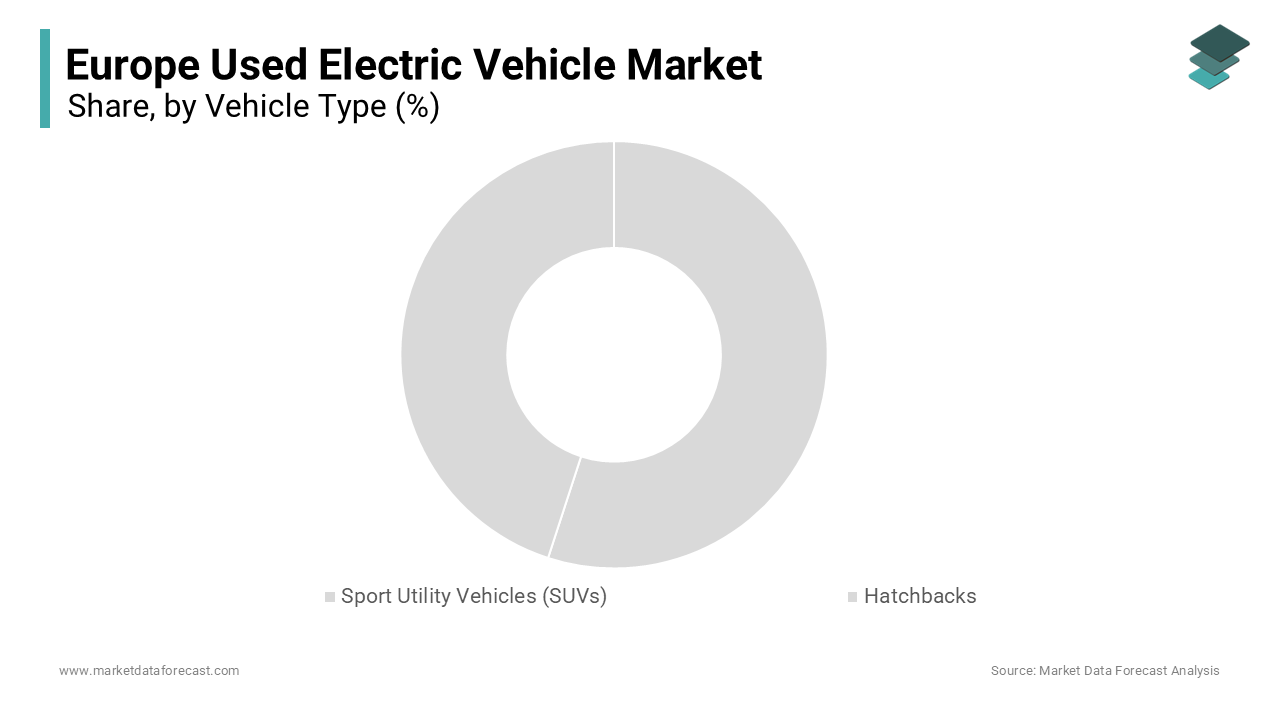
The hatchback segment is esteemed to witness a fastest CAGR of 18.5% from 2026 to 2034 owing to increasing urbanization across Europe, where compact electric hatchbacks offer an ideal solution for navigating congested city streets and limited parking spaces. As per study, approximately 75% of the European population lives in urban areas, a figure that is expected to rise in the coming decades. This demographic shift creates a surging demand for small, maneuverable vehicles that can easily handle tight urban environments. Many European cities, including London, Paris, and Berlin, have implemented strict low emission zones and congestion charges that penalize internal combustion engine vehicles, thereby incentivizing the switch to zero emission alternatives. The affordability of used electric hatchbacks makes them an attractive entry point for young professionals and students who are price sensitive but environmentally conscious. Furthermore, the lower insurance premiums and maintenance costs associated with smaller electric vehicles enhance their economic appeal.
By Fuel Type Insights
The battery electric vehicle segment was the largest by holding a significant share of the Europe used electric vehicle market in 2025 with the stringent zero emission mandates and regulatory frameworks that prioritize pure electric mobility over hybrid or conventional alternatives. As per the European Commission, the fit for 55 package aims to reduce greenhouse gas emissions by at least 55% by 2030, creating a powerful regulatory tailwind for battery electric vehicles. Many European countries have announced plans to ban the sale of new internal combustion engine vehicles by 2035, which signals a clear long term commitment to electrification and influences consumer preferences in the used market. According to the European Environment Agency, battery electric vehicles produce significantly lower lifecycle emissions compared to plug in hybrids, making them the preferred choice for environmentally conscious buyers and corporate fleets aiming to meet sustainability targets. The growing awareness of air quality issues in major cities further reinforces the demand for zero emission vehicles, as residents seek to contribute to cleaner urban environments. Additionally, the expansion of renewable energy sources in Europe enhances the environmental credentials of battery electric vehicles, as they can be charged using green electricity. This alignment with broader climate goals and regulatory directives ensures that the battery electric vehicle segment remains the cornerstone of the used electric vehicle market, attracting a diverse range of buyers from individual consumers to large organizations.
The Plug in Hybrid Electric Vehicle segment is projected to register a fastest CAGR of 16.2% from 2026 to 2034 with the transitional appeal of plug in hybrids for consumers, who are hesitant to commit fully to battery electric vehicles due to concerns about charging infrastructure or range limitations. Plug in hybrids offer the flexibility of electric driving for short distances while retaining a gasoline engine for longer trips, providing a safety net that appeals to cautious buyers. As per the International Energy Agency, plug in hybrid sales have remained robust in Europe as consumers seek a balanced approach to decarbonization. This dual powertrain configuration is particularly attractive in rural areas where charging infrastructure may be less developed, allowing users to benefit from electric mobility without sacrificing convenience. The availability of affordable used plug in hybrids enables budget conscious consumers to experience the benefits of electrification without the higher upfront costs associated with long range battery electric vehicles.
By Sales Channel Insights
The Franchised Dealers segment was the largest by holding 55.4% of the Europe used electric vehicle market share in 2025 with the high level of trust and confidence that consumers place in authorized dealerships, particularly when purchasing complex technologies like electric vehicles. Franchised dealers offer certified pre owned programs that include rigorous multi point inspections, battery health checks, and extended warranties, which significantly reduce the perceived risk for buyers. These dealerships have direct access to manufacturer trained technicians and genuine spare parts, ensuring that any potential issues with the vehicle can be addressed promptly and effectively. According to the study, the standardized service protocols employed by franchised dealers enhance the reliability of used electric vehicles by making them a safer investment for consumers. The ability to trade in existing vehicles and secure financing through established partnerships with banks further simplifies the purchasing process, adding to the convenience factor. This comprehensive package of trust, quality assurance, and customer service solidifies the leading position of franchised dealers in the used electric vehicle market, attracting buyers who prioritize peace of mind over lower prices.
The Peer to Peer segment is esteemed to witness a fastest CAGR of 22.4% from 2026 to 2034 with the digital transformation of the automotive industry and the increasing popularity of online platforms that connect private sellers directly with buyers. Peer to peer platforms offer a transparent and efficient marketplace where users can compare prices, view detailed vehicle histories, and communicate directly with owners. As per a report, the number of online used car transactions in Europe has increased significantly, with peer to peer platforms capturing a growing share of the market. These platforms often provide verification services and escrow payment options, which enhance security and build trust among users. According to study, the convenience and cost savings associated with bypassing traditional intermediaries are major drivers of consumer adoption. Private sellers can often offer lower prices than dealerships since they do not have overhead costs, making peer to peer platforms attractive to budget conscious buyers. The ability to negotiate directly with sellers also empowers buyers to secure better deals.
By End Use Insights
The Personal Use segment dominated the Europe used ev market by holding a significant share in 2025 with the increasing affordability of used electric vehicles, which makes them accessible to a broader range of individual consumers seeking to reduce their transportation costs and environmental impact. As per Eurostat, household expenditure on transport remains a significant portion of family budgets, and the lower operating costs of electric vehicles, including cheaper electricity compared to gasoline and reduced maintenance requirements, offer substantial long term savings. The integration of electric vehicles into daily lifestyles is further facilitated by the growing availability of home charging solutions, which allow owners to charge their vehicles overnight conveniently. This convenience aligns with the routines of many households, enhancing the practicality of electric mobility. Additionally, the social status and environmental consciousness associated with driving an electric vehicle resonate with personal buyers who wish to demonstrate their commitment to sustainability. The diverse range of models available in the used market, from compact hatchbacks to spacious SUVs, ensures that there is an option for every personal need and preference.
The Commercial Use segment is expected to witness a fastest CAGR of 19.8% from 2026 to 2034 with the urgent need for logistics and delivery companies to electrify their last mile operations in response to stringent urban emission regulations. As per the European Commission, many cities are implementing low emission zones that restrict access for diesel and gasoline vans, forcing commercial operators to switch to zero emission alternatives. Used electric vans offer a cost effective solution for small and medium sized enterprises that need to comply with these regulations without incurring the high costs of new vehicles. According to Transport and Environment, the total cost of ownership for electric vans is already lower than for diesel equivalents in many urban delivery scenarios by making them economically viable for commercial fleets. Companies are increasingly recognizing the brand value associated with sustainable logistics, which enhances their corporate image and appeals to environmentally conscious customers. The availability of reliable used electric vans with sufficient range for daily delivery routes enables businesses to transition smoothly to electric mobility.
REGIONAL ANALYSIS
Germany Used Electric Vehicle Market Analysis
Germany was the top performer in the Europe used electric vehicle market by accounting for 28.3% of the Europe used electric vehicle market in 2025. The robust industrial base and a strong cultural emphasis on engineering excellence and environmental stewardship is additionally elevating the growth of the market in this country. The extensive network of charging infrastructure and generous government incentives that have accelerated electric vehicle adoption. As per the Federal Ministry for Economic Affairs and Climate Action, Germany has invested billions of euros in expanding public charging stations, with over 100000 points installed nationwide. This infrastructure support reduces range anxiety and encourages consumers to purchase used electric vehicles with confidence. Additionally, the presence of major automotive manufacturers such as Volkswagen, BMW, and Mercedes Benz ensures a steady supply of high quality used electric vehicles from corporate fleets and lease returns. According to the German Association of the Automotive Industry, the domestic production of electric vehicles has surged, creating a large pool of pre owned inventory. The strong resale value of German brands further enhances the attractiveness of the used market. Consumers trust the durability and performance of locally produced electric vehicles, which drives demand.
United Kingdom Used Electric Vehicle Market Analysis
The United Kingdom used electric vehicles was ranked second by holding 18.3% of share in 2025 owing to the aggressive regulatory measures and a high level of consumer awareness regarding climate change. The implementation of the Ultra Low Emission Zone in London and similar clean air zones in other major cities, which impose charges on high emission vehicles. As per Transport for London, these initiatives have led to a significant shift towards electric mobility, with many residents opting for used electric vehicles to avoid daily fees. The UK government has also set a target to ban the sale of new petrol and diesel cars by 2030, which has heightened interest in electric alternatives. The availability of government grants for home charging installations further supports individual ownership. Additionally, the strong presence of leasing companies and corporate fleets contributes to a steady flow of off lease electric vehicles into the used market. Consumers are increasingly aware of the lower running costs of electric vehicles, which makes them an attractive option for budget conscious buyers.
France Used Electric Vehicle Market Analysis
France used electric vehicle market growth is likely to have a significant growth opportunities in coming years with the strong government support for electric mobility and a dense urban population that benefits from compact electric vehicles. As per the French Ministry of Ecological Transition, this subsidy has significantly boosted sales volumes and encouraged the adoption of electric vehicles among middle income households. The development of a comprehensive charging network, particularly in urban areas like Paris, Lyon, and Marseille, enhances the practicality of owning an electric vehicle. According to the French Association for the Development of Electric Mobility, the number of public charging points has doubled in recent years, supporting increased usage. The popularity of small electric cars, such as the Renault Zoe, which has been a best seller for many years, has created a large inventory of affordable used models. This availability caters to the needs of urban dwellers who require efficient and economical transportation. Additionally, the French culture of environmental consciousness and support for local industries fosters a positive attitude towards electric mobility.
Norway Used Electric Vehicle Market Analysis
Norway used electric vehicle market growth is likely to grow with its early and comprehensive adoption of electric vehicles, driven by extensive tax exemptions and incentives. The exemption from value added tax and registration taxes for electric vehicles, which has made them price competitive with conventional cars for many years is solely propelling the growth of the market. The high turnover of vehicles due to favorable leasing conditions ensures a constant supply of nearly new electric cars. The ubiquity eliminates range anxiety completely, making used electric vehicles a practical choice for all types of drivers. The high level of consumer trust in electric technology, combined with the cold climate which has tested battery performance extensively, provides valuable real world data for buyers. The maturity of the market means that consumers are well informed and confident in purchasing used electric vehicles. This advanced ecosystem and high adoption rate make Norway a critical and influential market in the European landscape.
Netherlands Used Electric Vehicle Market Analysis
The Netherlands used electric vehicle growth is likely to grow with the strong focus on sustainability and innovative mobility solutions. As per the Netherlands Enterprise Agency, there are over 100000 public charging points in the country by ensuring that electric vehicle owners have easy access to charging facilities. According to the Dutch Association of Importers of Cars and Buses, the corporate sector has been a early adopter of electric vehicles due to favorable tax treatments for company cars. This has resulted in a significant volume of off lease electric vehicles entering the used market. The flat geography of the Netherlands makes electric vehicles particularly efficient, as regenerative braking is less frequently needed compared to hilly regions. Additionally, the high level of digital literacy among consumers facilitates the use of online platforms for buying and selling used electric vehicles.
COMPETITIVE LANDSCAPE
The competition in the Europe used ev market is intensifying as traditional dealerships, digital platforms, and manufacturers vie for dominance. Established automotive groups leverage their brand reputation and certified pre owned programs to attract risk averse buyers. Meanwhile, agile online peer to peer platforms disrupt traditional models by offering transparency and lower prices. Manufacturers are increasingly entering the secondary market directly to control customer relationships and capture residual value. This multifaceted competitive landscape drives innovation in battery diagnostics and digital retailing. Companies differentiate themselves through superior after sales support, flexible financing options, and comprehensive warranty packages. The entry of new tech focused startups further pressures incumbents to adopt advanced data analytics for pricing and inventory management. Regulatory pressures and sustainability goals also shape competitive dynamics, forcing players to align with circular economy principles.
KEY MARKET PLAYERS
Some of the companies that are playing a dominating role in the Europe Used Electric Vehicle Market include
- Volkswagen AG
- Ayvens
- BMW AG
- Tesla
- Mercedes-Benz Group AG
- Renault Group
- Stellantis N.V.
- Tesla Inc.
- BYD Co. Ltd.
- Auto1 Group SE
- AutoScout24 GmbH
- Mobile.de GmbH
Top Players in the Market
Ayvens
Ayvens stands as a pivotal entity in the Europe used ev market by leveraging its massive fleet management capabilities to supply high quality pre owned electric vehicles. The company recently merged LeasePlan with ALD Automotive to create a global leader in sustainable mobility solutions. This strategic consolidation allows Ayvens to optimize vehicle lifecycles and enhance residual value management for electric assets. Ayvens actively promotes circular economy principles by ensuring that end of lease electric vehicles are efficiently remarketed or recycled. Their extensive network across European nations facilitates seamless transactions and robust after sales support. This comprehensive approach strengthens their position as a key supplier of certified pre owned electric vehicles, driving adoption and supporting the transition to zero emission transportation throughout the continent.
Volkswagen Group
Volkswagen Group significantly influences the Europe used ev market through its diverse portfolio of electric brands including Volkswagen Audi and Porsche. The company has established dedicated certified pre owned programs that offer rigorous inspections and warranties for used electric vehicles. These initiatives assure buyers of vehicle quality and performance reliability. Volkswagen recently expanded its digital platforms to streamline the online purchasing experience for second hand electric cars. By leveraging its manufacturing expertise, the group ensures that spare parts and technical support remain readily available for older models. This commitment to long term serviceability enhances consumer confidence. The company also invests in battery refurbishment technologies to extend the lifespan of electric powertrains. These efforts collectively strengthen its market presence by making used electric vehicles more accessible and trustworthy for a broader range of European consumers seeking sustainable mobility options.
Tesla
Tesla plays a transformative role in the Europe used ev market by setting high standards for software integration and battery performance transparency. The company operates its own direct sales channel for pre owned vehicles, ensuring consistent quality and customer experience. Tesla recently enhanced its online inventory system to provide detailed battery health metrics and remaining warranty information to potential buyers. This transparency addresses common concerns regarding degradation and longevity. The over the air update capability keeps older models technologically relevant, maintaining their appeal in the secondary market. Tesla also expanded its Supercharger network access to other electric vehicle brands, increasing the overall utility of electric mobility in Europe. These actions reinforce consumer trust and stimulate demand for used Tesla vehicles.
Top Strategies Used by the Key Market Participants
Key players in the Europe used ev market primarily employ certification and warranty extension strategies to build consumer trust. Companies implement rigorous multi point inspections and provide detailed battery health reports to mitigate perceived risks. Digital transformation is another major strategy, with firms developing online platforms for seamless browsing and purchasing experiences. Partnerships with charging infrastructure providers are crucial to enhance the value proposition of used electric vehicles. Fleet operators focus on optimizing residual values through predictive analytics and proactive maintenance programs. Additionally, manufacturers are investing in battery refurbishment and second life applications to extend vehicle usability. Marketing campaigns emphasize total cost of ownership benefits and environmental impact reductions. These strategies collectively aim to reduce barriers to entry, improve transparency, and accelerate the adoption of pre owned electric vehicles across European markets while ensuring profitability and sustainability for all stakeholders involved in the secondary automotive ecosystem.
MARKET SEGMENTATION
This research report on the Europe Used Electric Vehicle Market has been segmented and sub-segmented based on the following categories.
By Vehicle Type
- Sport Utility Vehicles (SUVs)
- Hatchbacks
By Fuel Type
- Battery Electric Vehicles (BEV)
- Plug-in Hybrid Electric Vehicles (PHEV)
By Sales Channel
- Franchised Dealers
- Peer-to-Peer
By End Use
- Personal Use
- Commercial Use
By Country
- UK
- France
- Spain
- Germany
- Italy
- Russia
- Sweden
- Denmark
- Switzerland
- Netherlands
- Turkey
- Czech Republic
- Rest of Europe
Access the study in MULTIPLE FORMATS
Purchase options starting from
$ 2000
Didn’t find what you’re looking for?
TALK TO OUR ANALYST TEAM
Need something within your budget?
NO WORRIES! WE GOT YOU COVERED!
Call us on: +1 888 702 9696 (U.S Toll Free)
Write to us: sales@marketdataforecast.com