Global Jams and Preserves Market Size, Share, Trends & Growth Forecast Report By Product Type (Jams, Marmalade, Honey, Sweet Spreads And Others), Flavor Type (Blackberry, Mango, Strawberry, Apricot, Grape, Raspberry And Others), Distribution Channel (Supermarket/Hypermarket, Grocery Stores, Wholesale, Online And Others), And Region (North America, Europe, APAC, Latin America, Middle East And Africa), Industry Analysis From 2026 To 2034
Global Jams and Preserves Market Summary
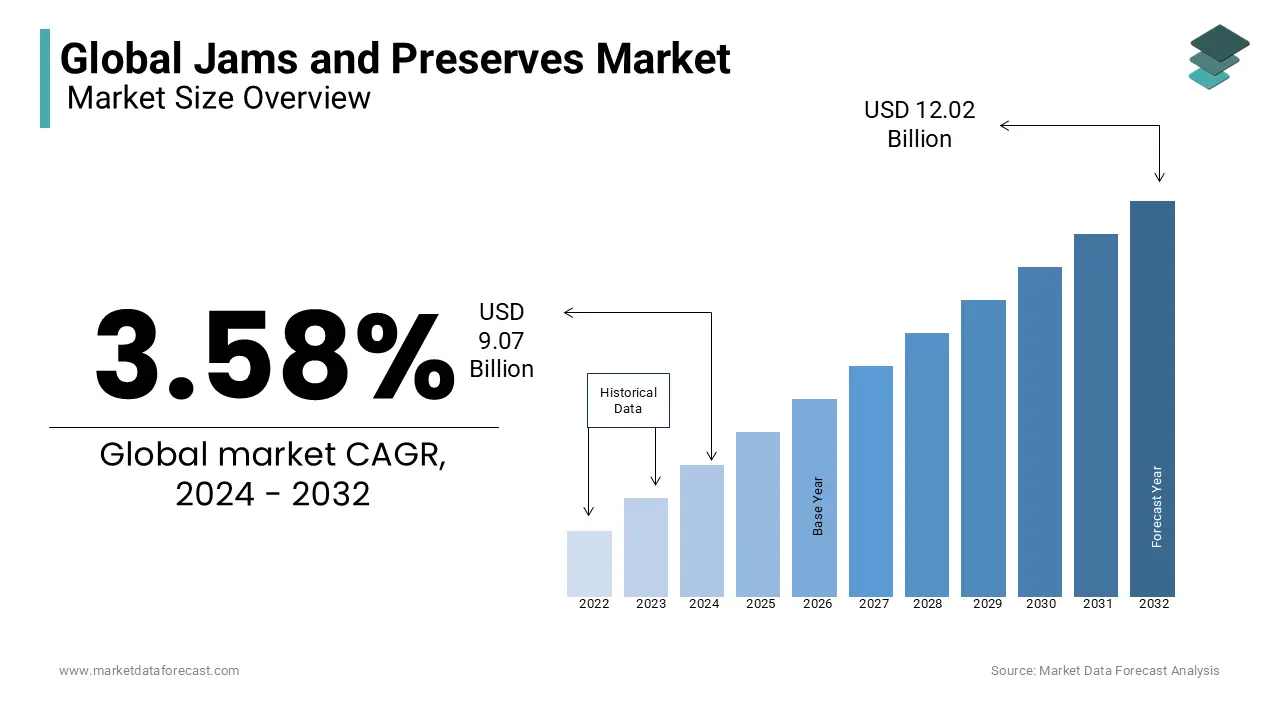
The global jams and preserves market was valued at USD 9.07 billion in 2025 and is projected to grow from USD 9.39 billion in 2026 to USD 12.44 billion by 2034, expanding at a CAGR of 3.58% between 2026 and 2034. The rising consumer demand for natural spreads, increasing preference for fruit-based flavors, expanding retail distribution, and the popularity of convenience foods are driving the growth of the jams and preserves market. Premium and organic product lines are also gaining traction in developed markets.
Key Market Trends
- Shift toward natural, low-sugar, and organic jams driven by health-conscious consumers.
- Strawberry flavor dominance is supported by global popularity and year-round demand.
- Strong retail penetration via supermarkets and hypermarkets, making jams and preserves more accessible to mass consumers.
- Rising adoption of e-commerce and direct-to-consumer sales channels.
- Product innovation in exotic and mixed fruit flavors to attract younger consumers.
Segmental Insights
- By product type, the jams segment dominated with a 46.4% share in 2025, supported by wide household consumption.
- By distribution channel, supermarkets and hypermarkets captured 54.5% of retail sales in 2025, making them the leading sales channel.
- By flavor, strawberry was the largest category, accounting for 32.4% of global sales in 2025.
Regional Insights
- North America holds a significant share of the global jams and preserves market, backed by high household penetration and established brands.
- Europe remains a mature market with steady demand for artisanal and premium preserves.
- Asia-Pacific is set to record strong growth, driven by urbanization, rising disposable incomes, and Western food influence.
- Latin America and the Middle East & Africa present emerging opportunities through expanding modern retail formats.
Competitive Landscape
Leading companies in the global jams and preserves market include Bonne Maman, B&G Foods Inc., Conagra Brands Inc., The Hain Celestial Group Inc., F. Duerr & Sons, The JM Smucker Company, Hindustan Unilever Limited, Braswell's, Welch's, Kraft Heinz Company, RochakAgro Food Products Pvt Ltd, Murphy Orchards, Wilkin & Sons Ltd, The Nashville Jam Co, The Hershey Company, and WT Lynch Foods Limited. These players compete through flavor innovation, organic offerings, and expanding retail distribution networks.
Global Jams and Preserves Market Size
The global jams and preserves market size was worth USD 9.39 billion in 2025 and is predicted to reach USD 12.89 billion by 2034 from USD 9.73 billion in 2026, growing at a CAGR of 3.58% between 2026 to 2034.
Jams and preserves are a categorty of fruit-based food products prepared by cooking fruit with sugar, pectin, and sometimes acid to achieve a spreadable consistency and extended shelf life. Jams are typically made from crushed or chopped fruit, while preserves contain whole or large pieces of fruit suspended in a gel-like matrix. These products serve as pantry staples across cultures, used in breakfast spreads, baking, desserts, and culinary applications. Unlike processed sweet spreads such as syrups or flavored butters, jams and preserves retain a significant portion of the fruit’s natural flavor and texture, positioning them as semi-processed, minimally altered food items.
In rural communities across Eastern Europe and Latin America, home-based preservation remains a widespread practice. Furthermore, the resurgence of artisanal food movements and farm-to-table philosophies has reinvigorated interest in small-batch, additive-free preserves. Regulatory standards, such as the Codex Alimentarius guidelines, define minimum fruit content and labeling requirements in many countries, ensuring product authenticity. As consumer preferences shift toward natural, recognizable ingredients, jams and preserves occupy a unique intersection between tradition, convenience, and clean-label appeal in the global food landscape.
MARKET DRIVERS
Rising Consumer Preference for Natural and Clean-Label Ingredients
The growing consumer preference for natural, minimally processed foods with transparent ingredient lists is a primary driver of demand in the jams and preserves market. A notable portion of consumers in the EU prioritize products with recognizable ingredients, avoiding artificial preservatives, colors, and high-fructose corn syrup—common concerns associated with processed spreads. This shift has prompted manufacturers to reformulate offerings using organic fruit, unrefined sugars like cane or coconut sugar, and natural pectin, aligning with clean-label trends. In the United States, many of shoppers actively seek out “no sugar added” or “only fruit and sugar” labeling on jam products, particularly among health-conscious parents and older demographics. The demand is further amplified by the popularity of home-style and craft preserves, perceived as healthier alternatives to mass-produced brands. As public awareness of dietary impacts on long-term health grows, and regulatory bodies like the WHO advocate for reduced added sugar intake, producers are innovating with stevia, monk fruit, and fruit-concentrate-based sweetening systems. This alignment with wellness-oriented lifestyles ensures that clean-label jams and preserves remain a trusted and expanding segment of the breakfast and pantry market.
Expansion of E-commerce and Direct-to-Consumer Specialty Food Platforms
The rapid growth of online grocery and specialty food marketplaces has significantly expanded access to artisanal, regional, and premium jams and preserves, fueling market dynamism beyond traditional retail channels. In the United Kingdom, the sales of premium fruit spreads through platforms like Amazon Fresh, Ocado, and specialist vendors such as Sous Chef increased between 2021 and 2023. Small-batch producers, who previously relied on farmers’ markets or local stores, are now leveraging digital storefronts to reach international audiences. Subscription models and curated gift boxes have further enhanced consumer engagement. In India, platforms like Nature’s Basket and Licious have introduced gourmet preserves from regional producers, tapping into urban demand for premium breakfast alternatives. The integration of social media marketing and influencer collaborations has also accelerated discovery, particularly among younger consumers. As digital trust, cold-chain logistics, and payment systems improve globally, e-commerce is transforming jams and preserves from a commodity product into a personalized, experience-driven category with global reach.
MARKET RESTRAINTS
Volatility in Fruit Supply and Climate-Induced Crop Disruptions
The vulnerability of fruit cultivation to climatic fluctuations and environmental stressors, which directly impact raw material availability and cost, is a significant constraint on the jams and preserves market. Like, rising temperatures, erratic rainfall, and extreme weather events have reduced the yield stability of soft fruit crops in key producing regions. In developing countries, smallholder farmers face additional challenges. These supply shocks not only raise production costs but also compromise product consistency, particularly for brands committed to single-origin or seasonal offerings. Furthermore, pest outbreaks linked to warming climates, such as the spotted wing drosophila affecting European berry farms, have increased reliance on pesticides, conflicting with organic and clean-label positioning. Without investment in climate-resilient agriculture and diversified sourcing networks, the jams and preserves industry faces recurring supply chain instability that threatens scalability and profitability.
Increasing Regulatory Scrutiny on Added Sugar Content
The jams and preserves market faces mounting pressure from public health authorities due to high sugar content, which is essential for preservation but increasingly scrutinized for its role in obesity and metabolic diseases. Chile has gone further by mandating front-of-pack warning labels on products exceeding 10 grams of added sugar per 100 grams—a threshold many traditional jams surpass. As a result, companies face the dual challenge of maintaining shelf stability and texture while reducing sugar, which plays a critical role in gel formation and microbial inhibition. The European Food Safety Authority has also tightened guidelines on health claims, prohibiting terms like “natural source of vitamin C” unless sugar content is below specified limits. These regulatory shifts increase reformulation costs and complicate marketing strategies. In response, some producers have turned to low-methoxyl pectin and alternative sweeteners, but these often alter mouthfeel and flavor. Without standardized solutions or consumer acceptance of texture changes, the industry struggles to balance preservation science with evolving health mandates, limiting innovation and market expansion in regulated economies.
MARKET OPPORTUNITIES
Growth of Functional and Fortified Fruit Spreads
The development of functional spreads enhanced with vitamins, probiotics, antioxidants, and plant-based proteins, catering to the rising demand for nutritious, multitasking food products, is a transformative opportunity in the jams and preserves market. Brands like Crofter’s and Bonne Maman have introduced organic, low-sugar preserves with added vitamin C and elderberry, targeting wellness-focused consumers. In India, startups are launching amla (Indian gooseberry)-based preserves with high vitamin C content, leveraging traditional Ayurvedic knowledge. The integration of prebiotic fibers and probiotics is also emerging, with companies like Snyders of Hanover experimenting with gut-health-focused fruit spreads. As consumers seek to maximize nutritional value from every meal component, functional jams and preserves are evolving from simple condiments into purpose-driven food innovations, opening a premiumized, health-aligned market segment with significant growth potential.
Expansion into Emerging Markets with Rising Breakfast Culture
Emerging economies where urbanization, Western dietary influences, and rising disposable incomes are fostering a breakfast culture that includes spreads and toast-based meals, is a significant growth opportunity for the jams and preserves market. Local producers are responding with regionally inspired flavors, such as date-pomegranate or mango-lime, to align with cultural palates while maintaining premium positioning. Furthermore, hotel chains and airline caterers are incorporating branded jams into hospitality offerings, enhancing visibility. As cold-chain infrastructure improves and retail modernizes, distribution barriers are diminishing. With per capita consumption still low compared to Western markets, the potential for volume growth is substantial. By combining localization, education, and strategic partnerships with bakeries and cafes, global and regional brands can establish jams and preserves as essential components of the evolving morning meal in high-growth economies.
MARKET CHALLENGES
Counterfeit and Substandard Products in Informal Markets
The proliferation of counterfeit, adulterated, or substandard products in informal and unregulated retail environments, particularly in developing regions, is a persistent challenge in the jams and preserves market. These illicit products, often sold at lower prices, undermine brand equity and consumer trust in legitimate brands. Moreover, homemade or cottage-industry preserves, while culturally significant, may lack hygiene controls, leading to microbial contamination. Without robust enforcement, traceability systems, and consumer education, the informal sector remains a breeding ground for food safety violations. As global brands expand into price-sensitive markets, they face the dual challenge of competing with cheap imitations while maintaining quality and compliance, threatening both public health and long-term market integrity.
Consumer Perception of Shelf Stability and Preservative Use
The consumer skepticism toward shelf-stable products, where the very mechanisms that ensure longevity, high sugar content and added preservatives, are increasingly viewed with suspicion, is a growing challenge for the jams and preserves market. The perception gap creates a paradox: consumers demand convenience and extended usability, yet reject products perceived as “over-processed.” The rise of “clean label” movements has further intensified scrutiny, with consumers questioning the necessity of potassium sorbate or citric acid, even when used within safe limits. In response, some brands have eliminated preservatives, but this requires refrigeration and reduces distribution range, limiting scalability. The regulatory gray area complicates marketing. Moreover, the popularity of homemade jams, often perceived as safer despite higher microbial risks, undermines commercial products. Without effective consumer education on food science and preservation principles, manufacturers face an uphill battle to reconcile safety, shelf life, and clean-label expectations, threatening the viability of traditional production models in a transparency-driven marketplace.
REPORT COVERAGE
| REPORT METRIC | DETAILS |
| Market Size Available | 2025 to 2034 |
| Base Year | 2025 |
| Forecast Period | 2026 to 2034 |
| CAGR | 3.58% |
| Segments Covered | By Type, Distribution Channel, Flavour Type And Region |
| Various Analyses Covered | Global, Regional & Country Level Analysis, Segment-Level Analysis, DROC; PESTLE Analysis. Porter’s Five Forces Analysis, Competitive Landscape; Analyst Overview of Investment Opportunities |
| Regions Covered | North America, Europe, APAC, Latin America, Middle East & Africa |
| Market Leaders Profiled | Bonne Maman, B&G Foods, Inc., Conagra Brands, Inc., The Hain Celestial Group, Inc., F. Duerr& Sons, The JM Smucker Company, Hindustan Unilever Limited, Braswell's, Welch's, Kraft Heinz Company, RochakAgro Food Products Pvt Ltd, Murphy Orchards, Wilkin & Sons Ltd, The Nashville Jam Co, The Hershey Company, WT Lynch Foods Limited |
SEGMENTAL ANALYSIS
By Product Type Insights
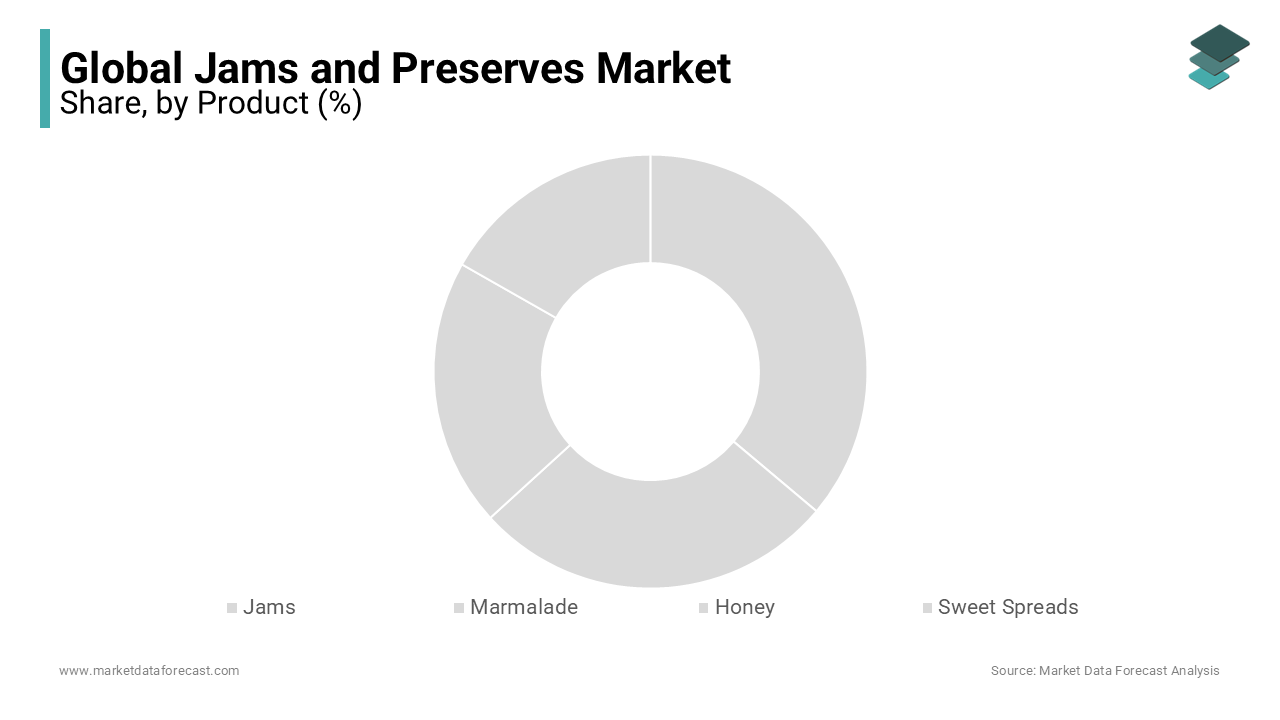
The jams segment dominated the global jams and preserves market by capturing 46.4% of the global market share in 2025. This lead position is primarily attributed to the widespread consumer familiarity with jam as a breakfast staple and culinary ingredient across both developed and emerging markets. A further key factor driving its dominance is the versatility of jams in daily consumption patterns, particularly in Western and urban diets where toast, pastries, and sandwiches are common. The product’s compatibility with both sweet and savory applications, such as glazes for meats or fillings for desserts, further enhances its utility. Besides, jams benefit from standardized production processes and broad retail availability, making them accessible across socioeconomic segments. With strong cultural embedding, consistent flavor profiles, and wide-ranging use cases, jams remain the most entrenched and widely accepted form of preserved fruit, solidifying their position as the cornerstone of the market.
The sweet spreads segment is growing at the fastest rate, projected to expand at a CAGR of 9.3% from 2026 to 2034. This acceleration is driven by the rising popularity of non-traditional, plant-based, and blended spreads that transcend conventional fruit preservation. These include nut-based spreads (such as almond or cashew butter blended with fruit), seed pastes, and composite products combining fruit with yogurt, honey, or cocoa. In Asia-Pacific, companies like NutraSweet in India and MyPro in Australia have launched fruit-infused nut spreads targeting health-conscious millennials. Furthermore, the inclusion of exotic ingredients, such as baobab, moringa, or jackfruit, adds novelty and aligns with clean-label trends. The flexibility of sweet spreads in catering to vegan, keto, and gluten-free diets has also broadened their appeal. As consumers move beyond traditional jam formats in search of innovation and nutritional enhancement, this segment is redefining the category, transforming preserved fruit from a simple condiment into a multifunctional, value-added food product.
By Distribution Channels Insights
The supermarket/hypermarket channel dominated the distribution of jams and preserves by capturing 54.5% of market share in 2025. This lead position is driven by the centrality of large-format grocery stores in household shopping routines, particularly for staple food items. These outlets offer extensive shelf space, brand visibility, and promotional opportunities, enabling manufacturers to execute in-store campaigns, sampling events, and bundled offers. In emerging markets, modern retail expansion is further consolidating this trend. Supermarkets also benefit from cold-chain integration, allowing for the display of premium, refrigerated, and short-dated artisanal products alongside shelf-stable variants. Furthermore, private-label development by major chains, such as Tesco, Carrefour, and Walmart, has intensified competition, prompting branded players to invest in packaging innovation and loyalty programs. As urbanization and organized retail penetration increase globally, supermarkets remain the primary battleground for market share, offering unmatched reach, logistics efficiency, and consumer trust in the jams and preserves sector.
The online distribution channel is growing at the fastest rate and is projected to expand at a CAGR of 18.9% from 2026 to 2034. This rapid acceleration is driven by the increasing penetration of e-grocery platforms, same-day delivery services, and digital-savvy consumers seeking convenience and specialty products. Social media and influencer marketing further amplify discovery, with platforms like Instagram and Pinterest driving traffic to specialty e-stores such as Amazon Handmade and Etsy. The ability to offer limited editions, seasonal batches, and direct-from-producer options enhances exclusivity and engagement. As last-mile logistics improve and digital payment systems become more secure, online channels are transforming from supplementary outlets into primary drivers of innovation and premiumization in the jams and preserves market.
By Flavour Type Insights
The strawberry flavor segment held the largest share of the global jams and preserves market with 32.4% of the worldwide market share in 2025. This dominance is rooted in its broad sensory appeal, balancing sweetness and acidity, and its strong cultural association with freshness, youthfulness, and indulgence. A further driver of its leadership is consumer familiarity and early-life exposure. The flavour’s compatibility with other ingredients, such as balsamic vinegar, basil, or chocolate, has also led to premium and gourmet product innovation. Moreover, strawberries’ vibrant red color enhances visual appeal on packaging and in culinary applications, increasing shelf attractiveness. The fruit’s year-round availability through greenhouse cultivation and global trade further ensures a consistent supply. As food marketers leverage strawberries’ emotional resonance and sensory versatility, the flavor remains the most commercially viable and universally accepted option in the jams and preserves category.
The mango flavor segment is experiencing the most rapid growth and is projected to grow at a CAGR of 11.6% between 2025 and 2034. This surge is fueled by the increasing global popularity of tropical fruit profiles, particularly in regions undergoing dietary modernization and cultural fusion. Mango’s rich, aromatic sweetness and association with exotic, sun-ripened fruit appeal to younger, adventurous consumers seeking novel taste experiences. In Africa, local producers in Kenya and Nigeria are commercializing traditional mango preserves for both domestic and export markets. Additionally, the fruit’s high vitamin C and beta-carotene content aligns with wellness trends, allowing brands to position mango spreads as nutritious alternatives. As global palates diversify and tropical flavors gain mainstream acceptance, mango is transitioning from a seasonal novelty to a core flavor in the international jams and preserves portfolio.
REGIONAL ANALYSIS

North America Jams And Preserves Market Insights
North America held the most dominating share of the global market in 2025. The United States is the primary driver, where jams and preserves are deeply embedded in breakfast culture, particularly in the form of peanut butter and jelly sandwiches, a staple for generations. Canada complements this demand with a strong tradition of wild berry preservation, particularly in rural and Indigenous communities. Major brands like Smucker’s dominate shelf space, but there is growing competition from organic and craft producers responding to health trends. The rise of plant-based and functional spreads has further diversified the category. Retail consolidation and private-label expansion in chains like Walmart and Kroger have intensified competition. As consumer preferences shift toward reduced sugar and clean ingredients, North American manufacturers are investing in reformulation and transparency. With high brand loyalty and robust distribution networks, the region remains a key innovation and volume hub in the global market.
Europe Jams And Preserves Market Insights
Europe stood as the most dominant region in the global jams and preserves market by commanding 36.2% of the global market share in 2025. The region’s growth is anchored in its deep-rooted culinary traditions, where fruit preservation is an integral part of seasonal eating and rural economies. Countries like France, Italy, and Poland have long-standing practices of home-made and small-batch jam production, supported by abundant soft fruit cultivation. The European Union’s Protected Geographical Indication (PGI) status for products like “Confiture de Strasbourg” and “Marmelada de Trás-os-Montes” reinforces authenticity and quality. Supermarkets and specialty stores widely stock both mass-market and artisanal brands, with private labels gaining traction. Consumer preference for natural ingredients and organic certification has driven innovation, with Germany and the UK leading in clean-label product launches. With strong regulatory standards, high disposable income, and a culture of breakfast rituals, Europe remains the most mature and influential market for jams and preserves globally.
Asia-Pacific Jams and Preserves Market Insights
The Asia-Pacific region is emerging as a high-growth market. While traditional diets in countries like China, Japan, and South Korea have not historically emphasized fruit spreads, urbanization and Western lifestyle adoption are reshaping breakfast habits. In Japan, consumption of Western-style breakfast items increased between 2018 and 2023, particularly among young professionals. India saw a rise in packaged jam sales in metropolitan areas, driven by dual-income households and café culture. Australia and New Zealand maintain strong domestic production, with boutique brands leveraging native fruits like finger lime and quandong. E-commerce platforms are accelerating access, particularly in Southeast Asia, where Singapore and Malaysia lead in premium import demand. Government support for agro-processing and food exports in countries like Thailand and Vietnam is also fostering regional production. As disposable incomes rise and retail modernizes, Asia-Pacific is transitioning from a niche to a strategic growth frontier for the jams and preserves industry.
Latin America jams and preserves market Insights
Latin America contributes notable portion of the global jams and preserves market. Brazil leads the region, with a growing domestic industry focused on tropical fruits such as guava, passion fruit, and acerola. Chile, a major berry exporter, processes surplus harvests into jams for domestic and international markets. However, traditional consumption remains limited, with many populations relying on fresh fruit or homemade conserves. Supermarket penetration is rising, but informal markets still dominate in rural areas. The region’s rich biodiversity and agricultural potential present untapped opportunities. As food safety standards improve and branding strengthens, Latin America is poised to become a key supplier of exotic fruit preserves to global markets.
Middle East And Africa Jams And Preserves Market Insights
The Middle East and Africa collectively account for a small share of the global jams and preserves market. The Gulf Cooperation Council countries, particularly the UAE and Saudi Arabia, represent the most developed segment, where expatriate populations and luxury hospitality sectors drive demand for imported and premium brands. Nigeria and Kenya are witnessing nascent growth in packaged spreads, particularly in urban supermarkets. However, refrigeration limitations and low breakfast penetration constrain volume. Traditional diets favor honey, date syrup, or fresh fruit over fruit spreads. As modern retail expands and Western eating habits gain traction, particularly among youth, the region is gradually opening to preserved fruit products. Strategic investments in cold-chain logistics and localized flavor development could unlock significant future potential.
COMPETITIVE LANDSCAPE
The competitive landscape of the jams and preserves market is shaped by a dynamic interplay between legacy brands, regional artisans, and agile niche producers, each vying for consumer loyalty in a category that balances tradition with innovation. Established multinational companies dominate shelf space and household penetration through decades of brand building, distribution strength, and marketing muscle. However, they face growing pressure from boutique and organic brands that emphasize small-batch production, exotic flavors, and sustainable sourcing, appealing to discerning, experience-driven consumers. Supermarket private labels further intensify competition by offering cost-effective alternatives with increasingly sophisticated packaging and quality. The rise of e-commerce and direct-to-consumer models has lowered entry barriers, enabling regional producers to reach global audiences without relying on traditional retail gatekeepers. Geopolitical and climatic factors also influence competitiveness, as access to high-quality fruit and resilient supply chains becomes a strategic advantage. Innovation is no longer limited to flavor but extends to texture, functionality, and packaging sustainability. The most successful players are those that balance heritage with adaptability—honoring the craft of preservation while responding to health trends, environmental concerns, and shifting breakfast rituals. As consumer expectations evolve from mere taste to ethical sourcing and nutritional value, the market is transforming from a commoditized pantry item into a curated, values-based food choice.
KEY MARKET PLAYERS
Companies playing a notable role in the global jams and preserves market include
- Bonne Maman
- B&G Foods, Inc.
- Conagra Brands, Inc.
- The Hain Celestial Group, Inc.
- F. Duerr& Sons
- The JM Smucker Company
- Hindustan Unilever Limited
- Braswell's
- Welch's
- Kraft Heinz Company
- RochakAgro Food Products Pvt Ltd
- Murphy Orchards
- Wilkin & Sons Ltd
- The Nashville Jam Co
- The Hershey Company
- WT Lynch Foods
LEADING PLAYERS IN THE JAMS AND PRESERVES MARKET
The J.M. Smucker Company
The J.M. Smucker Company stands as a dominant force in the global jams and preserves market, renowned for its iconic brand portfolio that includes Smucker’s, the most recognized fruit spread label in North America. The company has built its reputation on consistency, quality, and deep integration into daily American food culture, particularly through its flagship strawberry and grape preserves. Smucker’s has successfully bridged the gap between household staple and premium perception by expanding into organic, no-sugar-added, and craft-inspired variants. Its robust distribution network ensures presence in supermarkets, foodservice, and institutional channels. By maintaining strong consumer trust and adapting to clean-label trends, Smucker’s has sustained long-term brand loyalty. The company also leverages its expertise in fruit processing to support innovation in texture, flavor authenticity, and shelf stability, setting industry benchmarks. Through strategic marketing and generational brand recognition, Smucker’s continues to define the standard for fruit spreads in both domestic and international markets.
Bonne Maman (Andros Group)
Bonne Maman, a brand under France’s Andros Group, has redefined the premium jams and preserves segment by combining artisanal craftsmanship with global scalability. Originating in Normandy, the brand emphasizes traditional recipes, glass jar packaging, and natural ingredients, positioning itself as a symbol of French culinary authenticity. Its success lies in evoking sensory nostalgia and gourmet appeal, making it a preferred choice in gourmet stores, hotels, and households seeking elevated breakfast experiences. Bonne Maman’s commitment to regional sourcing—such as raspberries from the Loire Valley and apricots from Provence—enhances its image of terroir-driven quality. The brand has achieved widespread international distribution while maintaining a handcrafted aesthetic, a rare balance in mass-market food production. Its visual identity, including the signature checkered lid, reinforces brand recall. By aligning with slow food and farm-to-table movements, Bonne Maman has transcended commoditization, establishing itself as a trusted ambassador of European-style preserves in markets across Asia, North America, and the Middle East.
Welch’s
Welch’s has carved a distinctive niche in the jams and preserves market by leveraging its heritage as a grape juice and fruit products cooperative, originally established to provide value-added options for Concord grape growers. The brand is synonymous with grape jelly, particularly in the United States, where it has become a cultural staple, often paired with peanut butter in the classic sandwich. Welch’s differentiates itself through vertical integration, controlling grape cultivation, processing, and branding to ensure consistency and traceability. The company has expanded beyond traditional spreads into organic, seedless, and antioxidant-rich variants, aligning with health-conscious consumer trends. Its cooperative model fosters a narrative of farmer support and sustainability, enhancing brand integrity. Welch’s also maintains a strong presence in foodservice and school nutrition programs, reinforcing widespread accessibility. By blending agricultural stewardship with mainstream appeal, Welch’s has secured a unique position as both a heritage brand and an innovator in fruit-based pantry staples.
TOP STRATEGIES USED BY KEY MARKET PARTICIPANTS
- One of the most effective strategies employed by leading players is brand storytelling centered on authenticity, tradition, and origin. Companies emphasize regional sourcing, generational recipes, and artisanal methods to create emotional resonance and differentiate from commoditized alternatives. This narrative positions their products as premium, trustworthy, and culturally rich, appealing to consumers seeking transparency and heritage.
- Another key strategy is product diversification into health-aligned and functional variants, including organic, low-sugar, non-GMO, and fortified spreads. By reformulating to meet clean-label demands and cater to dietary preferences such as keto or vegan lifestyles, companies expand their consumer base and remain competitive in evolving wellness markets.
- A third major tactic is channel expansion and premium placement, where brands secure visibility in high-end retail environments such as gourmet grocers, specialty food stores, and online curated marketplaces. This approach enhances brand perception and enables premium pricing, while partnerships with cafes, hotels, and airlines increase exposure and normalize consumption in diverse settings.
Global Jams and Preserves Market News
- In January 2023, The J.M. Smucker Company launched a new line of organic, chia-infused fruit spreads, combining traditional jam textures with functional ingredients to appeal to health-conscious consumers. This innovation reinforces Smucker’s commitment to clean-label evolution and expands its presence in the wellness segment.
- In May 2023, Bonne Maman partnered with a network of small-scale fruit growers in southern France to establish a certified sustainable sourcing program, ensuring traceability and fair compensation for raw materials. This initiative strengthens the brand’s artisanal identity and aligns with European Union sustainability directives.
- In September 2023, Welch’s introduced a plant-based, no-sugar-added preserves line sweetened with fruit concentrate, targeting diabetic and low-carb diet communities. The launch was supported by educational campaigns on natural sweetening methods and metabolic health.
- In February 2025, The J.M. Smucker Company acquired a boutique preserves brand based in Oregon known for its exotic flavor profiles and eco-friendly packaging. This acquisition allows Smucker’s to expand into the premium craft segment and diversify its innovation pipeline.
- In June 2025, Bonne Maman launched a direct-to-consumer e-commerce platform offering limited-edition seasonal jams, gift bundles, and virtual tasting experiences. This move enhances customer engagement and capitalizes on the growing demand for personalized, experience-driven food products.
MARKET SEGMENTATION
This research report on the global jams and preserves market has been segmented and sub-segmented based on product, distribution channel, flavor type & region.
By Product
- Jams
- Marmalade
- Honey
- Sweet Spreads
- Others
By Distribution Channels
- Supermarkets/Hypermarket
- Grocery Stores
- Wholesale
- Online
- Others
By Flavor Type
- Blackberry
- Mango
- Strawberry
- Apricot
- Grape
- Raspberry
- Others
By Region
- North America
- Europe
- Asia Pacific
- Latin America
- Middle East and Africa
Frequently Asked Questions
1. What is the difference between jams and preserves?
Jams are made from crushed or pureed fruit, while preserves contain larger pieces or whole fruits, offering a chunkier texture.
2. What are the most popular types of jams and preserves?
Popular types include strawberry, blueberry, raspberry, apricot, orange marmalade, mixed fruit, and exotic fruit variants.
3. What factors are driving the growth of the jams and preserves market?
Key growth drivers include rising demand for convenient breakfast foods, increasing bakery consumption, and growing interest in natural and fruit-based products.
4. How are consumer preferences changing in this market?
Consumers are increasingly preferring low-sugar, organic, clean-label, and preservative-free jams and preserves.
5. Which distribution channels dominate the jams and preserves market?
Supermarkets and hypermarkets dominate the market, followed by convenience stores, specialty stores, and online retail platforms.
6. What role does innovation play in the market?
Innovation focuses on reduced-sugar formulations, functional ingredients, premium flavors, and sustainable packaging.
7. What challenges does the jams and preserves market face?
Challenges include high sugar content concerns, fluctuating fruit prices, and strong competition from alternative spreads.
8. How does sustainability influence the jams and preserves market?
Sustainability initiatives include responsible fruit sourcing, recyclable packaging, and reduction of food waste.
9. Which regions are major contributors to the global market?
Europe and North America are major contributors due to high consumption of bread and bakery products.
10. What is the future outlook for the jams and preserves market?
The market is expected to grow steadily, supported by product innovation, health-focused offerings, and expanding retail availability.
Related Reports
Access the study in MULTIPLE FORMATS
Purchase options starting from
$ 2500
Didn’t find what you’re looking for?
TALK TO OUR ANALYST TEAM
Need something within your budget?
NO WORRIES! WE GOT YOU COVERED!
Call us on: +1 888 702 9696 (U.S Toll Free)
Write to us: sales@marketdataforecast.com