Latin America Sanitary Napkin Market Size, Share, Trends, Forecast, Research Report By Type (Menstrual Pad, Pantyliner), Distribution Channel, and Region (Brazil, Mexico, Argentina, Chile & Rest of Latin America) – Regional Industry 2026 to 2034
Latin America Sanitary Napkin Market Size
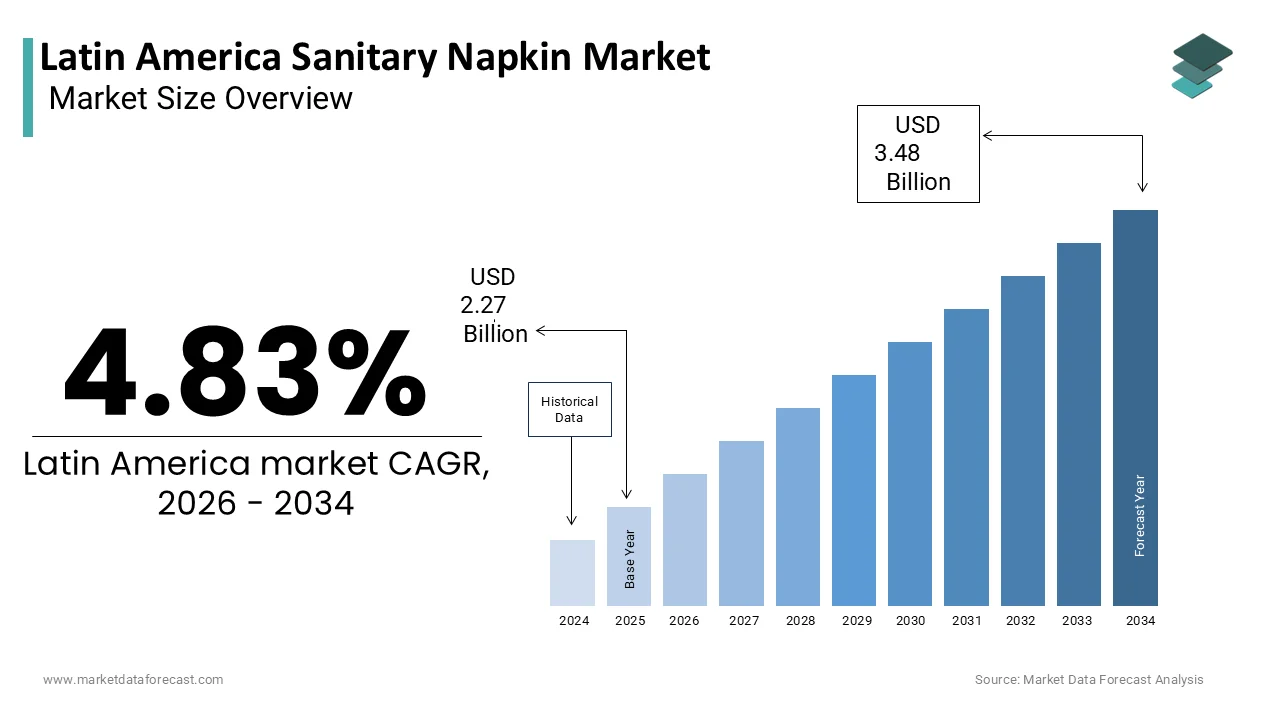
The Latin American sanitary napkin market was valued at USD 2.27 billion in 2025, and the market size is expected to reach USD 2.38 billion in 2026 and USD 3.48 billion by 2034, with a CAGR of 4.83% during the forecast period.
Sanitary napkin refers to a range of absorbent hygiene products designed for menstrual management, including pads with wings, ultra-thin variants, and organic formulations. These products are critical to menstrual health and gender equity, particularly in regions where access to proper hygiene directly influences school attendance and workforce participation among women and girls. Cultural taboos and limited sexual education further exacerbate the issue, especially in indigenous communities across Guatemala and Bolivia. As public health initiatives gain momentum, the demand for reliable, affordable, and discreet menstrual products is becoming a focal point of social development, driving both policy reform and commercial innovation across the region.
MARKET DRIVERS
Expanding Government-Led Menstrual Health Initiatives
Public sector interventions aimed at improving menstrual hygiene are significantly boosting demand for sanitary napkins across Latin America. In Argentina, the national government passed Law 27.623, mandating the provision of free menstrual products in all public schools, universities, and healthcare centers. These initiatives not only reduce period poverty but also validate menstrual health as a public priority. Such policies have led to a measurable decline in school absenteeism among adolescent girls in targeted regions, reinforcing the role of institutional procurement in scaling market demand.
Rising Awareness and Normalization of Menstrual Health
A growing societal shift toward open discourse on menstruation is transforming consumer behavior and product adoption in Latin America. Grassroots movements, digital campaigns, and NGO-led education programs are dismantling long-standing stigmas associated with periods. In Mexico, the nonprofit Periodo México is promoting the use of sanitary napkins over unhygienic alternatives. This cultural evolution is mirrored in media representation, with brands like Always and Kotex launching Spanish-language campaigns featuring real stories of period experiences. The resulting increase in self-efficacy and health consciousness is driving consistent product usage, particularly among younger demographics who prioritize dignity, comfort, and reliability in menstrual care.
MARKET RESTRAINTS
Persistent Economic Inequality and Affordability Barriers
Despite growing awareness, a significant portion of the female population in Latin America cannot afford regular access to sanitary napkins due to income constraints. In Honduras, the average monthly cost of a pack of sanitary pads represents a key share of a minimum wage earner’s income. In El Salvador, many women in low-income households use homemade alternatives such as cloth or newspaper during their periods. Even in middle-income countries like Ecuador, rural women often ration pad usage, changing them less frequently than recommended, increasing infection risks. According to the World Bank, nearly 30% of the population in Latin America lives below the national poverty line. This economic exclusion prevents mass market penetration and undermines efforts to achieve universal menstrual hygiene access.
Limited Distribution Infrastructure in Rural and Indigenous Communities
Geographic and logistical challenges hinder the consistent availability of sanitary napkins in remote areas across Latin America. In the Amazon regions of Peru and Brazil, many indigenous communities are accessible only by boat or air, complicating supply chain logistics for hygiene products. As per the United Nations Development Programmeseveralof health posts in rural Bolivia lack a regular stock of sanitary napkins, forcing women to travel long distances for basic supplies. The absence of formal retail networks and cold-chain-agnostic storage further limits shelf life and product integrity. These systemic gaps in last-mile delivery prevent equitable access, particularly in areas where traditional beliefs already discourage open discussion of menstruation, compounding exclusion and health disparities.
MARKET OPPORTUNITIES
Growth of Eco-Friendly and Organic Sanitary Product Innovation
A rising environmental consciousness is fueling demand for sustainable menstrual hygiene solutions in urban Latin American markets. In Chile, sales of biodegradable sanitary pads increased by 55% between 2020 and 2023. Brands like Lunacel in Mexico and EcoFem in Colombia have introduced plant-based, compostable pads free from chlorine and synthetic fragrances, appealing to environmentally aware consumers. Additionally, zero-waste stores and online platforms are expanding distribution, while university campuses in Argentina and Uruguay have begun installing pad dispensers with organic options. This shift reflects a broader trend toward sustainable personal care, positioning green innovation as a high-potential growth avenue for forward-thinking manufacturers seeking differentiation in a competitive market.
Digital Commerce and Direct-to-Consumer Subscription Models
The expansion of e-commerce and mobile payment systems is enabling new distribution channels for sanitary napkins, particularly among urban millennials and Gen Z consumers. In Brazil, online sales of feminine hygiene products grew significantly in 2023 compared to the previous year. Companies have launched subscription services that deliver sanitary products monthly to customers’ homes, ensuring consistent access and reducing stigma associated with in-store purchases. These platforms often integrate educational content and discreet packaging, enhancing user experience. Also, over 140 million Latin Americans now use digital wallets, facilitating seamless transactions for sensitive products. The scalability of digital models, combined with targeted social media marketing, allows brands to build loyal customer bases while bypassing traditional retail limitations, especially in regions with inconsistent pharmacy availability.
MARKET CHALLENGES
Cultural Stigma and Taboos Surrounding Menstruation
Deep-rooted societal taboos continue to impede open discussion and proper management of menstruation across many Latin American communities. In indigenous regions of Guatemala and the Andes, menstruating women are often considered "impure" and are restricted from participating in daily activities. Also, around half of the girls in rural Ecuador receive no formal education about menstruation before their first period, leading to fear and misinformation. In some communities, sanitary napkins are referred to euphemistically or purchased in concealed packaging to avoid embarrassment. These cultural barriers not only affect product adoption but also hinder public health campaigns and policy implementation, requiring sustained educational outreach to shift entrenched perceptions.
Regulatory Fragmentation and Lack of Product Standardization
The sanitary napkin market in Latin America faces inconsistent regulatory oversight, resulting in variable product quality and consumer safety concerns. While countries like Chile and Uruguay have established strict hygiene and labeling standards under their national health ministries, others lack comprehensive frameworks for feminine hygiene products. As per the Pan American Health Organization, only a few countries in the region have mandatory testing requirements for absorbency, skin irritation, and chemical residues in sanitary pads. In Paraguay and Nicaragua, counterfeit or substandard products—often lacking proper sterilization—frequently enter informal markets, posing infection risks. This regulatory disparity undermines consumer trust and complicates regional expansion for reputable manufacturers, necessitating harmonized safety protocols to ensure public health integrity.
REPORT COVERAGE
| REPORT METRIC | DETAILS |
| Market Size Available | 2025 to 2033 |
| Base Year | 2025 |
| Forecast Period | 2025 to 2033 |
| CAGR | 4.83% |
| Segments Covered | By Type, Distribution Channel, and Region |
| Various Analyses Covered | Global, Regional, & Country Level Analysis; Segment-Level Analysis; DROC; PESTLE Analysis; Porter’s Five Forces Analysis; Competitive Landscape; Analyst Overview of Investment Opportunities |
| Regions Covered | Latin America includes Brazil, Argentina, Mexico, and the Rest of Latin America |
| Market Leaders Profiled | Procter & Gamble, Kimberly-Clark Corporation, Johnson & Johnson, Hengan International Group Company Limited, aatracare LLC, and others. |
SEGMENTAL ANALYSIS
By Type Insights
The menstrual pads segment dominated the Latin America sanitary napkin market by capturing a substantial share of total product sales in 2025. This overwhelming dominance is due to their essential role in managing moderate to heavy menstrual flow, particularly during peak days. In Brazil, most menstruating women use full-size sanitary pads as their primary hygiene product. The reliance on pads is reinforced by public health distribution programs in schools and clinics, where bulk packs of absorbent pads are prioritized over lighter alternatives. Besides, cultural preferences for maximum protection, especially among adolescents and working women, favor high-absorbency pads with wings and leak guards.
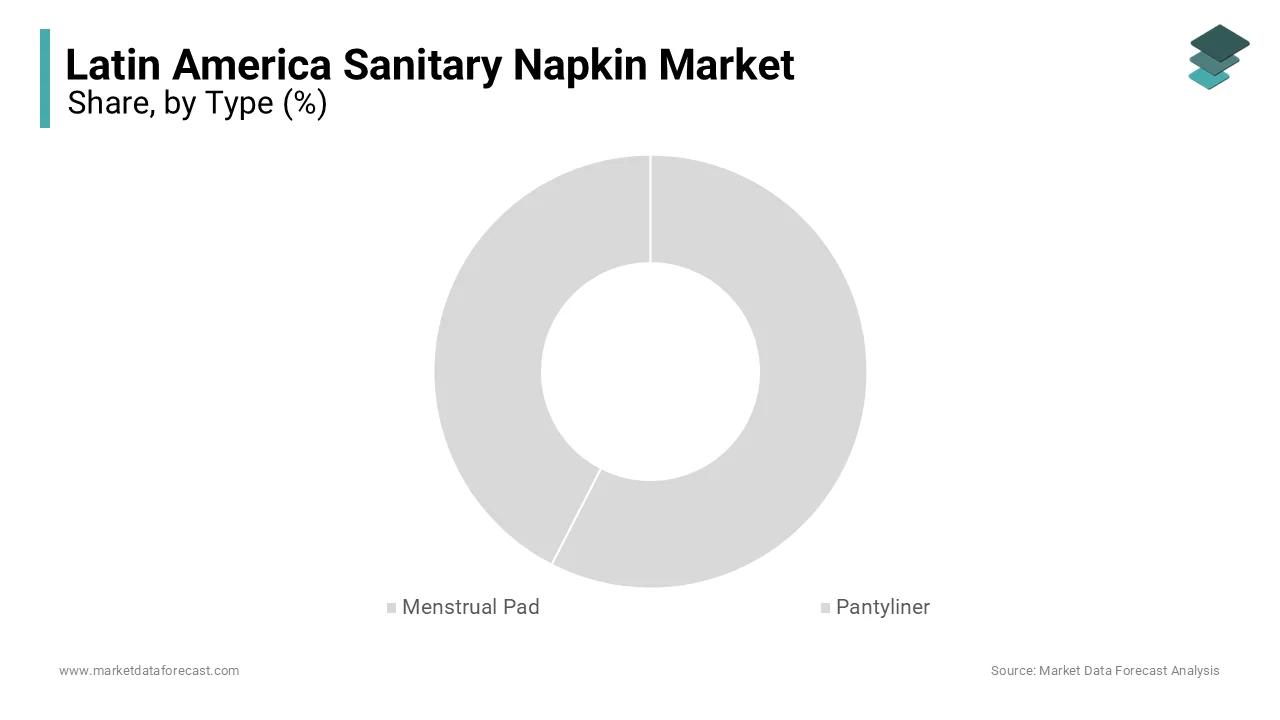
The pantyliners segment represented the fastest-growing segment and is projected to expand at a CAGR of 8.6% from 2025 to 2033. This growth is driven by rising demand for discreet, lightweight protection during low-flow days, post-menstruation, and for daily vaginal discharge management. In urban centers like Santiago and Bogotá, younger consumers are increasingly adopting pantyliners as part of a broader personal hygiene routine, influenced by digital wellness trends and body-conscious lifestyles. Brands have responded with ultra-thin, breathable variants packaged in discreet carrying pouches. Additionally, the integration of pantyliners into subscription boxes and eco-friendly product lines, such as biodegradable options in Colombia, has enhanced appeal among environmentally aware and health-focused demographics, accelerating adoption beyond traditional menstrual use.
By Distribution Channel Insights
The pharmacies segment constituted the prominent distribution channel by accounting for 42.7% of total sanitary napkin sales in 2025. This dominance of the segment is credited to the perception of pharmacies as trusted, health-focused outlets where consumers seek quality-assured and dermatologically tested products. In Mexico, a notable portion of sanitary napkin purchases occur in pharmacy chains, where trained staff can guide selection, particularly for sensitive skin or allergy-specific formulations. Also, pharmacies are key nodes in government health programs that distribute free or subsidized pads in low-income communities. In Chile, leading pharmacy chains have introduced private-label sanitary products, improving affordability while maintaining perceived medical credibility. The co-location of menstrual products with other health items reinforces their positioning as essential hygiene goods, not just consumer products, solidifying pharmacies as the primary retail gateway.
The online retail segment is the fastest-growing distribution channel and is projected to grow at a CAGR of 12.8% through 2033. This surge is fueled by increasing digital literacy, mobile payment adoption, and demand for discreet purchasing of sensitive products. In Brazil, online sales of feminine hygiene products reached a significant level in 2023, an increase from the previous year. Platforms like Mercado Libre, Amazon Mexico, and regional players such as Linio have optimized search algorithms and delivery logistics for menstrual products, often offering subscription models with home delivery. As per the Inter-American Development Bank, a substantial number of Latin Americans use digital wallets, facilitating seamless transactions for intimate goods. Besides, social media-driven brands like Lunacel and She leverage Instagram and TikTok to market directly to consumers, bypassing traditional retail and enhancing customer loyalty through personalized engagement and discreet packaging.
REGIONAL ANALYSIS
Brazil Sanitary Napkin Market Insights
Brazil commanded the Latin American sanitary napkin market at 36.3%. The country’s position is because of its massive female population, widespread urbanization, and progressive public health policies. With millions of menstruating women, Brazil has become a key battleground for both multinational and domestic brands. A large share of adolescent girls use commercial sanitary products, risen steadily due to a federal initiative that ddistributesfree pads in public schools. Major cities such as São Paulo and Rio de Janeiro exhibit high brand loyalty and demand for premium variants, including organic and ultra-thin pads. Besides, e-commerce penetration in feminine hygiene has surged, with companies like Natura & Co integrating sanitary products into their direct-selling networks. The convergence of policy support, consumer awareness, and retail innovation positions Brazil as the region’s most dynamic and influential market.
Mexico Sanitary Napkin Market Insights
Mexico is also a key player in the regional landscape, which is driven by a young, digitally engaged female population and expanding access to formal retail. A significant portion of Mexico’s population is under 35, creating a large base of active consumers who prioritize convenience and discretion in menstrual care. Most women in urban areas purchase sanitary pads from pharmacies or supermarkets, with brands like Always and Intimus dominating shelf space. The governments have also begun distributing menstrual products in rural clinics, improving access in underserved regions. Additionally, digital adoption is accelerating. The rise of local startups offering subscription models and eco-friendly alternatives reflects a maturing market where innovation and inclusivity are reshaping traditional consumption patterns.
Argentina Sanitary Napkin Market Insights
Argentina commands a significant share of the market and is distinguished by high product awareness and strong brand penetration despite economic volatility. With one of the highest literacy rates in the region, Argentine women exhibit informed purchasing behavior, often prioritizing quality and dermatological safety. Also, a large number of sanitary napkins sold in Buenos Aires are hypoallergenic or fragrance-free, reflecting consumer sensitivity to skin health. The economic crisis has, however, led to increased demand for private-label and value-tier products in supermarkets. Additionally, NGOs have launched public campaigns to destigmatize menstruation, influencing both policy and brand messaging. Menstrual product advertising in digital media grew between 2021 and 2023, signaling a cultural shift toward openness. These dynamics create a market where trust, affordability, and education intersect to shape long-term growth.
Chile Sanitary Napkin Market Insights
Chile is functioning as a high-penetration, innovation-led market within Latin America. The country boasts one of the region’s highest per capita expenditures on feminine hygiene, supported by strong healthcare infrastructure and gender equity policies. Moreover,the majority of adolescent girls in urban areas have access to commercial sanitary products, one of the highest rates in South America. Pharmacies dominate distribution, often bundling pads with other personal care items. Chile has also emerged as a testing ground for sustainable products, with brands gaining traction through eco-certified, compostable pads. Additionally, the government’s Plan Nacional de Salud Sexual y Reproductiva includes menstrual hygiene as a core component, ensuring integration into public health frameworks. Also, online sales of hygiene products grew in recent years, reflecting a digitally mature consumer base that values convenience, discretion, and environmental responsibility.
Colombia Sanitary Napkin Market Insights
Colombia is emerging as a high-potential growth market with expanding access and rising social awareness. The country has made significant strides in menstrual equity, with Bogotá becoming the first Latin American capital to implement a city-wide free pad distribution program in public schools and transit stations. A substantial number of girls have benefited from this initiative since 2022. Retail penetration is growing, with major chains like Éxito and Alkosto dedicating shelf space to diverse product tiers. Additionally, local brands are challenging multinationals with affordable, culturally resonant packaging. Also, online shopping for feminine hygiene products increased notably between 2021 and 2023, driven by improved logistics and digital payment adoption. With strong policy momentum and a youthful demographic, Colombia is poised to become a key growth engine in the region’s sanitary napkin market.
KEY MARKET PLAYERS AND COMPETITIVE LANDSCAPE
Key players in the Latin American sanitary napkin market are
- Procter & Gamble,
- Kimberly-Clark Corporation,
- Johnson & Johnson,
- Hengan International Group Company Limited,
- Natracare LLC, .
The competition in the LatinAmericana sanitary napkin market is intensifying as global brands, regional manufacturers, and emerging eco-conscious startups vie for consumer loyalty in a socially evolving landscape. Multinational corporations like Procter & Gamble leverage brand trust, extensive distribution, and large-scale marketing to maintain dominance, particularly in urban centers. At the same time, local players such as Intimus and Alba are gaining ground by offering culturally attuned products and competitive pricing. The market is increasingly shaped by social advocacy, with brands aligning themselves with menstrual equity, environmental sustainability, and female empowerment. E-commerce growth has lowered entry barriers for niche brands focusing on organic or reusable products. However, disparities in income, education, and infrastructure create a fragmented demand landscape, requiring companies to balance mass-market appeal with targeted outreach. As awareness rises and policy support strengthens, competition is shifting from mere product availability to holistic brand values, innovation, and social impact.
TOP PLAYERS IN THE MARKET
Procter & Gamble (Always)
Procter & Gamble has established a dominant presence in the LatiAmericanca sanitary napkin market through its flagship brand Always, which emphasizes innovation, discretion, and menstrual wellness education. The company has localized its product portfolio to meet regional preferences, introducing ultra-thin pads with Latin-inspired designs and enhanced breathability for tropical climates. In 2023, P&G launched the Libre para Ser (Free to Be) campaign across Mexico and Colombia, partnering with influencers and schools to combat period stigma and promote self-confidence among adolescent girls. Additionally, Always introduced biodegradable pad variants in Chile and Argentina, aligning with rising environmental awareness. The brand has also expanded its e-commerce footprint through direct integrations with Mercado Libre and Amazon, offering subscription models with home delivery. These initiatives reflect a holistic strategy that combines product innovation, digital engagement, and social advocacy to strengthen consumer loyalty and brand relevance.
Johnson & Johnson (Stayfree / Carefree)
Although Johnson & Johnson has divested its Lactacyd feminine hygiene line, its legacy influence in intimate care continues through distribution partnerships and brand recognition in the sanitary protection space, particularly under the Stayfree and Carefree labels in select Latin American markets. The company has historically contributed to raising awareness about dermatological safety in menstrual products, promoting hypoallergenic formulations suitable for sensitive skin. In 2022, J&J collaborated with dermatologists in Brazil and Argentina to publish clinical guidelines on reducing skin irritation from sanitary pads, reinforcing trust in hygiene standards. While it no longer directly manufactures pads in the region, its formulations and safety benchmarks have influenced local brands and retailers. Independent distributors continue to market Carefree pantyliners in pharmacies across Central America, maintaining a niche presence in daily hygiene segments, particularly among urban professionals seeking trusted, medical-grade personal care solutions.
Cia. de Produtos Industriais (Intimus)
Intimus, a leading feminine care brand under CiDe de Produtos Industriais has emerged as a key regional player by focusing on cultural resonance, affordability, and accessibility across Latin America. Originating in Brazil, the brand has expanded into Colombia, Argentina, and Peru with product lines tailored to local preferences, including high-absorbency pads for active lifestyles and discreet packaging for younger consumers. In 2023, Intimus launched Intimus Zero, a line of ultra-thin, plastic-free sanitary pads made with plant-based materials, responding to growing environmental concerns in Chile and Uruguay. The company has also deepened its social impact by partnering with the Brazilian Ministry of Education to distribute free pads in public schools, enhancing brand visibility and trust. Through strategic sponsorships of women’s sports and digital wellness campaigns on TikTok and Instagram, Intimus has positioned itself as a modern, empathetic brand that aligns with evolving gender norms and sustainability values in the region.
TOP STRATEGIES USED BY KEY MARKET PLAYERS
Key players in the Latin AAmericansanitary napkin market are deploying multifaceted strategies to strengthen their foothold in a socially and economically diverse region. Major companies are prioritizing product localization by developing variants suited to tropical climates, body shapes, and cultural preferences. Brands are investing in digital marketing and social media campaigns to destigmatize menstruation and engage younger demographics. Expansion into e-commerce platforms and subscription models ensures discreet access and repeat purchases. Sustainability is a growing focus, with companies introducing biodegradable materials and reducing plastic content. Strategic partnerships with governments and NGOs enable participation in public health programs, enhancing brand credibility. Additionally, tiered pricing models—including value packs and private-label lines—allow companies to penetrate low-income segments while maintaining premium offerings in urban centers, ensuring broad market coverage across socioeconomic tiers.
RECENT HAPPENINGS IN THE MARKET
- In March 2023, Procter & Gamble launched the Always Libres para Ser educational tour in Mexico, visiting 50 public schools to provide menstrual hygiene kits and conduct workshops on self-esteem, significantly enhancing brand engagement among adolescent girls and educators.
- In July 2022, Intimus partnered with the São Paulo State Department of Education to distribute 500,000 sanitary pads monthly in public schools, establishing a long-term supply agreement and reinforcing its role in advancing menstrual equity in Brazil.
- In January 2025, Kimberly-Clark introduced a biodegradable variant of its Kotex line in Chile, made with 60% plant-based materials, responding to consumer demand for sustainable menstrual products and strengthening its eco-friendly brand positioning.
- In May 2023, Alba, a Colombian feminine care brand, launched a direct-to-consumer e-commerce platform with subscription delivery, expanding its reach beyond traditional retail and capturing a growing segment of digitally savvy urban women.
- In September 2023, Always Brazil collaborated with influencer Camila Coelho to launch a limited-edition pad packaging campaign promoting body positivity, generating over 10 million social media impressions and boosting online sales by 34% in the following quarter.
MARKET SEGMENTATION
This research report on the Latin American sanitary napkin market is segmented and sub-segmented into the following categories.
By Type
- Menstrual Pad
- Pantyliner
By Distribution Channel
- Supermarkets and Hypermarkets
- Pharmacies
- Convenience Stores
- Online
- Specialty Stores
- Others
By Country
- Brazil
- Argentina
- Mexico
- Rest of Latin America
Frequently Asked Questions
1. What is the Latin America Sanitary Napkin Market?
The Latin America Sanitary Napkin Market refers to the production, distribution, and consumption of sanitary pads used for feminine hygiene during menstruation.
2. What factors are driving the growth of this market?
Key drivers include rising awareness of feminine hygiene, increasing disposable income, urbanization, and government initiatives promoting menstrual health.
3. Which countries dominate the Latin America Sanitary Napkin Market?
Brazil and Mexico hold the largest shares, followed by Argentina, Colombia, and Chile.
4. What are the main product types in this market?
The market includes disposable sanitary napkins, reusable napkins, organic and biodegradable pads, and ultra-thin variants.
5. What trends are shaping the market?
Trends include rising demand for eco-friendly products, organic cotton-based pads, and increased adoption of online retail channels.
6. Who are the major players in the Latin America Sanitary Napkin Market?
Key companies include Procter & Gamble, Kimberly-Clark, Unicharm Corporation, Essity AB, and local brands catering to cost-sensitive consumers.
7. What challenges does the market face?
Challenges include cultural stigma, lack of awareness in rural areas, and affordability issues for low-income populations.
8. What is the growth outlook for this market?
The market is expected to grow steadily due to improving awareness, better accessibility, and innovations in product design.
Related Reports
Access the study in MULTIPLE FORMATS
Purchase options starting from
$ 1600
Didn’t find what you’re looking for?
TALK TO OUR ANALYST TEAM
Need something within your budget?
NO WORRIES! WE GOT YOU COVERED!
Call us on: +1 888 702 9696 (U.S Toll Free)
Write to us: sales@marketdataforecast.com