U.S. Sneaker Market Size, Share, Trends & Growth Forecast Report Segmented By Product Type ( Low-Top Sneakers, Mid-Top Sneakers, High-Top Sneakers), Category, Price Point, Distribution Channel and Country – Industry Analysis From 2026 to 2034
U.S. Sneaker Market Report Summary
The U.S. sneaker market was valued at USD 27.12 billion in 2025, is estimated to reach USD 28.41 billion in 2026, and is projected to reach USD 41.21 billion by 2034, growing at a CAGR of 4.76% during the forecast period from 2026 to 2034. The growth of the U.S. sneaker market is driven by the strong influence of streetwear culture, celebrity endorsements, and rising health consciousness encouraging athletic participation. Additionally, the expansion of digital engagement, direct-to-consumer channels, and innovation in sustainable materials is further supporting market growth.
Key Market Trends
- Rising influence of streetwear culture and limited-edition sneaker collaborations
- Increasing demand for performance-oriented footwear driven by fitness trends
- Growing adoption of direct-to-consumer (DTC) and e-commerce platforms
- Strong focus on sustainability and eco-friendly materials in footwear production
- Expansion of sneaker resale market and digital-driven consumer engagement
Segmental Insights
- Based on product type, the low-top sneakers segment was the largest and held a significant share of the U.S. sneaker market in 2025. The segment’s dominance is attributed to its comfort, versatility, affordability, and suitability for everyday wear across diverse consumer groups.
- Based on category, the branded sneakers segment accounted for the largest share of the U.S. sneaker market in 2025. This is driven by strong brand loyalty, global recognition, and continuous innovation by leading athletic footwear companies.
- Based on price point, the economic segment was the largest, supported by high demand from budget-conscious consumers and widespread accessibility across retail channels.
- Based on distribution channel, the online stores segment dominated the market in 2025 due to the convenience, wide product availability, and increasing preference for digital shopping platforms.
Regional Insights
The United States remains a dominant and influential market globally, supported by its strong sports culture, high consumer spending, and significant influence of fashion and digital trends. States such as California, New York, Washington, and Oregon contribute significantly due to urbanization, active lifestyles, and strong retail ecosystems.
Competitive Landscape
The U.S. sneaker market is highly competitive, characterized by the presence of global sportswear giants and emerging niche brands competing on innovation, branding, and digital engagement. Companies focus on celebrity collaborations, sustainability initiatives, and direct-to-consumer strategies to strengthen their market positions. Prominent players in the U.S. sneaker market include Nike, Inc., Adidas AG, Puma SE, Under Armour, Inc., New Balance Athletics, Inc., Skechers USA, Inc., ASICS Corporation, VF Corporation, Deckers Outdoor Corporation, and Converse Inc.
U.S. Sneaker Market Size
The U.S sneaker market size was valued at USD 27.12 billion in 2025 and is anticipated to reach USD 28.41 billion in 2026 from USD 41.21 billion by 2034, growing at a CAGR of 4.76% during the forecast period from 2026 to 2034.
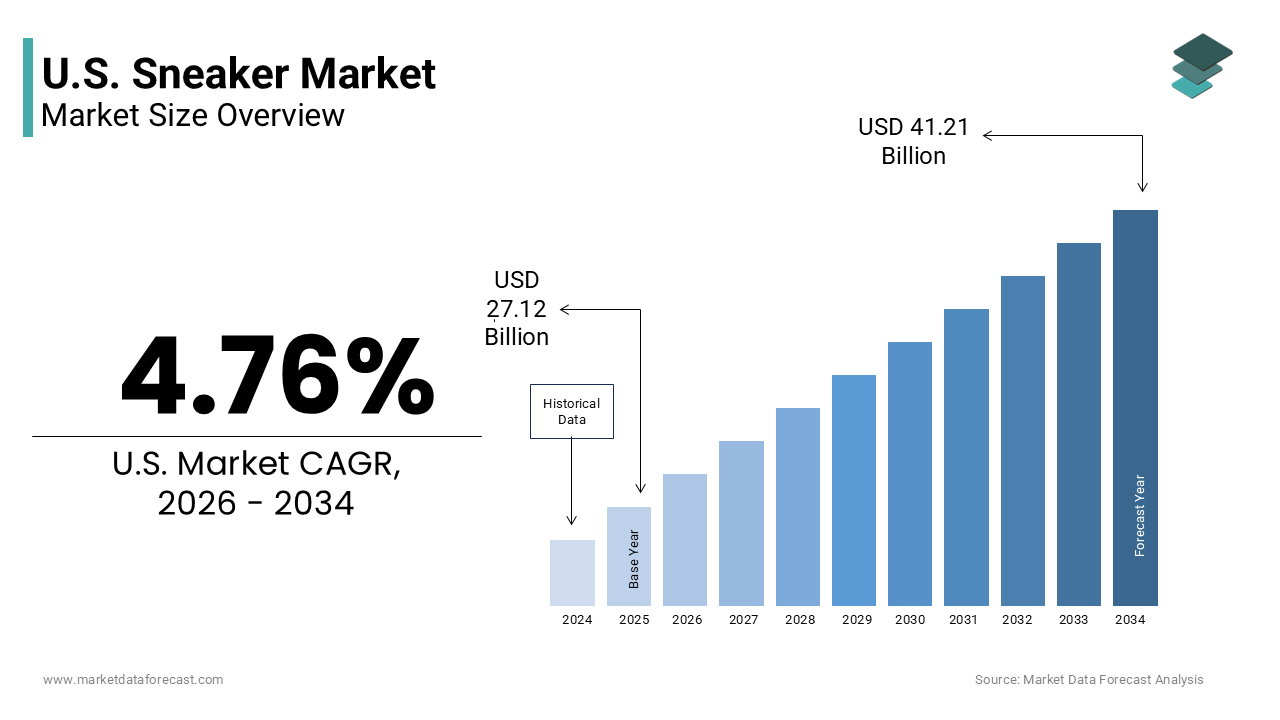
A sneaker is a lightweight, comfortable shoe designed primarily for sports or casual everyday wear, characterized by a flexible rubber sole and an upper made of canvas, fabric, or synthetic materials. This market covers the design manufacturing and retail of footwear primarily constructed with flexible uppers and rubber soles intended for sports casual wear or street style. As per the Bureau of Labor Statistics, the average American household spends $466 annually on footwear, underscoring the category's essential role in personal expenditure. The market is defined by rapid product cycles, brand loyalty and the influence of celebrity endorsements which drive demand beyond functional utility. According to the Centers for Disease Control and Prevention rising participation in recreational activities such as walking running and gym training supports consistent baseline demand for performance oriented sneakers. The industry operates within a complex supply chain that relies heavily on international manufacturing hubs while focusing marketing and design efforts domestically. Consumer behavior is increasingly shaped by digital engagement where social media platforms dictate trends and release strategies. Research shows that 94% of teens use social media, with approximately 71% checking these platforms daily, underscoring the dominant role of digital channels in shaping youth purchasing decisions. The definition of this market now includes sustainable materials and ethical production practices as key differentiators. Understanding this landscape requires analyzing the tension between mass market accessibility and exclusive limited edition releases that fuel the secondary resale economy.
MARKET DRIVERS
Influence of Streetwear Culture and Celebrity Endorsements
The pervasive influence of streetwear culture and high profile celebrity endorsements is one of the main reasons for the growth of the United States sneaker market. This transforms footwear into status symbols and collectible assets. Collaborations between major athletic brands and musicians athletes or fashion designers create hype and scarcity that drive immediate sales and long term brand equity. According to research, influencer collaborations drive an average 80% brand recall and significant increases in purchase intent, while market analysis from Circana notes that high-demand sneaker collaborations often achieve sell-out rates exceeding 90% shortly after release. Celebrities such as Travis Scott and LeBron James have launched signature lines that command premium prices and foster deep emotional connections with fans. According to a study, trust in digital creators and celebrities influences the purchasing decisions of roughly 50% of Millennials and 54% of Gen Z who increasingly view sneakers and apparel as extensions of their personal values and identity. The integration of sneakers into high fashion runways further legitimizes them as luxury items encouraging consumers to invest in multiple pairs for different occasions. Social media amplifies this effect by showcasing exclusive drops and styling tips creating a feedback loop of desire and acquisition. This cultural shift ensures that sneakers remain relevant beyond their athletic origins appealing to a broad demographic that values aesthetics and exclusivity. The resulting demand sustains high margins for limited editions and drives traffic to both primary and secondary markets.
Rising Health Consciousness and Athletic Participation
The increasing focus on health and wellness along with higher rates of athletic participation fuels consistent demand for performance-oriented sneakers in the United States sneaker market. Consumers are prioritizing physical fitness as a core component of their lifestyle leading to greater investment in specialized footwear for running training and outdoor activities. As per the Sports and Fitness Industry Association over 50 percent of Americans engage in regular exercise routines requiring appropriate gear to prevent injury and enhance performance. This trend is supported by public health initiatives promoting active living which encourage walking and jogging as accessible forms of exercise. According to the Centers for Disease Control and Prevention the number of adults meeting physical activity guidelines has risen steadily creating a larger base of potential customers for athletic footwear. Manufacturers respond by innovating technologies such as cushioning systems and breathable materials that appeal to health conscious buyers seeking comfort and durability. The rise of fitness apps and wearable technology also motivates users to track their progress further integrating sneakers into their daily health regimes. This functional demand provides a stable foundation for the market ensuring steady sales volume regardless of fluctuating fashion trends. The emphasis on preventive health care reinforces the necessity of high quality footwear making it a priority expenditure for many households.
MARKET RESTRAINTS
Environmental Concerns and Sustainability Challenges
Growing awareness of environmental impact and the carbon footprint of footwear production is a limitation to the United States sneaker market. This pressures brands to adopt costly sustainable practices. Traditional sneaker manufacturing involves extensive use of synthetic materials plastics and adhesives that are difficult to recycle and contribute to landfill waste. As per the Environmental Protection Agency millions of tons of textile and footwear waste are generated annually in the US posing significant disposal challenges. Consumers are increasingly demanding transparency regarding sourcing and production methods which forces companies to reengineer supply chains and invest in eco friendly alternatives. According to a study, while over 66% of consumers consider sustainability a key purchasing factor, there is a significant "intention-action gap" where the majority hesitate to pay higher prices for green products. This discrepancy creates financial pressure on manufacturers who must balance ethical commitments with competitive pricing. The complexity of recycling multi material sneakers further complicates end of life management limiting the effectiveness of current circular economy initiatives. Regulatory scrutiny regarding chemical usage and waste management also adds compliance costs that can erode profit margins. Brands face reputational risks if they fail to meet evolving environmental standards leading to consumer backlash. These factors constrain market growth by increasing operational burdens and creating uncertainty around future regulatory requirements.
Supply Chain Volatility and Raw Material Costs
The volatility in global supply chains and fluctuating raw material costs slow down the United States sneaker market. This disrupts production schedules and increases input expenses. Sneaker manufacturing relies heavily on imported materials such as rubber leather and synthetic fabrics which are subject to geopolitical tensions trade policies and logistical bottlenecks. As per the Bureau of Labor Statistics producer price indices for footwear materials have experienced significant fluctuations leading to unpredictable cost structures for manufacturers. Dependence on overseas factories particularly in Asia exposes companies to risks such as labor shortages port congestion and natural disasters that delay shipments. According to the Institute for Supply Management supply chain disruptions have led to extended lead times forcing brands to hold higher inventory levels which ties up capital. The rising cost of freight and energy further exacerbates these issues squeezing profit margins for both manufacturers and retailers. Companies struggle to pass these costs onto consumers without risking demand erosion in a price sensitive market. Additionally, the lack of domestic manufacturing capacity limits flexibility in responding to sudden changes in demand or supply conditions. This instability complicates long term planning and inventory management making it difficult for brands to maintain consistent product availability. Consequently, supply chain vulnerabilities act as a persistent drag on market efficiency and profitability.
MARKET OPPORTUNITIES
Expansion of Direct to Consumer Digital Channels
The expansion of direct to consumer DTC digital channels opens new doors for the growth of the United States sneaker market. This enables brands to bypass intermediaries and capture higher margins. Online platforms enable companies to control the customer experience gather valuable data and build direct relationships with shoppers through personalized marketing. As per sources, e commerce sales in the footwear category continue to grow with mobile devices accounting for an increasing share of transactions. Brands leverage proprietary apps and websites to offer exclusive releases early access and customized products that enhance customer loyalty. According to Shopify data DTC brands report higher customer lifetime values compared to those relying solely on wholesale partnerships due to improved engagement and retention strategies. The ability to test new designs and gather real time feedback allows for faster innovation cycles and reduced inventory risk. Social commerce features such as shoppable posts and live streams further integrate shopping into daily digital interactions driving impulse purchases. Additionally, virtual try on technologies using augmented reality reduce return rates by helping customers make informed sizing decisions. By investing in robust digital infrastructure sneaker companies can expand their reach beyond traditional retail constraints. This shift empowers brands to optimize pricing strategies and tailor offerings to specific demographic segments thereby maximizing revenue potential in an increasingly digital marketplace.
Innovation in Sustainable Materials and Circular Economy
The development of innovative sustainable materials and circular economy models unlocks potential for differentiation and expansion in the United States sneaker market. Consumers are increasingly seeking eco friendly options that minimize environmental impact without compromising on style or performance. As per the Textile Exchange, demand for organic cotton and recycled synthetics remains high as brands integrate these into product lines to hit sustainability targets, despite recycled polyester facing competition from low-priced virgin materials. Companies like Adidas and Nike have launched sneakers made from ocean plastics and bio based components appealing to environmentally conscious buyers. According to research the global landscape for sustainable footwear is projected to grow at a rate of over 5 percent driven by regulatory support and consumer preference. Brands can capitalize on this trend by implementing take back programs that recycle old shoes into new products thereby closing the loop and reducing waste. Partnerships with biotech firms to develop biodegradable alternatives further enhance credibility and innovation credentials. Marketing these initiatives effectively builds brand loyalty among younger demographics who prioritize ethical consumption. Additionally, transparency in supply chain practices allows companies to command premium prices for sustainable collections. By leading the transition toward circularity sneaker manufacturers can mitigate regulatory risks and align with global sustainability goals. This strategic focus not only addresses environmental concerns but also opens new revenue streams through innovative product offerings and services.
MARKET CHALLENGES
Proliferation of Counterfeit Products
The widespread presence of counterfeit sneakers constrains the growth of the United States market. This undermines brand integrity and causes significant revenue losses. Illicit manufacturers produce high quality replicas that are sold through online marketplaces and social media platforms making it difficult for consumers to distinguish them from authentic products. As per the International Chamber of Commerce the trade in fake goods costs the global footwear industry billions of dollars annually affecting both sales and brand reputation. Counterfeits often use inferior materials and labor practices which can lead to safety issues and negative customer experiences that are mistakenly attributed to the original brand. According to the Federal Trade Commission enforcement against online counterfeiters remains challenging due to the anonymity and cross border nature of these operations. The prevalence of fakes dilutes the exclusivity of limited edition releases reducing the perceived value for legitimate collectors and enthusiasts. Brands must invest heavily in authentication technologies legal actions and consumer education to combat this issue which increases operational costs. Furthermore, the ease of accessing counterfeits online erodes trust in secondary marketplaces where authenticity is paramount. This persistent threat forces companies to constantly adapt their security measures and monitoring strategies. Failure to effectively address counterfeiting can lead to long term damage to brand equity and customer loyalty in a highly competitive landscape.
Intense Competition and Market Saturation
The intense competition and market saturation are serious obstacles to the United States sneaker market. This challenge makes it difficult for brands to differentiate themselves and maintain market share. Numerous established players alongside emerging niche brands vie for consumer attention through aggressive marketing frequent releases and celebrity partnerships. As per sources, the number of footwear brands available in the US has increased significantly leading to fragmented consumer loyalty and heightened pressure on pricing. This saturation forces companies to continuously innovate and lower prices to stay relevant which squeezes profit margins. According to IBISWorld, although basic sneaker manufacturing techniques are accessible, significant barriers to entry, including high marketing expenditures and complex global distribution networks, protect major incumbents from new competitors attempting to scale. The reliance on similar marketing tactics such as influencer endorsements and limited drops creates noise that makes it harder for individual brands to stand out. Retailers face shelf space constraints leading to tougher negotiations and potential delisting of underperforming labels. Additionally, the rapid pace of trend cycles requires constant product development which strains resources and increases the risk of unsold inventory. Brands must navigate this crowded landscape by finding unique value propositions and fostering deep community engagement. Companies that lack distinct differentiation risk becoming commoditized. This often leads to losing relevance in the eyes of discerning consumers who have endless choices.
REPORT COVERAGE
| REPORT METRIC | DETAILS |
| Market Size Available | 2025 to 2034 |
| Base Year | 2025 |
| Forecast Period | 2026 to 2034 |
| CAGR | 4.76% |
| Segments Covered | By Product Type, Category, Price Point, Distribution Channel and Region |
| Various Analyses Covered | Global, Regional, & Country Level Analysis; Segment-Level Analysis, Drivers, Restraints, Opportunities, Challenges, PESTLE Analysis, Porter’s Five Forces Analysis, Competitive Landscape, Analyst Overview of Investment Opportunities |
| Countries Covered | California, Washington, Oregon, New York, and the Rest of the United States. |
| Key Market Players | Nike, Adidas, Puma, Under Armour, New Balance, Skechers, ASICS, VF Corporation, Deckers Outdoor Corporation, and Converse. |
SEGMENTAL ANALYSIS
By Product Type Insights
The low top sneakers segment was the largest segment in the United States market in 2025. This prominence of the segment is supported by its versatility comfort and suitability for everyday wear across various lifestyles. These shoes offer greater freedom of movement and breathability compared to higher cut alternatives making them the preferred choice for casual walking running and gym activities. As per the National Sporting Goods Association low top athletic shoes account for the majority of unit sales in the footwear category due to their universal appeal among men women and children. The design aligns with contemporary fashion trends that favor minimalism and ease of pairing with diverse outfits from jeans to athletic wear. A study indicates that low tops consistently outperform mid and high tops in volume terms as they are perceived as essential staples rather than seasonal or trend dependent items. The widespread adoption of remote work has further boosted demand for comfortable yet presentable footwear that transitions seamlessly between home and outdoor environments. Major brands prioritize low top silhouettes in their core collections ensuring broad availability and frequent replenishment. Additionally, the lower material cost and simpler construction of low tops allow for competitive pricing which attracts price sensitive consumers. This combination of functional utility aesthetic flexibility and affordability solidifies the low top segment as the dominant force in the US sneaker landscape.
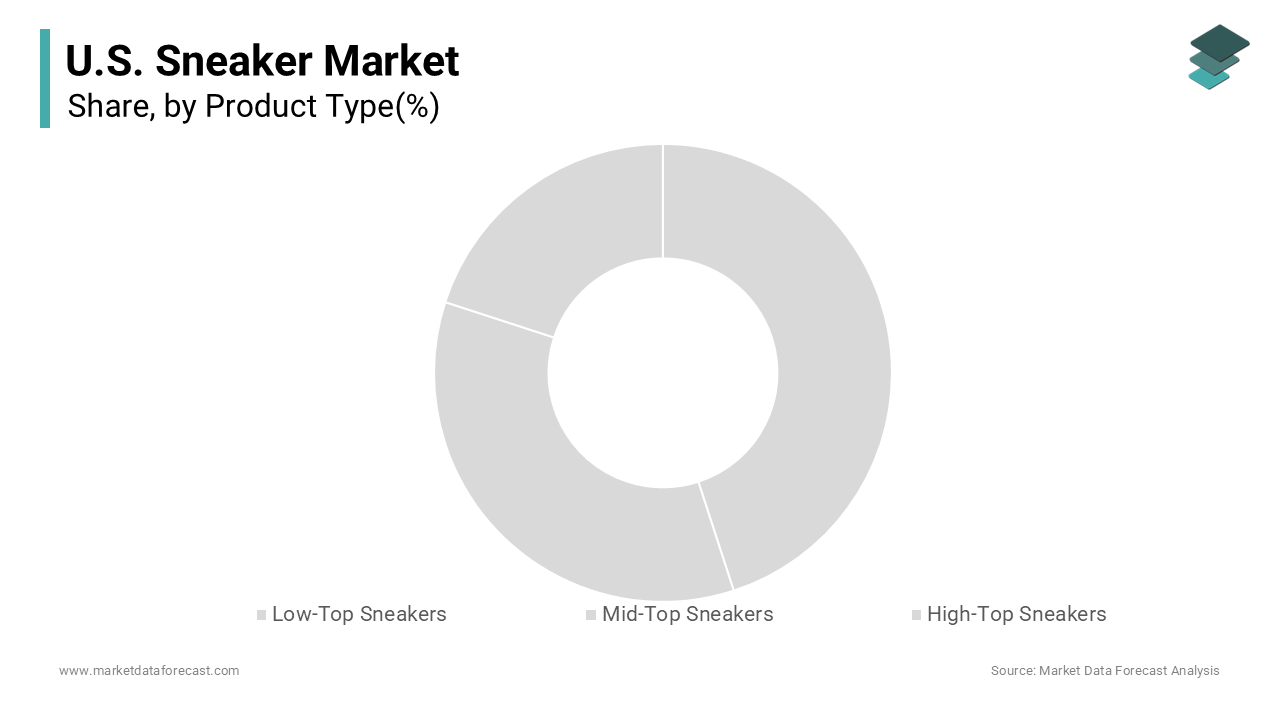
The high-top sneakers segment is likely to experience the fastest CAGR of 7.5% over the forecast period owing to its strong association with streetwear culture basketball heritage and fashion forward statements. High tops provide ankle support and a distinctive silhouette that appeals to younger demographics and sneaker enthusiasts who value bold aesthetics and brand identity. According research, sales of high-top models surge during back-to-school and holiday periods, as these silhouettes are heavily marketed as premium, fashion-forward pieces for younger consumers The influence of hip hop culture and professional basketball leagues continues to elevate the status of high tops as symbols of coolness and athletic prowess. Surveys show that Gen Z consumers are significantly more likely to purchase high top sneakers for social occasions compared to older generations who prefer practical low cuts. Collaborations between luxury fashion houses and athletic brands often feature high top designs creating hype and exclusivity that drive premium pricing and rapid sell outs. The resurgence of retro basketball styles from the 1980s and 1990s further fuels this trend as nostalgia becomes a powerful marketing tool. Additionally, the integration of advanced cushioning technologies in modern high tops enhances their performance credentials attracting both athletes and casual wearers. This convergence of cultural relevance technological innovation and stylistic distinction propels the high top segment ahead of others in terms of growth velocity.
By Category Insights
The branded sneakers segment dominated the United States sneakers market in 2025. This dominance of the segment is driven by the powerful influence of established labels such as Nike Adidas and New Balance which command significant consumer loyalty and trust. Brand recognition serves as a key determinant in purchasing decisions as shoppers associate specific logos with quality performance and social status. Marketing campaigns featuring high profile athletes and celebrities reinforce brand desirability and create emotional connections that transcend product features. According to sources, top sneaker brands rank among the most valuable globally enabling them to command premium prices and maintain high margins. The extensive distribution networks of branded companies ensure widespread availability in department stores specialty shops and online platforms maximizing reach. Furthermore, branded sneakers often retain resale value particularly limited edition releases which incentivizes collectors and resellers to participate in the primary market. Consumers perceive branded products as safer investments in terms of durability and style longevity compared to unknown alternatives. This strong brand equity coupled with continuous innovation in design and technology ensures that the branded segment remains the undisputed leader in the US sneaker industry.
The private label sneakers segment is on the rise and is expected to be the fastest growing segment in the market by witnessing a CAGR of 6.8% from 2026 to 2034 due to rising consumer preference for value-oriented options and improved quality perceptions of store brands. Retailers such as Walmart Target and Amazon have invested heavily in developing exclusive footwear lines that offer comparable style and comfort to national brands at lower price points. The improvement in manufacturing standards and design capabilities of private label producers has narrowed the quality gap with branded competitors making them viable options for everyday use. Retailers leverage their customer data to tailor private label offerings to specific demographic preferences enhancing relevance and appeal. Additionally, the convenience of purchasing private label sneakers alongside other grocery or household items during single shopping trips boosts impulse buys. The absence of heavy marketing costs allows retailers to pass savings to consumers further driving adoption. This combination of affordability accessibility and improving quality positions the private label segment as a dynamic growth area in the competitive sneaker market.
By Price Point Insights
The economic price point segment held the majority share of the United States sneaker market in 2025. This supremacy of the segment is credited to its accessibility to a broad consumer base including budget conscious families students and value seekers. Affordable sneakers typically priced under 50 dollars cater to everyday needs such as school uniforms work requirements and casual wear where durability and cost effectiveness are prioritized over prestige. As per studies, the majority of American households allocate a modest portion of their budget to footwear favoring practical and inexpensive options for regular replacement. Retail giants like Walmart and Payless ShoeSource dominate this segment by offering wide assortments of low cost brands and private labels that meet basic quality standards. The high turnover rate of childrens shoes due to growth spurts further sustains demand for economical options that do not represent a significant financial burden. Additionally, promotional discounts and clearance sales in mass market retailers attract bargain hunters who prioritize value over brand name. The sheer volume of transactions in this segment ensures steady revenue streams for manufacturers and retailers despite lower individual profit margins. This widespread need for affordable footwear cements the economic segment as the largest contributor to overall market volume.
The luxury price point segment is expected to exhibit a noteworthy CAGR of 9.2% during the forecast period. This quick surge of the segment is supported by increasing disposable incomes among affluent consumers and the elevation of sneakers as high fashion items. Luxury sneakers priced above 200 dollars often feature premium materials intricate designs and collaborations with renowned designers or artists appealing to status conscious buyers. The phenomenon of sneakerhead culture has transformed limited edition luxury releases into collectible assets driving demand beyond functional use. Social media influencers and celebrities frequently showcase luxury sneakers enhancing their aspirational value and driving viral demand. The exclusivity associated with limited drops creates urgency and fosters brand loyalty among elite shoppers. Additionally, the rise of online resale platforms facilitates the trading of rare luxury sneakers further stimulating primary market interest. This convergence of wealth accumulation fashion trends and cultural hype propels the luxury segment forward at an accelerated pace.
By Distribution Channel Insights
The online stores segment led the United States sneaker market in 2025. This leading position of the segment is attributed to the convenience of home delivery extensive product selection and competitive pricing available through digital platforms. E commerce allows consumers to compare brands read reviews and access exclusive releases without geographical constraints making it the preferred channel for tech savvy shoppers. Major brands and retailers have invested heavily in user friendly websites and apps that offer personalized recommendations virtual try on tools and seamless checkout experiences. The ability to access global inventory and niche products that may not be available in local stores further enhances the appeal of online shopping. Additionally, flexible return policies and free shipping incentives reduce the perceived risk of buying shoes without trying them on physically. The integration of social commerce features allows users to purchase directly from social media posts streamlining the journey from discovery to purchase. This combination of convenience variety and technological innovation ensures that online stores remain the dominant distribution channel in the US sneaker market.
The brand outlets segment is predicted to witness the highest CAGR of 5.5% between 2026 and 2034. This swift expansion of the segment is fuelled by consumer desire for authentic discounted products and the experiential nature of outlet shopping. Outlet malls and factory stores offer significant savings on previous season styles and overstock items attracting bargain hunters who still value brand authenticity and quality. Brand outlets provide a controlled environment where companies can clear inventory without diluting the prestige of their full price retail locations. The tactile experience of trying on shoes and receiving immediate possession of purchases appeals to consumers who dislike waiting for shipping or dealing with returns. Additionally, outlet centers often feature dining and entertainment options making them destinations for family outings and leisure activities. Brands leverage these spaces to engage directly with customers through exclusive outlet only products and promotions. This blend of value experience and brand engagement drives the rapid expansion of the brand outlets channel in the competitive sneaker landscape.
REGIONAL ANALYSIS
U.S. Sneaker Market Analysis
The United States outperformed others in the sneaker market and occupied a 35.1% share in 2025. Moreover, the demand for sneakers in the US is propelled by its strong sports culture high disposable income and fashion consciousness. Its top spot is strengthened by the presence of major global headquarters such as Nike and Under Armour which drive innovation and set worldwide trends. As per the Sports and Fitness Industry Association millions of Americans participate in athletic activities annually creating a robust baseline demand for performance footwear. The market is characterized by a mature ecosystem where digital engagement and physical retail coexist to serve diverse consumer preferences. According to the Bureau of Labor Statistics, household spending on footwear remains a staple of the "Apparel and Services" category, with average annual expenditures reaching $466 per consumer unit, though growth has moderated due to inflationary pressures on discretionary athletic models. Consumer behavior in the US is marked by a high adoption of e commerce and social media influences which shape purchasing decisions and brand loyalty. The prevalence of sneaker culture and resale markets adds layers of complexity and opportunity for brands to engage with enthusiastic communities. Regulatory frameworks regarding labor practices and environmental sustainability are increasingly shaping production strategies for companies operating in the region. High levels of urbanization and active lifestyles further stimulate demand for versatile and stylish footwear options. This robust foundation ensures that the United States remains the central hub for sneaker innovation consumption and cultural influence globally.
COMPETITIVE LANDSCAPE
The competition in the United States sneaker market is intense and characterized by a mix of global giants and agile niche brands vying for consumer attention. Major players compete on brand equity innovation and marketing prowess while smaller companies differentiate themselves through unique designs and sustainable practices. The rise of direct to consumer models has disrupted traditional retail channels forcing established brands to enhance their digital presence and customer service quality. Price sensitivity varies across segments with value driven shoppers seeking affordability and enthusiasts willing to pay premiums for exclusivity. Innovation in materials and technology provides competitive advantages for early adopters who can offer superior performance or comfort. Regulatory compliance and ethical sourcing standards also influence competitive dynamics as consumers demand transparency. Social media plays a pivotal role in shaping trends and driving viral demand for specific styles. This complex landscape requires continuous adaptation and strategic investment to maintain market relevance and profitability in a rapidly evolving industry.
KEY MARKET PLAYERS
A few of the major companies in the U.S. Sneaker Market include
- Nike, Inc.
- Adidas AG
- Puma SE
- Under Armour, Inc.
- New Balance Athletics, Inc.
- Skechers USA, Inc.
- ASICS Corporation
- VF Corporation
- Deckers Outdo
Top Players in the Market
Nike Inc
Nike Inc stands as a dominant force in the global sneaker industry driven by its iconic branding and extensive product portfolio. The company leverages high profile athlete endorsements and innovative design to maintain cultural relevance across diverse demographics. Recent actions include expanding its direct to consumer digital platforms and enhancing membership programs to foster deeper customer loyalty. Nike invests heavily in sustainability initiatives such as using recycled materials in production to align with environmental consciousness. The firm strengthens its market position through strategic collaborations with fashion designers and celebrities that create hype and exclusivity. By integrating advanced technology into footwear performance and retail experiences Nike ensures it remains at the forefront of innovation. These efforts solidify its leadership by combining athletic heritage with modern lifestyle appeal and operational excellence in the global marketplace.
Adidas AG
Adidas AG is a major global player known for its strong presence in both performance sports and streetwear culture. The company focuses on blending athletic functionality with fashion forward designs to appeal to style conscious consumers worldwide. Recent strategies involve expanding partnerships with high profile influencers and launching limited edition collections that drive brand desirability. Adidas prioritizes sustainability by committing to use only recycled polyester in its products and reducing carbon emissions in manufacturing. The firm enhances its digital capabilities through improved e commerce platforms and personalized shopping experiences. By investing in community engagement and local marketing campaigns Adidas builds strong emotional connections with customers. These actions strengthen its competitive edge by balancing heritage with innovation and responsiveness to evolving consumer preferences in the dynamic global sneaker industry.
Puma SE
Puma SE operates as a significant global entity in the sneaker market by focusing on the intersection of sports performance and lifestyle fashion. The company leverages collaborations with musicians athletes and designers to create unique products that resonate with younger audiences. Recent actions include expanding its presence in emerging markets and enhancing its digital sales channels to reach broader consumer bases. Puma emphasizes sustainability through initiatives like the Forever Better program which aims to reduce environmental impact across its supply chain. The firm strengthens its brand identity by sponsoring major sporting events and teams globally. By focusing on speed and agility in product development Puma responds quickly to trending styles and consumer demands. These strategic moves enable the company to maintain a strong competitive position and drive growth in the highly contested global sneaker landscape.
Top Strategies Used by Key Market Participants
Key players in the United States sneaker market prioritize direct to consumer digital expansion to enhance customer engagement and capture higher profit margins effectively. Companies leverage high profile celebrity endorsements and influencer partnerships to build brand hype and drive cultural relevance among younger demographics. Sustainability initiatives are central to corporate strategies with brands investing in eco friendly materials and circular economy models to meet consumer expectations. Limited edition releases and exclusive collaborations create scarcity and urgency that fuel demand and secondary market activity. Investment in advanced manufacturing technologies improves product performance and customization options for individual buyers. Omnichannel retail integration ensures seamless shopping experiences across online and physical stores. Data analytics drive personalized marketing campaigns that increase conversion rates and customer loyalty. These combined approaches allow firms to navigate competitive pressures and sustain growth in a dynamic retail environment.
MARKET SEGMENTATION
This research report on the U.S. Sneaker Market has been segmented based on the following categories.
By Product Type
- Low-Top Sneakers
- Mid-Top Sneakers
- High-Top Sneakers
By Category
- Branded
- Private Label
By Price Point
- Luxury
- Economic
By Distribution Channel
- Specialty Stores
- Supermarkets and Hypermarkets
- Brand Outlets
- Online Stores
- Others
By Country
- California
- Washington
- Oregon
- New York
- Rest of the United States
Access the study in MULTIPLE FORMATS
Purchase options starting from
$ 1200
Didn’t find what you’re looking for?
TALK TO OUR ANALYST TEAM
Need something within your budget?
NO WORRIES! WE GOT YOU COVERED!
Call us on: +1 888 702 9696 (U.S Toll Free)
Write to us: sales@marketdataforecast.com