Europe MMO Games Market Size, Share, Trends & Growth Forecast Report Segmented By Gaming Platform (Mobile, Tablet, Gaming Console, PC), Revenue Model, Game Type, And Country (UK, France, Spain, Germany, Italy, Russia, Sweden, Denmark, Switzerland, Netherlands, Turkey, Czech Republic & Rest Of Europe), Industry Analysis From 2026 To 2034
Europe MMO Games Market Report Summary
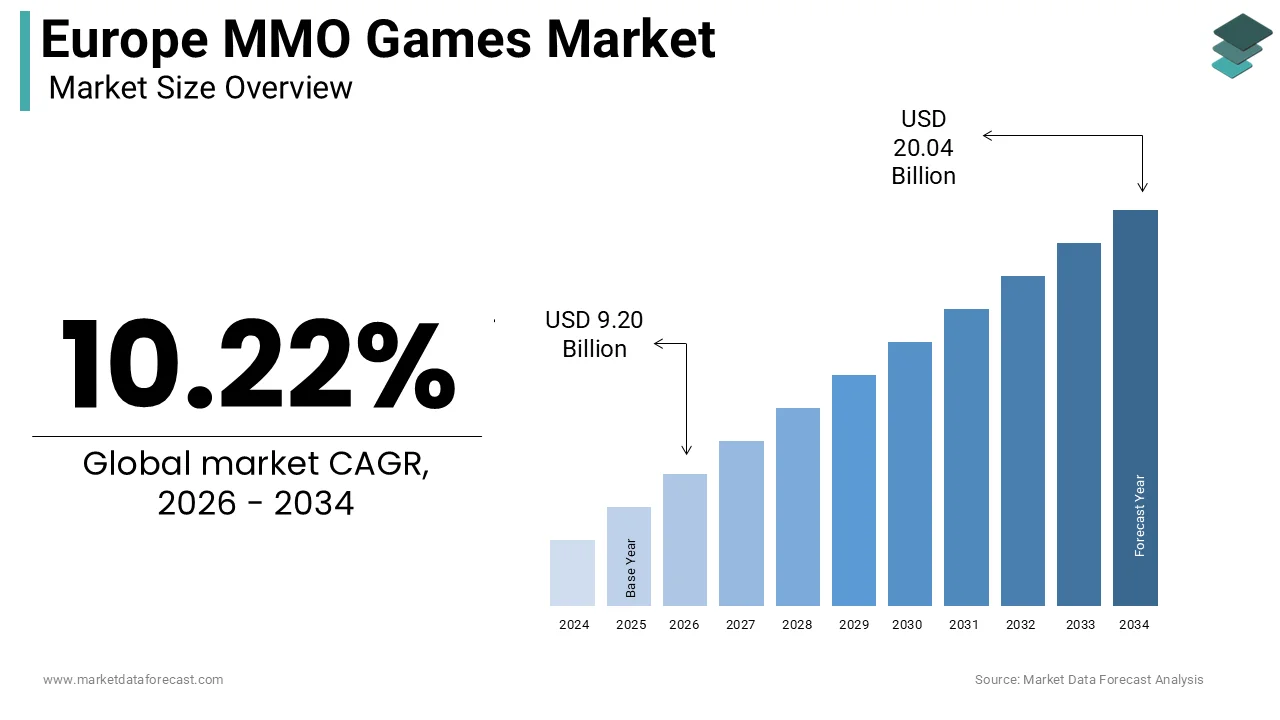
The Europe MMO (Massively Multiplayer Online) games market was valued at USD 8.35 billion in 2025 and is projected to reach USD 20.04 billion by 2034, growing from USD 9.20 billion in 2026 at a CAGR of 10.22% during the forecast period. Market growth is driven by increasing online gaming adoption, improved internet infrastructure, and rising popularity of multiplayer and social gaming experiences. The expansion of cloud gaming, esports, and cross-platform play is further accelerating the growth of the Europe MMO games market.
Key Market Trends
- Growing popularity of free-to-play and live-service game models
- Increasing adoption of cross-platform and cloud gaming
- Rising engagement in esports and online multiplayer communities
- Expansion of in-game monetization through microtransactions
- Advancements in graphics, AI, and immersive gameplay
Segmental Insights
- Based on gaming platform, the PC segment dominated the Europe MMO games market in 2025 by accounting for 44.7% of the regional market share, driven by strong gaming communities and performance capabilities
- Based on revenue model, the free-to-play segment led the market in 2025 by capturing 51.6% of the total market share, supported by wider accessibility and in-game purchases
- Based on game type, he theme park or quest-driven segment held the largest share in 2025 at 51.5%, driven by structured gameplay and storytelling experiences
Regional Insights
- Germany led the Europe MMO games market in 2025 by holding 23.75% of the regional market share, supported by a large gaming population and strong digital infrastructure
- United Kingdom holds a significant share, driven by a vibrant gaming ecosystem and high digital adoption
- France is expected to maintain a notable share due to strong game development studios and player base
- Spain is anticipated to witness a healthy CAGR, supported by increasing gaming engagement
- Italy is projected to grow steadily due to rising online gaming popularity
Competitive Landscape
- The Europe MMO games market is highly competitive, with developers focusing on immersive gameplay, continuous content updates, and monetization strategies. Companies are investing in live-service models, community engagement, and cross-platform capabilities to retain players and increase revenue.
- Prominent players in the Europe MMO games market include Ubisoft Entertainment SA, CCP Games, Gameforge AG, Gamigo AG, Jagex Ltd, Bigpoint GmbH, CipSoft GmbH, Ankama Games, Sandbox Interactive, and Funcom.
Europe MMO Games Market Size
The Europe MMO games market size was calculated to be USD 8.35 billion in 2025 and is anticipated to be worth USD 20.04 billion by 2034, from USD 9.20 billion in 2026, growing at a CAGR of 10.22% during the forecast period.
MMO games encompass a dynamic sector of online multiplayer experiences where large numbers of players interact simultaneously within a persistent virtual world. This industry includes Massively Multiplayer Online Role Playing Games, strategy simulations, and social platforms that foster long-term community engagement and recurring revenue models. The region is characterized by a mature gaming culture, high broadband penetration, and a strong preference for PC and console-based multiplayer experiences. As per Eurostat data, 89% of households in the European Union had access to the internet in 2023, providing the essential infrastructure for seamless online gaming. As per the International Telecommunication Union, fixed broadband subscriptions in Europe reached 35 per 100 inhabitants in 2022, ensuring low-latency connections required for competitive and cooperative gameplay. The cultural significance of gaming is evident, with the Interactive Software Federation of Europe stating that 62% of Europeans play video games regularly. This widespread adoption creates a fertile ground for MMO titles that rely on critical mass for viability. The market is also influenced by the General Data Protection Regulation, which shapes how developers handle user data and community interactions. Additionally, the rise of cloud gaming services is expanding accessibility, allowing users to play resource-intensive MMOs on lower-end hardware. This technological and cultural landscape positions Europe as a key region for the development and consumption of massively multiplayer online experiences, driving innovation in social gaming mechanics and digital economy structures.
MARKET DRIVERS
High Broadband Penetration and Advanced Digital Infrastructure
The extensive availability of high-speed internet and advanced digital infrastructure is propelling the growth of the European MMO games market. MMO games require stable and low-latency connections to support real-time interactions among thousands of players, which is making robust broadband essential for user retention and satisfaction. As per Eurostat, 92% of households in the European Union had access to broadband internet in 2023, with fiber optic coverage expanding rapidly across member states. This widespread connectivity ensures that players in both urban and rural areas can participate in lag-free gaming sessions. The European Commission’s Digital Decade targets aim to have all European households covered by Gigabit networks by 2030, further enhancing the potential for high-fidelity MMO experiences. According to the Organisation for Economic Cooperation and Development, average download speeds in Europe exceeded 100 Mbps in 2023, and is enabling the seamless streaming of complex graphical environments and rapid data synchronization. This infrastructure supports the increasing complexity of modern MMOs, which feature large-scale battles and persistent world events. Furthermore, the rollout of 5G networks allows for mobile MMO variants to gain traction, offering flexibility for on-the-go gaming. The reliability of these networks reduces churn rates as players are less likely to abandon games due to technical issues. Consequently, the solid foundation of digital connectivity in Europe facilitates the sustained growth and evolution of the MMO gaming sector.
Strong Gaming Culture and Community Engagement Traditions
The deeply entrenched gaming culture and strong traditions of community engagement in Europe significantly propel the demand for MMO games, which is another major market driver. European gamers often view gaming as a social activity rather than a solitary pursuit, seeking connections and collaborations within virtual worlds. As per the Interactive Software Federation of Europe, 62% of the population in Europe plays video games, with a significant portion engaging in multiplayer formats. This cultural inclination fosters vibrant online communities where players form guilds, participate in events, and build long-term relationships. The presence of major gaming conventions such as Gamescom in Germany and Paris Games Week in France reinforces the social aspect of gaming and drives interest in multiplayer titles. According to a survey by Newzoo, 45% of European gamers stated that playing with friends was their primary motivation for choosing online games. MMOs provide a platform for these social interactions, offering shared goals and collective achievements that strengthen community bonds. The tradition of LAN parties and local gaming clubs has evolved into online congregations, maintaining the social fabric of gaming culture. Furthermore, the popularity of esports in Europe encourages competitive play within MMO frameworks, attracting viewers and participants alike. This strong social orientation ensures a loyal player base that values the communal aspects of MMOs, driving consistent engagement and revenue through subscriptions and microtransactions.
MARKET RESTRAINTS
Stringent Data Privacy Regulations and Compliance Costs
The implementation of stringent data privacy regulations, particularly the General Data Protection Regulation, is a significant restraint on the European MMO games market growth. MMO games collect vast amounts of personal data, including payment information, chat logs, and behavioral patterns, which must be handled in strict compliance with European laws. As per the European Data Protection Board, non-compliance can result in fines of up to 4% of global annual turnover, creating substantial financial risks for developers. The requirement for explicit consent and the right to be forgotten complicates user management and data retention strategies. According to a report by the International Association of Privacy Professionals, 60% of gaming companies in Europe cited GDPR compliance as a major operational burden. These regulations necessitate investment in secure data infrastructure and legal expertise, increasing development and maintenance costs. Smaller studios may struggle to meet these requirements, limiting market entry and innovation. Furthermore, restrictions on data sharing hinder personalized marketing and user profiling which are crucial for player retention and monetization. The need to localize data storage within the EU adds further complexity and expense. These regulatory hurdles can delay product launches and reduce profitability, forcing companies to navigate a complex legal landscape. Consequently, the high cost and complexity of compliance act as a restraint on the growth and flexibility of the MMO games market in Europe.
Market Saturation and High Player Acquisition Costs
The saturation of the European gaming market and the resulting high costs of player acquisition are further hampering the regional market expansion. With numerous established titles dominating the landscape, new entrants face intense competition for user attention and loyalty. As per Statista, the number of active video game users in Europe exceeded 200 million in 2023, creating a crowded marketplace where standing out is increasingly difficult. Marketing expenses have surged as developers compete for visibility on digital platforms and social media. According to a study by Delta Partners, the cost per install for mobile games in Europe increased by 20% in recent years, reflecting the heightened competition for users. For MMOs that rely on large concurrent player bases to sustain economies and social dynamics, high acquisition costs can threaten viability. Established franchises benefit from brand recognition and network effects, making it hard for new titles to attract critical mass. Players often exhibit loyalty to existing communities, reducing their willingness to switch to new platforms. This saturation leads to shorter life cycles for new releases and higher churn rates. Developers must invest heavily in unique features and aggressive marketing to break through the noise, straining budgets. Consequently, the difficulty and expense of acquiring and retaining players in a saturated market restrain the expansion and profitability of the MMO games sector in Europe.
MARKET OPPORTUNITIES
Integration of Cloud Gaming Technologies
The integration of cloud gaming technologies is a significant opportunity for the Europe MMO games market by lowering hardware barriers and expanding accessibility. Cloud gaming allows users to stream high-quality MMO titles on devices with limited processing power, such as laptops, tablets, and smartphones. As per the European Cloud Partnership, the adoption of cloud services in the entertainment sector is accelerating with infrastructure improvements supporting low-latency streaming. This technology enables players to access resource-intensive MMOs without expensive upgrades, broadening the potential audience. According to a report by Juniper Research, the number of cloud gaming users in Europe is projected to reach 30 million by 2025, driven by improved internet speeds and 5G deployment. Subscription-based cloud gaming services offer convenient access to libraries of MMO titles, encouraging trial and discovery. This model aligns with the growing preference for access over ownership among younger demographics. Furthermore, cloud platforms facilitate cross-play capabilities, allowing users on different devices to interact seamlessly, enhancing community size and engagement. Developers can leverage cloud infrastructure for scalable server management, reducing operational costs and improving performance during peak times. The ability to update and maintain games centrally ensures consistent experiences for all users. By removing hardware constraints and enhancing convenience, cloud gaming opens new revenue streams and user segments for MMO developers in Europe.
Expansion into Emerging Genres and Hybrid Models
The expansion into emerging genres and hybrid gaming models offers lucrative opportunities for growth in the Europe MMO games market. Traditional MMORPGs are evolving to incorporate elements from battle royale, survival, and simulation genres, attracting diverse player bases. As per the Interactive Software Federation of Europe, there is growing interest in hybrid games that blend social interaction with competitive gameplay. Titles that combine MMO persistence with fast-paced action or creative building mechanics appeal to broader audiences beyond core RPG fans. According to Newzoo, genre-blending games have shown higher retention rates as they offer varied gameplay loops. The rise of sandbox MMOs allows for user-generated content, fostering creativity and long-term engagement. These models encourage players to shape the world, creating unique experiences that drive word of mouth marketing. Furthermore, the integration of blockchain technology for digital asset ownership, although controversial, offers potential for new economic models within games. Developers can experiment with play-to-earn mechanics or non-fungible tokens to enhance player investment. The flexibility of hybrid models allows for continuous content updates and seasonal events, keeping the experience fresh. By diversifying gameplay styles and economic structures, developers can tap into underserved niches and revitalize the MMO landscape in Europe.
MARKET CHALLENGES
Cybersecurity Threats and Account Security Issues
Cybersecurity threats and account security issues pose a major challenge to the Europe MMO games market as these platforms are frequent targets for hackers and fraudsters. MMO games involve valuable virtual assets and personal data, making them attractive for cybercriminals seeking to steal accounts or conduct fraudulent transactions. As per the European Union Agency for Cybersecurity, phishing attacks and credential stuffing incidents in the gaming sector increased by 25% in 2023. These breaches undermine player trust and can lead to significant financial losses for both users and developers. The complexity of managing millions of user accounts requires a robust security infrastructure, which is costly to implement and maintain. According to a report by Kaspersky, 40% of gamers in Europe have experienced some form of account compromise or hacking attempt. Such incidents result in customer churn and reputational damage for game publishers. The need for two-factor authentication and continuous monitoring adds friction to the user experience, potentially deterring casual players. Furthermore, the anonymity of online interactions facilitates toxic behavior and harassment, which requires sophisticated moderation tools to address. Regulatory pressures to protect minors and vulnerable users add another layer of complexity to security management. Failure to adequately address these threats can lead to legal liabilities and loss of market share. Consequently, maintaining high standards of cybersecurity remains a persistent and costly challenge for MMO operators in Europe.
Content Moderation and Toxic Behavior Management
The management of toxic behavior and the need for effective content moderation offer significant challenges to the Europe MMO games market. Large-scale multiplayer environments often suffer from harassment, hate speech, and cheating, which can degrade the user experience and drive players away. As per the Anti-Defamation League, 65% of multiplayer gamers in Europe have experienced severe harassment, including threats and stalking. Addressing this issue requires substantial investment in artificial intelligence-driven moderation tools and human review teams. The sheer volume of interactions in MMOs makes manual moderation impractical, necessitating automated solutions that can sometimes lack nuance. According to a study by the University of Oxford, ineffective moderation leads to higher churn rates, particularly among female and minority players. Developers face the difficult task of balancing free expression with community safety while adhering to varying national laws regarding speech and conduct. The General Data Protection Regulation also limits the extent to which user data can be monitored and stored for moderation purposes. Failure to create safe and inclusive environments can result in negative publicity and regulatory scrutiny. Furthermore, the global nature of MMOs means that cultural differences in communication styles can lead to misunderstandings and conflicts. Managing these social dynamics requires ongoing effort and resources, posing a continuous challenge to sustaining healthy and engaged communities in the European MMO market.
REPORT COVERAGE
| REPORT METRIC | DETAILS |
| Market Size Available | 2025 to 2034 |
| Base Year | 2025 |
| Forecast Period | 2026 to 2034 |
| CAGR | 10.22% |
| Segments Covered | By Gaming Platform, Revenue Model, Game Type, And Region |
| Various Analyses Covered | Global, Regional & Country Level Analysis; Segment-Level Analysis; DROC, PESTLE Analysis; Porter’s Five Forces Analysis; Competitive Landscape; Analyst Overview of Investment Opportunities |
| Regions Covered | UK, France, Spain, Germany, Italy, Russia, Sweden, Denmark, Switzerland, Netherlands, Turkey, and the Czech Republic |
| Market Leaders Profiled | Ubisoft Entertainment SA, CCP Games, Gameforge AG, Gamigo AG, Jagex Ltd., Bigpoint GmbH, CipSoft GmbH, Ankama Games, Sandbox Interactive, Funcom |
SEGMENTAL ANALYSIS
By Gaming Platform Insights
The PC segment held the leading position in the Europe MMO games market by accounting for 44.7% of the regional market share in 2025. The dominance of the PC segment in the European market is primarily driven by the superior hardware capabilities of personal computers, which allow for high-fidelity graphics, complex user interfaces, and precise control schemes essential for competitive MMO gameplay. As per Steam Hardware Survey data from early 2024, over 60% of European gamers prefer PCs for multiplayer online experiences due to the flexibility of customization and performance optimization. The mouse and keyboard setup provides unparalleled precision for targeting and menu navigation, which is critical in fast-paced MMORPGs and strategy games. According to the Interactive Software Federation of Europe, PC gaming revenue in the region remains robust with a dedicated community that values long-term engagement and deep mechanical complexity. The open nature of the PC platform allows for extensive modding communities, which extend the lifespan of MMO titles and foster loyal player bases. Furthermore, major esports tournaments for MMO titles are predominantly played on PC, reinforcing its status as the premier platform for competitive play. The ability to run multiple applications simultaneously, such as voice communication tools and streaming software, further enhances the social and professional aspects of PC gaming. This combination of technical superiority and cultural entrenchment ensures that the PC platform remains the cornerstone of the European MMO market.
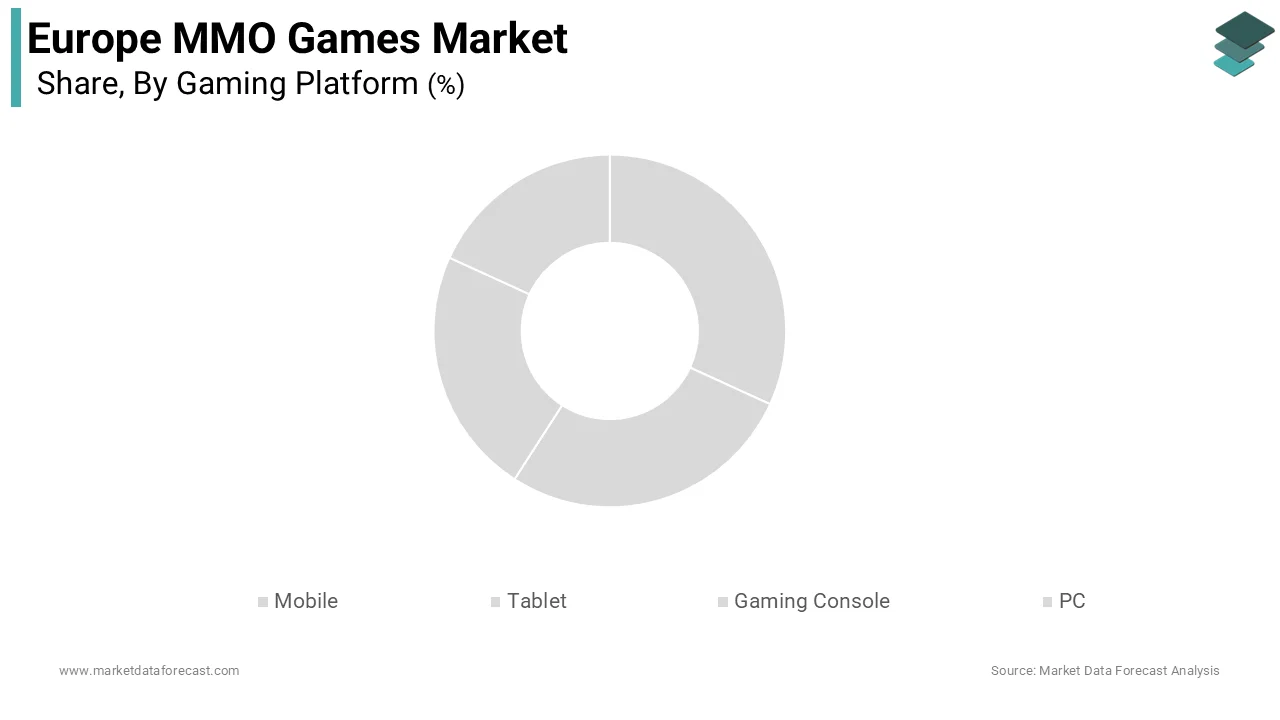
On the other hand, the mobile segment is on the rise and is projected to register the highest CAGR of 13.4% over the forecast period, owing to the compound annual growth rate of 12.8% during the forecast period, driven by the ubiquitous adoption of smartphones and improvements in mobile connectivity across Europe. As per Eurostat, smartphone penetration in the European Union reached 91% in 2023, providing a vast potential audience for mobile MMO experiences. The rollout of 5G networks has significantly reduced latency and increased bandwidth, enabling more complex and persistent online worlds to run smoothly on mobile devices. According to the GSMA Intelligence report, 5G connections in Europe are expected to account for 50% of total mobile connections by 2025, facilitating high-quality multiplayer gaming on the go. Mobile MMOs offer the convenience of playing anywhere and anytime, appealing to commuters and casual gamers who may not have access to dedicated gaming hardware. The lower barrier to entry in terms of cost and technical knowledge attracts a broader demographic, including older adults and non-traditional gamers. Publishers are increasingly optimizing popular PC MMO franchises for mobile platforms, leveraging existing brand recognition to drive downloads. The integration of cross progression features allows players to synchronize their progress between mobile and other devices, enhancing retention. This accessibility and technological advancement drive the rapid expansion of the mobile segment in the European MMO market.
By Revenue Model Insights
The free-to-play segment led the market by accounting for 51.6% of the regional market share in 2025. The dominance of the free-to-play segment in the European market is driven by the low barrier to entry, which allows players to download and start playing without any upfront financial commitment, thereby maximizing the potential user base. As per Statista, the number of free-to-play gamers in Europe exceeded 150 million in 2023, reflecting the widespread acceptance of this model. By removing the initial cost hurdle, developers can attract a diverse audience, including casual players who may be hesitant to invest in subscription-based titles. The large player base creates vibrant and active communities, which are essential for the health of MMO ecosystems. According to the Interactive Software Federation of Europe, free-to-play titles generate significant revenue through in-game purchases such as cosmetic items, battle passes, and convenience boosts. This model relies on the conversion of a small percentage of players into paying customers, known as whales, who contribute disproportionately to revenue. The psychological appeal of optional spending allows players to control their expenditure while still enjoying the core experience. Furthermore, the free-to-play model facilitates rapid user acquisition and easier marketing through word of mouth and social sharing. This scalability and financial flexibility ensure that free-to-play remains the predominant revenue model in the European MMO market.
On the other hand, the hybrid and season pass segment is expected to grow at the fastest CAGR of 15.4% over the forecast period in the European market, owing to the combination of accessibility offered by free-to-play entry and the premium value of structured progression systems. This model appeals to European consumers who prefer transparency and predictable spending over random loot boxes. As per the European Consumer Organisation, there is growing demand for fair and clear monetization practices in video games, which season passes provide by outlining exact rewards for purchase. Season passes offer a curated series of challenges and rewards that extend gameplay longevity and provide a sense of achievement. According to a study by Superdata, the attachment rate for season passes in popular MMOs has increased by 25% in the last two years. This model encourages regular login and engagement as players strive to complete tiers before the season ends. It also allows developers to plan content releases and revenue streams more effectively. The hybrid approach often includes a free tier alongside a premium tier, allowing non-paying users to participate while offering exclusive items to subscribers. This inclusivity broadens the appeal and reduces friction for new players. The perceived value of receiving multiple items for a single upfront cost resonates well with budget-conscious gamers. Consequently, the hybrid and season pass model is rapidly gaining traction as a preferred monetization strategy in the European MMO market.
By Game Type Insights
The theme park or quest-driven segment accounted for 51.5% of the regional market share in 2025. The growth of the theme park or quest-driven segment in the European market is attributed to the structured progression systems and rich narrative depth that guide players through curated experiences. As per a survey by IGN Europe, 65% of MMO players prefer guided quest lines and story-driven content over open-ended sandbox activities. Theme park MMOs provide clear objectives and rewards, reducing the ambiguity and decision fatigue associated with sandbox games. This structure appeals to a broad audience, including casual players who may not have the time or desire to create their own goals. According to the Interactive Software Federation of Europe, narrative-driven games have higher completion rates and player satisfaction scores in the region. The predictable pacing of theme park MMOs allows developers to control the release of content and manage player flow effectively. Major franchises such as World of Warcraft and Final Fantasy XIV exemplify this model with expansive expansions and intricate storylines that keep players engaged for years. The social aspect of grouping for dungeons and raids is also facilitated by the structured nature of these games. This reliability and depth of content ensure that theme park MMOs remain the most popular choice for European gamers seeking immersive and guided online experiences.
On the other hand, the sandbox/open world segment is anticipated to record a CAGR of 14.4% over the forecast period in the European market, owing to the increasing demand for player agency and creative freedom in gaming experiences. European gamers are increasingly seeking opportunities to shape the game world and create their own narratives rather than following predefined paths. As per a study by the University of Copenhagen, sandbox games promote higher levels of creativity and problem-solving skills, which appeals to educated demographics. Titles like EVE Online and Albion Online offer complex economic systems and player-driven politics that provide endless replayability. According to CCP Games, the user-generated content in sandbox MMOs leads to 40% higher retention rates among hardcore players. The ability to build, craft, and trade without strict limitations attracts players who enjoy simulation and strategy elements. The emergence of blockchain technology and non-fungible tokens, although controversial, has also sparked interest in true ownership of digital assets within sandbox environments. This sense of ownership and impact on the virtual world creates deep emotional investment. Developers are responding by providing more robust tools for user generated content and community governance. This shift towards empowerment and creativity drives the rapid growth of the sandbox segment in the European MMO market.
REGIONAL ANALYSIS
Germany MMO Games Market Analysis
Germany accounted for the highest share of 23.75 of the regional market in 2025. The growth of Germany in the European market can be credited to its strong PC gaming culture and high disposable income. The country is home to major gaming events such as Gamescom, which fosters a vibrant community and industry presence. As per the German Games Industry Association, over 34 million people in Germany play video games regularly, with a significant portion engaging in online multiplayer titles. The preference for complex strategy and role-playing games aligns well with the MMO genre. High broadband penetration and advanced hardware adoption support the technical requirements of modern MMOs. The country also has a strong tradition of tabletop role-playing games, which translates naturally to digital MMORPGs. Regulatory frameworks regarding loot boxes and gambling are strict, influencing monetization strategies but ensuring consumer protection. The presence of local studios and publishers supports the development of tailored content for the German market. English proficiency is high, allowing easy access to international titles. The robust esports scene further drives interest in competitive MMOs. This combination of cultural affinity, technological infrastructure, and economic strength positions Germany as the leading market for MMO games in Europe.
United Kingdom MMO Games Market Analysis
The United Kingdom held a promising share of the European MMO games market in 2025. The growth of the UK in the European market is driven by the mature gaming sector and strong English language content availability. The UK has a long history of PC and console gaming, with a large population of dedicated MMO players. As per Ukie, the UK games market is one of the largest in Europe, with substantial spending on digital content. The prevalence of high-speed internet and 5G networks facilitates seamless online gameplay. London is a hub for game development and publishing, attracting talent and investment. The cultural acceptance of gaming as a mainstream hobby drives broad participation across age groups. Esports tournaments and streaming platforms are highly popular, influencing game choices and trends. The UK market is characterized by early adoption of new technologies and business models such as cloud gaming. Regulatory discussions around online safety and data privacy are active, shaping industry practices. The strong community aspect of British gaming culture supports guild and clan formation in MMOs. This dynamic environment of innovation and engagement sustains the UK’s prominent role in the European MMO landscape.
France MMO Games Market Analysis
France is predicted to hold a notable share of the European MMO games market during the forecast period, owing to a strong cultural appreciation for narrative and artistic design in games. French gamers often favor MMORPGs with rich storytelling and aesthetic appeal. As per the Syndicat des Éditeurs de Logiciels de Ludiques, the French video game market continues to grow, with online multiplayer titles gaining popularity. The country hosts major gaming events and has a vibrant indie development scene. High smartphone penetration supports the growth of mobile MMOs. The government supports the creative industries through tax credits and funding initiatives. French players are known for their loyalty to specific franchises and communities. The presence of local servers and French language support is crucial for market success. Regulatory adherence to GDPR is strict, influencing data handling practices. The social aspect of gaming is valued, with many players participating in online communities. The integration of gaming with other cultural forms, such as cinema and literature, enhances its appeal. This blend of artistic sensibility and technological adoption drives the MMO market in France.
Spain MMO Games Market Analysis
Spain is anticipated to showcase a healthy CAGR in the European MMO games market over the forecast period, owing to a young demographic and increasing digital connectivity. The Spanish gaming market has seen rapid growth in recent years, with mobile and PC MMOs gaining traction. As per the Spanish Association of Video Games, more than 16 million people in Spain play video games, with a high proportion engaging in online multiplayer. The warm climate and social culture encourage group activities, including online gaming sessions. Improvements in broadband infrastructure have reduced latency issues, making online gaming more accessible. The popularity of free-to-play models aligns with the price sensitivity of some segments. Local influencers and streamers play a significant role in promoting MMO titles. The market is becoming increasingly professional, with emerging esports teams. Regulatory frameworks are evolving to address online safety and consumer rights. The integration of gaming into social media platforms enhances visibility and engagement. This youthful energy and improving infrastructure support the steady expansion of the MMO market in Spain.
Italy MMO Games Market Analysis
Italy is estimated to register a steady CAGR in the European MMO games market over the forecast period, owing to the growing interest in digital entertainment and improving internet infrastructure. The Italian gaming market is expanding with a focus on mobile and console platforms. As per the Italian Interactive Digital Entertainment Association, video game consumption is rising among all age groups. The historical appreciation for art and narrative influences preferences for visually stunning and story-rich MMOs. Broadband coverage is improving, particularly in urban areas, facilitating online play. The social nature of Italian culture supports multiplayer interactions and community building. Local events and conventions are increasing awareness and interest in gaming. Regulatory compliance with European standards is mandatory, affecting business operations. The market is sensitive to pricing, with free-to-play models performing well. The influence of global trends and international titles is strong due to high English proficiency among younger gamers. This combination of cultural interest and technological improvement drives the gradual growth of the MMO market in Italy.
COMPETITION OVERVIEW
The competition in the Europe MMO games market is intense and characterized by the presence of established global publishers alongside emerging independent studios. Major players leverage their extensive intellectual property portfolios and financial resources to dominate the landscape, while niche developers focus on innovative gameplay mechanics and unique artistic styles. The market exhibits high barriers to entry due to the significant investment required for server infrastructure and continuous content development. Companies compete based on graphical fidelity, narrative depth, and community engagement features. The shift towards free-to-play models has intensified rivalry as firms strive to attract large user bases and convert them into paying customers through microtransactions. Regulatory compliance regarding data privacy and consumer protection adds complexity to operations requiring robust legal frameworks. Strategic acquisitions and collaborations are common as entities seek to expand their technological capabilities and market reach. The rise of cloud gaming introduces new competitors from the tech sector, disrupting traditional distribution channels. Customer retention is a key focus area with lenders emphasizing personalized experiences and responsive support. This dynamic environment drives continuous innovation and adaptation among market participants to meet evolving player expectations and regulatory standards.
KEY MARKET PLAYERS
A few major players of the Europe MMO games market include
- Ubisoft Entertainment SA
- CCP Games
- Gameforge AG
- Gamigo AG
- Jagex Ltd
- Bigpoint GmbH
- CipSoft GmbH
- Ankama Games
- Sandbox Interactive
- Funcom
Top Strategies Used by Key Market Participants
Key players in the Europe MMO games market primarily focus on expanding cross-platform compatibility to unify player bases across PC, console, and mobile devices. Companies invest heavily in live service models that provide continuous content updates, seasonal events, and battle passes to sustain long-term engagement. Strategic partnerships with local influencers and esports organizations help enhance brand visibility and community trust. Developers prioritize server infrastructure improvements to reduce latency and ensure stable gameplay experiences for European users. Localization efforts are intensified to cater to diverse linguistic and cultural preferences within the region. Anti-cheat technologies are upgraded regularly to maintain fair play and protect user accounts from security threats. Monetization strategies shift towards ethical microtransactions and transparent season passes to align with consumer protection regulations. Community management teams are expanded to facilitate direct communication between developers and players. These multifaceted approaches enable companies to retain existing users while attracting new demographics in a saturated market.
Leading Players in the Europe MMO Games Market
- Electronic Arts Inc. maintains a formidable presence in the Europe MMO games market through its extensive portfolio of online multiplayer titles and live service platforms. The company leverages its strong intellectual property franchises to engage millions of players across PC and console ecosystems. EA recently focused on enhancing cross-platform capabilities to allow seamless interaction among users regardless of their devices. This strategic move aims to unify fragmented player bases and foster larger communities. The company also invests heavily in server infrastructure to ensure low latency and stable connections for European gamers. By integrating advanced anti-cheat systems, EA addresses security concerns that plague online gaming. These initiatives strengthen user trust and retention. EA continues to expand its live service offerings with regular content updates that keep gameplay fresh and engaging. This commitment to quality and innovation solidifies its position as a key contributor to the global MMO landscape while catering specifically to the diverse preferences of European audiences.
- Ubisoft Entertainment SA is a leading force in the Europe MMO games market, known for its ambitious open world projects and persistent online universes. The French publisher has successfully launched titles that blend role-playing elements with massive multiplayer interaction,s attracting a dedicated following. Ubisoft recently enhanced its free-to-play offerings to lower entry barriers and attract new players to its ecosystems. The company focuses on community-driven development by incorporating player feedback into regular updates and expansions. This approach ensures that game evolution aligns with user expectations and desires. Ubisoft also prioritizes regional server optimization to provide smoother experiences for European users. The integration of cross-platform progression features allows players to maintain their progress across different platforms. By fostering vibrantin-gamee economies and social structures, Ubisoft creates immersive environments that encourage long-term engagement. These efforts reinforce its reputation as an innovator in the genre and strengthen its competitive stance in the global market.
- NCSoft Corporation plays a significant role in the Europe MMO games market by bringing high-quality Asian MMORPGs to Western audiences. The South Korean developer is renowned for its visually stunning graphics and complex combat systems that appeal to hardcore gamers. NCSoft recently localized several major titles for the European market,s ensuring cultural relevance and linguistic accuracy. The company partnered with local distributors to improve marketing reach and customer support services. This strategy helps overcome geographical barriers and builds trust among European consumers. NCSoft also invested in cloud gaming technologies to make its resource-intensive games accessible on a wider range of devices. The introduction of mobile versions of popular PC MMOs has expanded their user base significantly. By maintaining high production standards and responsive customer service, NCSoft establishes a loyal community. Its focus on innovation and adaptation demonstrates its commitment to strengthening its position in the competitive European landscape.
MARKET SEGMENTATION
This research report on the European MMO games market has been segmented and sub-segmented based on gaming platform, revenue model, game type & region.
By Gaming Platform
- Mobile
- Tablet
- Gaming Console
- PC
By Revenue Model
- Free-To-Play
- Subscription-Based
- Buy-To-Play
- Hybrid and Season Pass
By Game Type
- Sandbox/Open World
- Theme-Park/Quest-Driven
- PvP-Centric
- PvE-Centric
By Region
- UK
- France
- Spain
- Germany
- Italy
- Russia
- Sweden
- Denmark
- Switzerland
- Netherlands
- Turkey
- Czech Republic
- Rest of Europe
Frequently Asked Questions
1. What is driving the growth of the MMO games market in Europe?
Growth is driven by increasing internet penetration, rising gaming population, advancements in cloud gaming, and growing esports popularity.
2. What are MMO games commonly known as?
MMO games are often referred to as MMORPGs (Massively Multiplayer Online Role-Playing Games) or online multiplayer games.
3. What are the major types of MMO games?
Major types include MMORPGs, MMOFPS (first-person shooters), MMORTS (real-time strategy), and sandbox MMOs.
4. What are the main revenue models in MMO games?
Revenue models include subscription-based, free-to-play with in-game purchases, and hybrid models.
5. What role does esports play in MMO games?
Esports and competitive gaming events increase engagement, viewership, and monetization opportunities.
6. What trends are shaping the MMO games market?
Key trends include cross-platform gaming, cloud gaming, virtual reality integration, and blockchain-based gaming.
7 . What challenges does the MMO games market face?
Challenges include high development costs, server maintenance, cybersecurity risks, and player retention issues.
8. What role does community engagement play?
Strong communities, social interaction, and regular updates are crucial for retaining players in MMO games.
9. How are regulations affecting the MMO games market?
Regulations related to data privacy, in-game purchases, and content moderation impact game development and operations.
10. What is the future outlook for the Europe MMO games market?
The market is expected to grow steadily due to technological advancements, increasing gamer base, and evolving monetization strategies.
Related Reports
Access the study in MULTIPLE FORMATS
Purchase options starting from
$ 2000
Didn’t find what you’re looking for?
TALK TO OUR ANALYST TEAM
Need something within your budget?
NO WORRIES! WE GOT YOU COVERED!
Call us on: +1 888 702 9696 (U.S Toll Free)
Write to us: sales@marketdataforecast.com