U.S Candle Market Size, Share, Trends & Growth Forecast Report Segmented By Product Type (Container Based, Pillars, Other), Distribution Channel, End User, And Country (California, Washington, Oregon, New York & Rest Of The United States) – Industry Analysis And Forecast, 2026 To 2034
U.S. Candle Market Report Summary
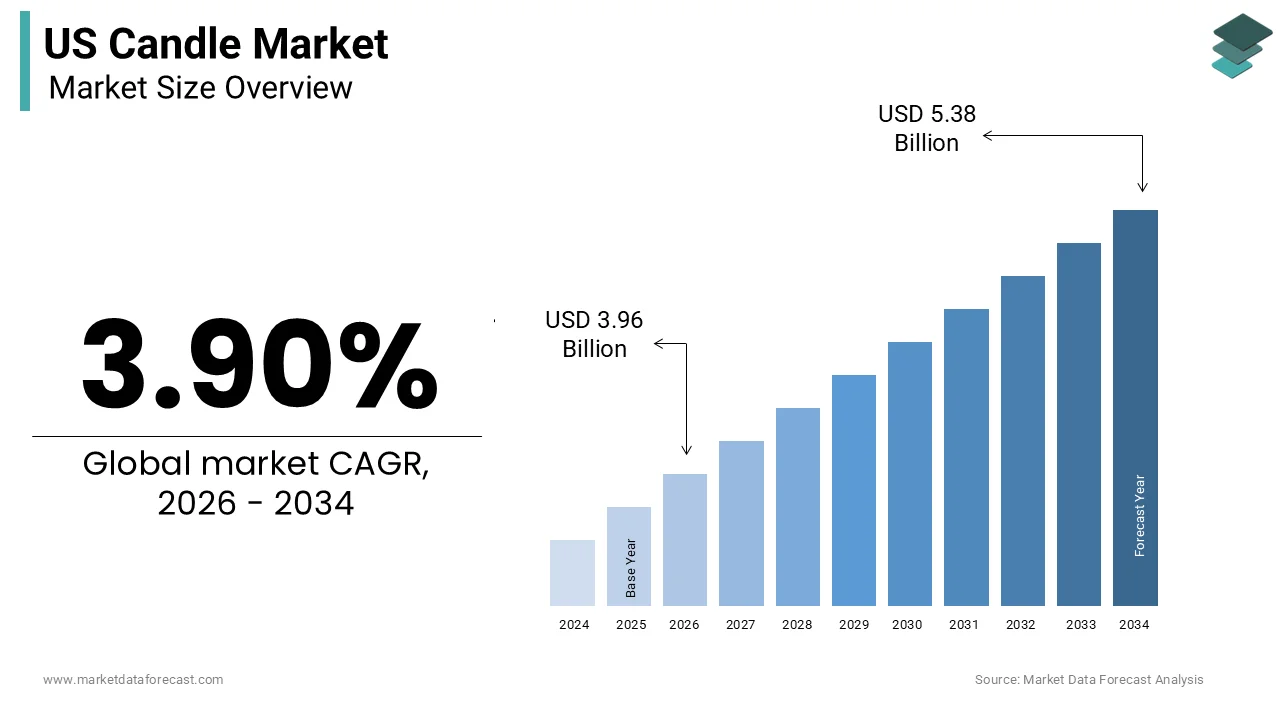
The United States candle market was valued at USD 3.81 billion in 2025 and is projected to reach USD 5.38 billion by 2034, growing from USD 3.96 billion in 2026 at a CAGR of 3.90% during the forecast period. Market growth is driven by rising consumer interest in home décor, aromatherapy, and wellness products. Candles are increasingly used for relaxation, ambiance, and gifting purposes, with demand further supported by seasonal trends and premium product innovations.
Key Market Trends
- Increasing demand for scented and aromatherapy candles
- Growth in the premium and luxury candle segments
- Rising popularity of eco-friendly and soy-based candles
- Expansion of e-commerce and direct-to-consumer sales
- Strong seasonal and gifting demand
Segmental Insights
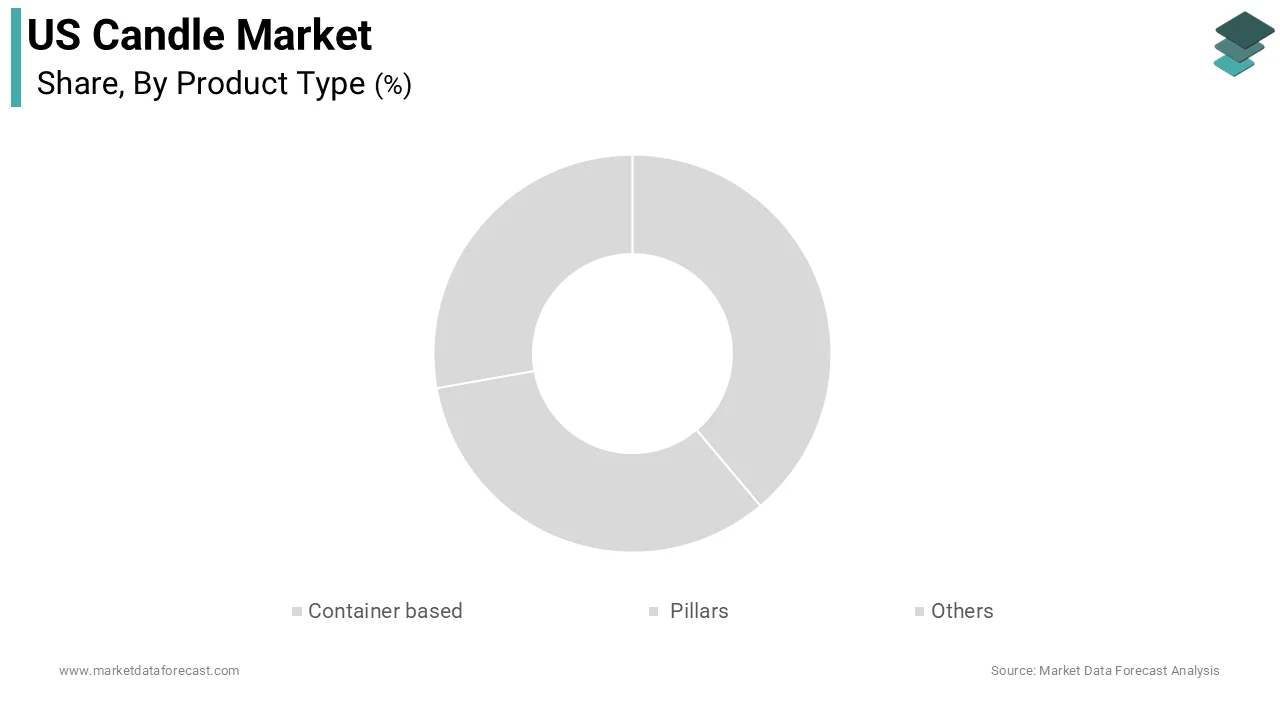
- Based on product type, the container-based candles segment dominated the U.S. candle market in 2025 by accounting for 54.5% of the regional market share, driven by convenience, safety, and aesthetic appeal.
- Based on distribution channel, the offline retail segment led the market in 2025, supported by a strong presence in specialty stores, supermarkets, and home décor outlets
- Based on end user, the residential segment held a significant share in 2025 at 34.3%, driven by the growing use of candles for home ambiance and wellness.
Competitive Landscape
- The U.S. candle market is moderately competitive, with companies focusing on fragrance innovation, sustainable materials, and premium branding. Market players are expanding their product lines with natural waxes, unique scents, and designer packaging to attract consumers.
- Prominent players in the U.S. candle market include Yankee Candle Company, Bath & Body Works, Newell Brands, Village Candle, NEST New York, Capri Blue, P.F. Candle Co, Bridgewater Candle Company, Diptyque, and Jo Malone London.
U.S Candle Market Size
The US candle market size was calculated to be USD 3.81 billion in 2025 and is anticipated to be worth USD 5.38 billion by 2034, from USD 3.96 billion in 2026, growing at a CAGR of 3.90% during the forecast period.
The candle is a home fragrance and decor industry characterized by the production and sale of wax-based illumination products infused with aromatic compounds. The definition extends beyond functional lighting to include emotional wellness, interior design elements, and gift-giving traditions that resonate deeply with American consumer culture. As per the National Candle Association, approximately 35% of US households use candles as a form of aromatherapy or to create a relaxing atmosphere, highlighting their role in mental well-being and stress reduction. Furthermore, data from the Bureau of Labor Statistics indicates that spending on household furnishings and equipment has remained resilient, reflecting the importance Americans place on creating comfortable living environments. The market is driven by seasonal trends, holidays, and the growing popularity of self-care routines where lighting a candle serves as a ritual for mindfulness and relaxation. The industry also benefits from the rise of e-commerce, which allows niche and artisanal brands to reach national audiences without traditional retail barriers.
MARKET DRIVERS
Rising Consumer Focus on Mental Wellness and Aromatherapy
The increasing emphasis on mental health and self-care practices, as consumers seek accessible and affordable ways to manage stress and enhance their home environment, is propelling the growth of the US candle market. Candles are no longer viewed merely as decorative items but as essential tools for creating sanctuaries of calm and promoting emotional balance through aromatherapy. According to the Global Wellness Institute, the wellness economy in the US is valued at over 1.5 trillion dollars, with mental wellness representing a rapidly growing sector. Lavender, eucalyptus, and chamomile scents are particularly popular due to their proven calming effects, which drives demand for candles featuring these specific fragrance profiles. The aromatherapy is increasingly recognized as a viable complementary therapy for anxiety and sleep disorders, further validating the use of scented candles in daily routines. Retailers report that products marketed with wellness benefits, such as sleep aid or stress relief, command higher price points and exhibit stronger customer loyalty. This trend is amplified by social media platforms where influencers share their evening wind-down routines, often featuring candle lighting as a key step.
Expansion of E-Commerce and Direct-to-Consumer Brands
The proliferation of e-commerce platforms and the rise of direct-to-consumer brands have significantly expanded the reach and accessibility, escalating the growth of the US candle market. Online sales channels allow small batch artisans and niche fragrance houses to bypass traditional retail gatekeepers and connect directly with consumers who seek unique and personalized scent experiences. According to the US Census Bureau, e-commerce sales in the retail sector have grown substantially, with home goods and decor being among the top categories for online purchases. These digital native brands leverage social media marketing and subscription models to build communities and drive repeat purchases. As per the Digital Commerce 360 report, customers are increasingly willing to buy fragrances online due to improved product descriptions, sample programs, and generous return policies that mitigate the risk of not smelling the product beforehand. The ability to offer limited edition seasonal scents and customizable options further enhances the appeal of online candle shopping. Additionally, the convenience of home delivery aligns with the busy lifestyles of modern consumers who value time-saving shopping experiences.
MARKET RESTRAINTS
Volatility in Raw Material Costs and Supply Chain Disruptions
The fluctuating prices of key raw materials, such as wax, essential oils, and fragrance compounds, are affecting profitability, and pricing stability is restricting the growth of the US candle market. The production of candles relies heavily on agricultural and petrochemical inputs, which are subject to global supply chain disruptions, weather events, and geopolitical tensions. According to the US Department of Agriculture, prices for soybeans, a primary source for soy wax, have experienced volatility due to changing weather patterns and export demands impacting the cost structure for candle makers. Small and medium-sized candle businesses often lack the bargaining power to secure long-term fixed price contracts, making them vulnerable to sudden cost spikes. The supply chain bottlenecks continue to affect the availability of packaging materials, such as glass jars and lids, causing delays and increased expenses. Furthermore, the dependence on imported essential oils from regions like Southeast Asia and Europe exposes the market to currency fluctuations and trade policy changes. This instability complicates financial planning and inventory management, creating uncertainty for businesses striving to maintain competitive pricing while ensuring product quality.
Regulatory Scrutiny on Safety and Environmental Standards
The increasing regulatory scrutiny regarding product safety, emissions, and environmental impact by requiring manufacturers to invest in compliance and reformulation is another factor declining the growth of the US candle market. Consumers and advocacy groups are becoming more aware of potential health risks associated with certain candle ingredients, such as lead wicks, phthalates in fragrances, and soot emissions from paraffin wax. As per the California Air Resources Board, regulations on volatile organic compound emissions from consumer products are tightening, forcing manufacturers to reformulate their fragrances to meet lower emission thresholds. Compliance with these evolving standards requires significant research and development investment, which can be burdensome for smaller players. Additionally, the lack of uniform federal regulations creates a complex landscape where companies must navigate varying state laws, increasing operational complexity. Negative publicity surrounding unsafe or polluting candles can damage brand reputation and erode consumer trust.
MARKET OPPORTUNITIES
Growth of Sustainable and Clean Label Products
The rising consumer preference for sustainable and clean-label products, as buyers increasingly prioritize eco-friendly and non-toxic options, is expected to expand the growth of the US candle market. Shoppers are actively seeking candles made from natural waxes such as soy, coconut, and beeswax paired with phthalate-free fragrances and cotton wicks to minimize environmental impact and health risks. Data from the Sustainable Packaging Coalition shows that demand for recyclable and biodegradable packaging is growing, pushing candle makers to innovate in jar materials and box designs. The certification for sustainable wood and paper products is becoming a key differentiator for brands aiming to appeal to environmentally conscious demographics. This trend allows companies to command premium prices and build loyal customer bases who value transparency and ethical sourcing. Opportunities exist for brands to highlight their carbon-neutral certifications, partnerships with local farmers, and commitment to zero-waste practices. Additionally, the development of refillable candle systems offers a novel approach to reducing waste and enhancing customer retention.
Integration of Smart Technology and Home Automation
The integration of smart technology and home automation into candle products for innovation is also creating new opportunities for the growth of the US candle market. As smart homes become more prevalent, consumers are looking for ways to integrate traditional decor items like candles into their connected ecosystems through flameless LED alternatives or smart diffusers. Companies can develop app-controlled candles that allow users to adjust brightness, scent intensity, and burn timers remotely, enhancing convenience and customization. As per the International Data Corporation, the intersection of the Internet of Things and home decor is gaining traction as consumers seek seamless integration of technology into their living spaces. Flameless LED candles with realistic flicker effects and replaceable scent cartridges offer a safe and long-lasting alternative to traditional wax candles, appealing to families with pets or children. This technological evolution opens new revenue streams through subscription services for scent refills and software updates.
MARKET CHALLENGES
Counterfeit Products and Intellectual Property Theft
The prevalence of counterfeit products and intellectual property theft, undermining brand integrity and consumer safety, is hindering the growth of the US candle market. Popular candle brands with distinctive scents and packaging are frequently replicated by unauthorized manufacturers who sell inferior and potentially hazardous imitations through online marketplaces. Data from the US Patent and Trademark Office indicates that enforcement against online counterfeiting is difficult due to the sheer volume of listings and the anonymity of sellers. These fake products often use low-quality waxes and unregulated fragrance oils that can release harmful chemicals when burned, posing health risks to consumers. Customers who unknowingly purchase counterfeits may associate negative experiences with the original brand, leading to lost trust and sales. Protecting intellectual property requires significant legal resources and monitoring efforts, which can be prohibitive for smaller independent candle makers. The lack of strict verification processes on some e-commerce platforms exacerbates the problem, allowing counterfeiters to operate with impunity.
Inconsistency in Scent Throw and Quality Control
Maintaining consistency in scent throw and overall quality control, particularly for small batch and artisanal producers, is also necessary to inhibit the growth of the US candle market. Scent throw refers to the ability of a candle to release its fragrance both when cold and while burning, which is influenced by variables such as wax type, fragrance load, curing time, and burn temperature. Data from industry forums indicates that customer complaints regarding weak scent or uneven burning are among the most common reasons for returns and negative reviews. Variations in raw material batches, such as differences in soy wax composition or fragrance oil potency, can lead to inconsistent performance across production runs. Inconsistent quality can damage brand reputation and hinder repeat purchases as consumers expect reliable performance from their favorite scents. Scaling production while maintaining handcrafted quality is particularly difficult, as larger batches may behave differently from small test samples.
REPORT COVERAGE
| REPORT METRIC | DETAILS |
| Market Size Available | 2025 to 2034 |
| Base Year | 2025 |
| Forecast Period | 2026 to 2034 |
| CAGR | 3.90% |
| Segments Covered | By Product Type, Distribution Channel, End User, And Region |
| Various Analyses Covered | Global, Regional & Country Level Analysis; Segment-Level Analysis; DROC, PESTLE Analysis; Porter’s Five Forces Analysis; Competitive Landscape; Analyst Overview of Investment Opportunities |
| Regions Covered | New York, Massachusetts, Pennsylvania, Illinois, Ohio, Michigan, Texas, Florida, Georgia, California, Washington, Colorado. |
| Market Leaders Profiled | Yankee Candle Company, Bath & Body Works, Newell Brands, Village Candle, NEST New York, Capri Blue, P.F. Candle Co., Bridgewater Candle Company, Diptyque, Jo Malone London |
SEGMENTAL ANALYSIS
By Product Type Insights
The container-based candles segment accounted in holding 54.5% of the US market share in 2025 due to their inherent safety features and convenience, which align perfectly with modern urban living standards. Unlike pillar or taper candles that require separate holders and pose a higher risk of wax spillage or fire hazards, container candles are self-contained within heat-resistant jars, making them safer for households with children and pets. The enclosed nature of these candles also allows for better scent retention and a more consistent burn pool, which enhances the aromatherapy experience that drives much of the market demand. As per the American Home Furnishings Alliance, consumers prioritize functional and safe decorative items, leading to the widespread adoption of jar candles in living rooms, bedrooms, and bathrooms. Furthermore, the glass or metal containers serve as reusable vessels for storage or decor after the wax is consumed, adding perceived value to the purchase.
The pillar candles segment is expected to register the fastest CAGR of 8.4% from 2026 to 2034, with a resurgence in interior design trends that favor rustic, minimalist, and classic aesthetics. Consumers are increasingly incorporating pillar candles into centerpieces, mantels, and dining tables as decorative elements that add warmth and elegance to living spaces without the need for complex holders. According to the American Society of Interior Designers, the trend towards maximalism and layered decor has led to a renewed interest in textured and sculptural candle forms that serve as focal points in room design. Data from Houzz indicates that searches for home decor ideas featuring pillar candles have increased by 30% year over year as homeowners seek affordable ways to refresh their interiors. The versatility of pillar candles allows them to be grouped in varying heights and colors, creating dynamic visual arrangements that appeal to design-conscious buyers. The home decor sales have remained robust, with candles being a key impulse purchase item in this category. The availability of pillar candles in diverse finishes such as marbled, metallic, or botanical-infused waxes further enhances their decorative appeal.
By Distribution Channel Insights
The offline retail channels segment held a dominant share of the US candle market in 2025, as they allow consumers to physically smell and inspect products before purchasing, which is critical for fragrance-related items. The ability to test scents in-store reduces the uncertainty associated with buying aromatherapy products and leads to higher conversion rates and customer satisfaction. According to the National Retail Federation, brick and mortar stores account for the majority of home fragrance sales, with department stores, specialty shops, and big box retailers serving as primary touchpoints. Shoppers often discover new fragrances while browsing aisles, leading to spontaneous decisions driven by immediate emotional responses to smells. As per the Shopper Marketing Magazine, in-store displays and sampling stations significantly influence buying behavior, with visually appealing arrangements drawing attention to new launches. The tactile experience of evaluating jar weight label quality and wax texture also contributes to perceived value and trust in the brand.
The online retail segment is likely to grow with an anticipated CAGR of 12.5% from 2026 to 2034, with the ability of niche and artisanal brands to reach national audiences without the constraints of physical shelf space. Digital platforms allow small-batch candle makers to showcase unique scents and stories directly to consumers who seek personalized and exclusive products. Data from Etsy indicates that handmade candle sales have surged, with thousands of independent creators launching successful online stores catering to specific tastes, such as vegan, cruelty-free, or locally sourced ingredients. Social media platforms like Instagram and TikTok play a crucial role in driving traffic to these online stores through influencer endorsements and viral trends. The ability to offer subscription services for regular candle deliveries further boosts online sales by ensuring recurring revenue and convenience. Online channels also enable brands to educate consumers through detailed blog posts and videos about scent notes and burning tips.
By End-User Insights
The residential segment accounted in holding 34.3% of the US candle market share in 2025, with an integral to daily wellness routines and home relaxation rituals. Consumers increasingly view their homes as sanctuaries for stress relief and mental rejuvenation, with candles playing a key role in creating calming atmospheres. According to the American Psychological Association, stress levels remain high among adults, leading to increased demand for home-based coping mechanisms such as aromatherapy and mindfulness practices. Candles are used during meditation, yoga, baths, and evening wind-down routines to signal transitions and promote relaxation. As per the National Sleep Foundation, soothing scents like lavender and chamomile are recommended for improving sleep quality, driving residential purchases of bedtime-specific candles. The trend towards hygge and cozy living emphasizes the use of soft lighting and pleasant scents to create inviting spaces for family and friends. Residential users also purchase candles for housewarming gifts and holiday decorations, making them a staple in household budgets.
The commercial segment is projected to expand at the fastest CAGR of 7.2% during the forecast period with the strategic integration of candles into hospitality and retail ambiance strategies. Hotels, spas, restaurants, and boutiques use signature scents and candle lighting to enhance customer experiences and reinforce brand identity. Data from hospitality industry reports shows that properties using ambient lighting and aromatherapy report higher guest ratings and longer stay durations. Restaurants utilize candles to create intimate dining atmospheres that encourage lingering and higher spending per table. As per the International Council of Shopping Centers, retail stores employ scent marketing to influence shopper behavior, with candles serving as both decor and merchandise. The use of custom-branded candles as corporate gifts or client incentives also drives commercial demand. Businesses recognize that a well-curated sensory environment differentiates them from competitors and builds emotional connections with customers.
COMPETITION OVERVIEW
The competition within the US candle market is characterized by intense rivalry among established global giants and emerging artisanal brands that strive to capture value in a fragmented and mature environment. Major corporations such as Newell Brands and Estée Lauder dominate the landscape, leveraging their extensive distribution networks, strong brand recognition, and comprehensive product portfolios to maintain leadership positions. These incumbents compete fiercely on innovation, particularly in areas like sustainable sourcing, scent complexity, and vessel design to differentiate their offerings and justify premium pricing strategies. Competitive dynamics are further influenced by consumer preferences for transparency and ethical practices, forcing all players to adapt quickly. Companies increasingly focus on experiential marketing and community building to foster loyalty beyond transactional relationships. This multifaceted competition drives rapid product iteration and forces constant adaptation to changing consumer tastes regarding wellness and sustainability, ensuring a dynamic and evolving marketplace structure where agility and authenticity are paramount for sustained success.
KEY MARKET PLAYERS
A few major players of the US candle market include
- Yankee Candle Company
- Bath & Body Works
- Newell Brands
- Village Candle
- NEST New York
- Capri Blue
- P.F. Candle Co
- Bridgewater Candle Company
- Diptyqu
- Jo Malone London
Top Strategies Used by Key Market Participants
Key players in the US candle market employ several strategic approaches to maintain competitiveness and drive growth amidst saturation. Product differentiation through clean label formulations serves as a primary strategy where manufacturers use natural waxes and phthalate-free fragrances to appeal to health-conscious consumers. Sustainability initiatives are increasingly vital as companies adopt recyclable packaging and carbon-neutral shipping to meet environmental expectations. Manufacturers also focus on scent innovation by launching limited edition seasonal collections that create urgency and drive repeat purchases. Strategic partnerships with influencers and social media platforms enhance brand visibility and reach younger demographics effectively. Additionally, firms expand direct-to-consumer channels, allowing for greater customization and improved customer relationships while bypassing traditional retail intermediaries. Emphasis on multi-sensory experiences, including unique vessel designs and immersive branding, helps differentiate products.
Leading Players in the Market
- Newell Brands Inc. maintains a formidable global presence through its Yankee Candle and WoodWick portfolios, which define mass market standards for home fragrance. The company leverages extensive distribution networks to ensure product availability across major retail channels worldwide. Recent actions include revitalizing brand imagery and introducing sustainable packaging initiatives to align with evolving consumer preferences for eco-friendly products. Newell focuses on innovation in wax blends and wick technologies to enhance burn performance and scent throw. Its commitment to diversifying scent profiles ensures appeal across diverse demographic segments. These strategic moves reinforce its leadership position by balancing traditional appeal with modern sustainability demands in the competitive global landscape.
- The Estée Lauder Companies Inc. The Estée Lauder Companies influences the global luxury candle segment through prestigious brands like Jo Malone London and Le Labo. The company emphasizes high-end craftsmanship and unique olfactory experiences that cater to affluent consumers seeking exclusivity. Recent efforts involve expanding retail footprints in key international markets and enhancing e-commerce capabilities for personalized shopping experiences. Estée Lauder invests in limited edition collections and artistic collaborations to generate buzz and maintain brand desirability. The firm prioritizes sustainable sourcing of ingredients and recyclable packaging to meet corporate responsibility goals. These actions solidify its reputation as a leader in the luxury home fragrance sector, driving growth through innovation and elevated customer experiences.
- Church & Dwight Co. Inc. Church & Dwight Co. Inc. competes effectively in the global market with its Arm and Hammer and Febreze licensed candle products. The company leverages strong brand recognition in household cleaning to cross-sell odor-eliminating candles. Recent strategies include expanding product lines to include natural ingredients and pet-safe formulations addressing specific consumer needs. Church & Dwight focuses on value-oriented pricing and wide distribution in mass merchandisers and grocery stores. The firm invests in research and development to improve odor-neutralization technologies within candle formats. These actions strengthen its position by offering functional benefits alongside fragrance, appealing to budget-conscious and utility-driven consumers globally.
MARKET SEGMENTATION
This research report on the US candle market has been segmented and sub-segmented based on product type, distribution channel, end user & region.
By Product Type
- Container based
- Pillars
- Others
By Distribution Channel
- Offline
- Online
By End User
- Residential
- Commercial
- Religious and ceremonial
By Region
- New York
- Texas
- Florida
- Georgia
- California
- Rest of U.S.
Frequently Asked Questions
1. What are the key drivers of the U.S candle market?
Key drivers include rising demand for scented candles, growth in home décor trends, and increasing use of candles for relaxation and aromatherapy.
2. What are the major challenges in the US candle market?
Challenges include fluctuating raw material costs (wax and fragrances), environmental concerns, and competition from alternative home fragrance products.
3. Which types of candles are most popular in the US?
Scented candles, container candles, and decorative candles are among the most popular types.
4. What materials are commonly used in candle manufacturing?
Common materials include paraffin wax, soy wax, beeswax, palm wax, and various fragrance oils.
5. Who are the key players in the US candle market?
Major players include Yankee Candle Company, Bath & Body Works, Village Candle, and NEST New York.
6. What role does e-commerce play in the candle market?
E-commerce plays a significant role by offering a wide variety of products and enabling direct-to-consumer sales.
7. What trends are shaping the US candle market?
Trends include eco-friendly candles, clean-burning wax, luxury packaging, and customizable fragrances.
8. How is sustainability influencing the candle market?
Manufacturers are focusing on natural waxes, recyclable packaging, and non-toxic ingredients to meet consumer demand for sustainable products.
9. What is the impact of seasonal demand on candle sales?
Candle sales peak during holidays and festive seasons, especially in winter months.
10. What applications drive candle usage in the US?
Candles are widely used for home décor, relaxation, aromatherapy, religious purposes, and gifting.
Related Reports
Access the study in MULTIPLE FORMATS
Purchase options starting from
$ 1200
Didn’t find what you’re looking for?
TALK TO OUR ANALYST TEAM
Need something within your budget?
NO WORRIES! WE GOT YOU COVERED!
Call us on: +1 888 702 9696 (U.S Toll Free)
Write to us: sales@marketdataforecast.com